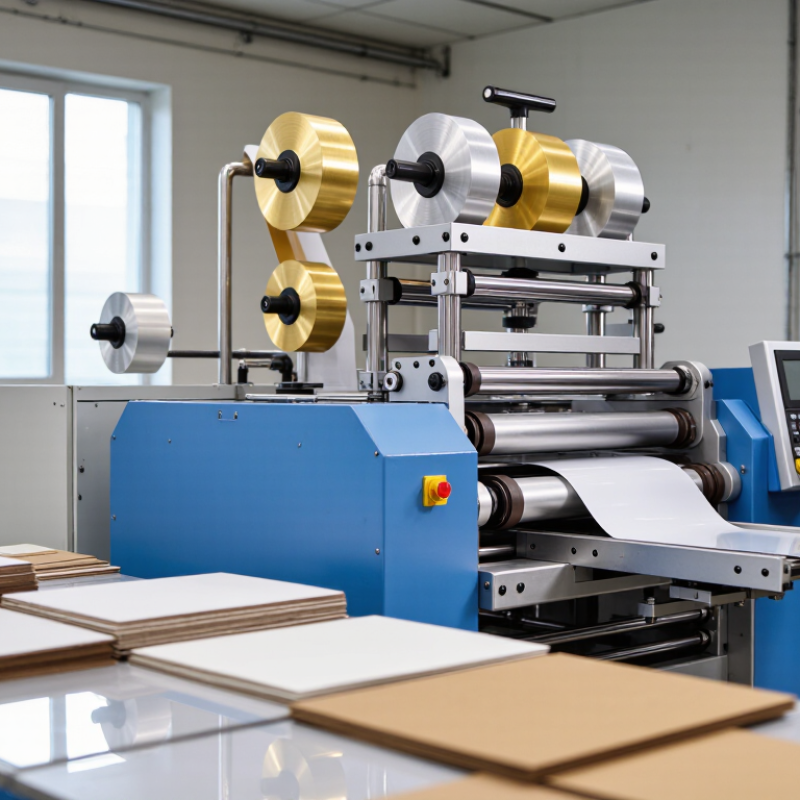
2026 Best Foil Machine for Global Buyers

Choosing the 2026 best Foil Machine requires more than comparing speed, price, or a polished sample.

Global buyers need equipment that performs consistently across markets, materials, and working conditions. Voltage compatibility matters. So do spare parts, operator training, software support, and local service response. A machine that runs beautifully in a showroom may struggle with textured paper, recycled board, or thin synthetic labels.

Printing-equipment consultant Cary Sherburne offers a practical view: “The best finishing equipment is measured by repeatability, not by its brightest sample.” That principle guides this review. We will examine foil transfer quality, temperature control, pressure stability, setup time, waste levels, and compatibility with different foil widths. Safety guarding and documented compliance also deserve attention. They are not optional details.

Real production tells the truth.

A reliable Foil Machine should produce clean edges on the first sheet and the thousandth. It should help operators adjust pressure without guesswork. It should also limit unnecessary foil consumption, because rising material costs can quietly damage profit. For international buyers, installation conditions may reveal another weakness. Humidity, dust, unstable power, and limited technical support can change daily performance.

No shortlist is perfect. A compact machine may sacrifice speed. A high-speed model may demand skilled operators. I may also give too much weight to service access, yet service often decides whether a purchase remains productive. This guide compares practical strengths and limitations, helping buyers select equipment that fits their products, workforce, budget, and long-term expansion plans.

2026 Best Foil Machine for Global Buyers

What Is a Foil Machine and How Does It Work?

2026 Best Foil Machine for Global Buyers

A foil machine applies a thin metallic or colored film to paper, board, leather, or selected plastic surfaces. The process usually combines heat, pressure, and controlled timing. A heated plate or roller presses the foil against the material. The coating releases only where the design touches it. The result can be bright, smooth, and sharply defined.

Different machines suit different workloads. A manual model may work well for small packaging projects and craft production. Pneumatic or automatic equipment offers steadier pressure for larger runs. Before buying, check the heating range, working area, compatible foil types, power requirements, and replacement parts. Global buyers should also confirm voltage, plug standards, operator protection, and local equipment regulations. These details are easy to overlook. That can become expensive.

Tips: Test the foil on the actual material before production. Paper texture, ink coverage, and surface moisture can change adhesion. Keep the stamping plate clean, and record useful temperature and pressure settings. Start with a slower speed. I have found that impressive samples can hide weak production consistency. A machine may look powerful, yet poor alignment can waste more foil than expected. Leave room for adjustment, because the first setting is rarely perfect.

Key Foil Machine Types for Different Production Needs

Choosing the best foil machine in 2026 starts with the product, not the advertised speed. Packaging teams should match equipment to substrate, artwork, run length, and finishing tolerance. Hot foil stamping machines use heated dies and pressure to transfer metallic foil onto paper, board, labels, or selected synthetic surfaces. They suit crisp logos, decorative details, and premium cartons. A flatbed model works well for stable sheets and repeatable registration. It is practical for short and medium runs. Setup takes time, though. Small alignment errors can waste valuable sheets.

Roll-to-roll foil machines support continuous web production for labels, flexible materials, and narrow-format packaging. They reduce manual feeding and maintain output during long runs. However, web tension, drying conditions, and foil release must be checked together. A rotary foil unit is faster for high-volume work and can integrate with inline printing or die-cutting. It needs disciplined maintenance. One loose adjustment may create uneven coverage across thousands of meters.

Digital foil systems are useful when designs change frequently or personalization matters. They often avoid traditional dies, shortening preparation for varied orders. Results depend heavily on toner, coating, surface smoothness, and curing. Inspect test samples under angled light, not only on a bright production table. Ask suppliers for measurable data, service response times, spare-part access, and operator training. I would also request a trial using the actual board. A polished demonstration can hide feeding problems. That lesson is easy to overlook.

How to Evaluate Foil Machine Performance and Features

Choosing the best foil machine requires more than checking its maximum speed. Smithers forecasts the global print market will approach $843 billion by 2028, with packaging supporting continued demand. That growth makes stable production more valuable than impressive brochure numbers. Test registration at normal operating speed, not only during a short demonstration. A 0.1-millimeter shift can be visible on fine lettering, especially against dark stock.

Measure foil usage, pressure consistency, heating response, and changeover time. A reliable machine should maintain temperature across the die, recover quickly between jobs, and handle paper, coated board, and suitable synthetic substrates. FESPA’s 2023 Print Census found that 60% of respondents expected higher sales, while many printers prioritized automation and efficiency. These figures suggest that labor savings matter, but only when controls remain understandable. Complex software is not automatically better.

Ask for production samples from your own artwork. Use thin lines, solid panels, small type, and repeated patterns. Inspect the first sheet, the hundredth, and the final sheet. Check waste, foil breaks, noise, guarding, and access for cleaning. I would not trust a machine based on speed alone. My practical mistake was once ignoring setup time; the hourly output looked excellent, but short jobs became inefficient. Also review service response, spare-part availability, electrical requirements, and operator training. A slower machine with predictable registration may deliver more sellable sheets. Performance should be proven in your workflow, not assumed from a specification sheet.

2026 Best Foil Machine for Global Buyers - How to Evaluate Foil Machine Performance and Features

Machine Type Typical Working Area Typical Production Speed Suitable Materials Foil Width / Length Temperature Range Typical Power Input Best Application
Manual or Semi-Automatic Flatbed Up to approximately 300 × 420 mm 300–1,200 impressions/hour Paper, coated board, leather, PU, book covers, invitations Commonly 10–100 mm wide; roll length varies by foil type Approximately 60–200°C Single-phase, commonly 0.5–2.0 kW Samples, short runs, customization, small print shops
Pneumatic Flatbed Approximately 300 × 400 to 600 × 800 mm 500–1,500 impressions/hour Paperboard, plastics, leather, laminated sheets and packaging stock Usually 20–250 mm wide; multiple foil strips may be used Approximately 80–220°C Single- or three-phase; commonly 1–4 kW plus compressed air Packaging, labels, bookbinding and medium-volume production
Automatic Roll-to-Roll Web widths commonly 200–650 mm 20–100 m/min, depending on material and design Flexible films, labels, self-adhesive stock and narrow-web packaging Web width and repeat length depend on the die and registration system Approximately 80–180°C Commonly 3–15 kW, depending on web width and automation Long runs, labels, flexible packaging and continuous decoration
Automatic Sheet-Fed Commonly up to B2 or larger sheet formats 2,000–8,000 sheets/hour, depending on sheet size and job Printed paper, carton board, coated stock and folding cartons Multiple foil rolls with programmable feeding and rewinding Approximately 80–200°C Typically 8–30 kW, depending on format and auxiliary systems High-volume cartons, premium packaging and commercial printing
Digital Foil System Usually A3–B2 class sheets or narrow-web formats Typically 5–30 m/min or job-based sheet production Digital prints, toner-based substrates, coated paper and specialty media Digital foil rolls selected according to the feeding system Often approximately 70–160°C Commonly 2–12 kW Variable data, short-run personalization and on-demand production

Key Evaluation Criteria for Global Buyers

Evaluation Dimension What to Check Practical Acceptance Target Why It Matters
Foil Transfer Quality Coverage, edge definition, adhesion, pinholes and consistency across the sheet Uniform transfer without visible gaps, scorching or excessive foil waste Directly affects appearance, rejection rate and material cost
Temperature Control Independent heating zones, sensor accuracy, warm-up time and over-temperature protection Stable temperature with adjustable control suited to the selected foil and substrate Reduces incomplete transfer, substrate damage and color variation
Pressure and Registration Pressure adjustment, platen parallelism, repeatability and sheet alignment Repeatable positioning with no visible movement between production cycles Important for fine text, detailed graphics and multi-color work
Production Speed Rated speed versus tested speed with the buyer’s actual artwork and material Confirm output using finished acceptable pieces, not only machine cycles Real productivity includes setup, loading, inspection and waste
Foil-Saving System Intermittent feeding, programmable foil advance, tension control and rewinding Foil advance should match the image area with minimal unused spacing Lower foil consumption improves operating economics
Substrate Compatibility Minimum and maximum thickness, surface coating, moisture sensitivity and flexibility Run a test with the exact substrate, ink, coating and foil combination Compatibility cannot be confirmed from machine size alone
Control and Automation Touchscreen settings, job memory, diagnostics, alarm history and language options Clear controls with repeatable job settings and accessible fault messages Shortens setup time and supports international operators
Safety and Compliance Emergency stops, guards, hot-surface protection, electrical documentation and conformity markings Documentation and configuration should match the destination country requirements Supports legal installation, operator safety and customs clearance
Utilities and Installation Voltage, frequency, phase, compressed-air demand, floor load and ventilation Confirm compatibility with the buyer’s electrical and workshop conditions before purchase Prevents installation delays and unexpected infrastructure costs
Serviceability Access to heating elements, sensors, belts, rollers, spare parts and technical manuals Routine maintenance should be possible without specialist tools wherever practical Reduces downtime and long-distance service dependence

Note: The specifications above are typical market ranges for different foil-machine configurations. Actual performance depends on the machine design, die, foil, substrate, artwork, operator settings and local electrical conditions. Buyers should request a production test using their own materials before placing an order.

Global Compliance, Voltage, and Material Considerations

2026 Best Foil Machine for Global Buyers

Global Compliance, Voltage, and Material Considerations

Choosing a foil machine for international use requires more than checking speed and pressure. Compliance documents should match the destination market. Ask for electrical safety reports, electromagnetic compatibility results, and restricted-substance declarations. Depending on the country, buyers may also need machinery safety marking, importer records, and local-language manuals. The machine’s nameplate should clearly show voltage, frequency, rated power, and grounding requirements.

Voltage errors can damage heating systems and create unsafe operating conditions. Confirm whether the site uses 110–120V or 220–240V power. Check both 50Hz and 60Hz compatibility. A plug adapter is not a voltage converter. That detail is often overlooked. Also verify emergency-stop design, protective covers, fuse ratings, and replacement-part availability. A professional supplier should provide wiring diagrams and test records, not vague assurances.

Tips: Test the machine with your actual foil, substrate, and artwork before ordering. Different papers, films, and coated boards respond differently to heat and pressure. Ask for sample results at several temperatures. Record adhesion, edge sharpness, and surface damage. For packaging that may contact sensitive products, confirm material suitability separately. My view is simple: technical sheets help, but real samples reveal weaknesses. No checklist is perfect. Recheck assumptions.

How to Choose the Best Foil Machine for Your Market

2026 Best Foil Machine for Global Buyers

How to Choose the Best Foil Machine for Your Market

Choosing the best foil machine starts with your market’s real production needs. Define the materials first, including paper, cartons, labels, or coated products. Record the foil width, stamping area, daily output, and acceptable waste level. A machine for short custom runs may need quick setup and simple controls. High-volume packaging requires stable pressure, accurate temperature control, and repeatable feeding. Check voltage, frequency, plug type, and regional safety requirements before ordering. These details are easy to overlook.

Test the machine with your actual materials, not only supplier samples. Check foil adhesion, edge sharpness, color consistency, pressure marks, and setup time. Ask for operating manuals, maintenance schedules, spare-parts lists, and service response times. Total ownership cost includes dies, foil, energy, shipping, import fees, and operator training. I once underestimated setup waste, and the quoted production cost changed quickly. A slower machine may be better if it reduces rejected sheets.

Tips: Request a live trial using your artwork and substrate. Choose adjustable temperature and pressure settings. Confirm emergency stops, guarding, and operator access. Review local service coverage carefully. Speed looks attractive, but stable results matter more. Leave room for mistakes.

Top