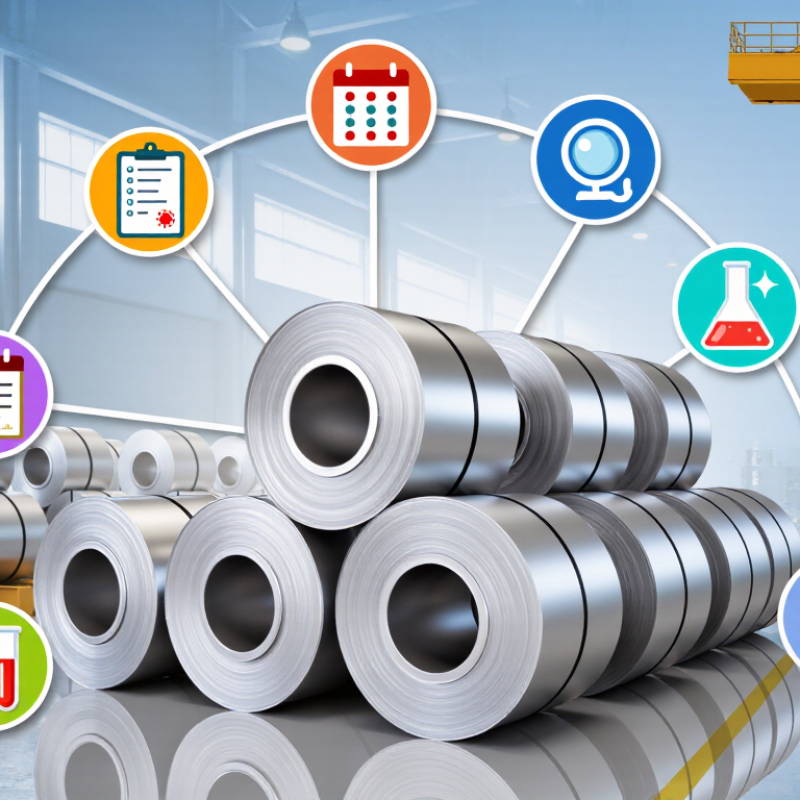
International sourcing should begin with traceability, not a low headline price.
The World Stainless Association reported global stainless steel production of about 62 million tonnes in 2024. That scale creates many suppliers, but quality can vary between heats and production lines. Buyers should request the mill test certificate, heat number, chemical composition, hardness, tensile results, and surface condition. SUS201 should also match the agreed JIS specification, while ASTM A240 may support broader project acceptance.
Certification needs practical verification. ISO 9001 supports controlled production, but it does not prove every coil meets your purchase order. Ask for EN 10204 3.1 inspection documents, third-party testing when risk is high, and independent PMI checks on sampled coils.
Packaging matters too. Moisture-resistant wrapping, protected edges, and clear coil labels reduce damage during sea transport. Small details matter.
Pricing should separate base metal, processing, packing, inland freight, insurance, and duties. A cheap offer may hide narrow tolerances or uncertain delivery. Recent energy and freight volatility, highlighted in OECD steel market analysis, makes fixed assumptions risky. Request a validity period and a clear adjustment formula.
Delivery promises should include production time, port handling, customs clearance, and a realistic buffer. Seven days can become three weeks. That is not always supplier failure; sometimes the forecast was careless.