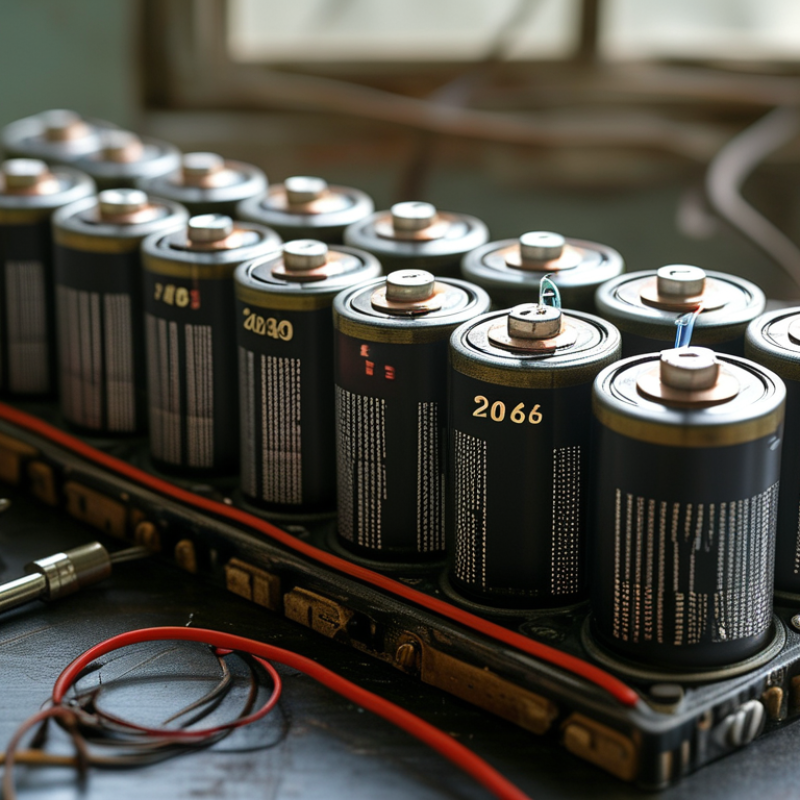
| Cell Identification | Cell format | Confirm that each cylindrical cell is an 18 mm × 65 mm rechargeable lithium-ion cell. | Approx. 18 mm diameter × 65 mm length | Do not assume that every cell with an 18650 label has the same chemistry, capacity, or current rating. |
| Cell Identification | Nominal voltage | Use the voltage printed on the cell datasheet when configuring the pack and charger. | Usually 3.6–3.7 V per cell | Do not mix cells with different chemistries or voltage specifications. |
| Cell Identification | Full-charge voltage | Set the charger to the exact full-charge voltage specified for the cell chemistry. | Common lithium-ion cells: 4.20 V | Charging above the specified voltage can cause overheating, venting, or fire. |
| Visual Inspection | Wrapper and insulation | Inspect the outer wrap, positive-terminal ring, and insulating separators before every assembly. | No tears, dents, corrosion, leakage, or loose insulation | Replace damaged wraps with correctly sized insulating materials; isolate cells with dents or leakage. |
| Open-Circuit Test | Resting voltage | Measure with a calibrated multimeter after the cell has rested and is disconnected from all loads. | About 3.0–4.2 V for a typical cell in normal use | A very low, unstable, or rapidly falling voltage requires quarantine and expert evaluation. |
| Voltage Matching | Parallel-group matching | Match cells by chemistry, model, capacity, age, and resting voltage before connecting in parallel. | Use a narrow voltage difference; many builders target ≤0.05 V | Connecting cells with a large voltage difference can create a dangerous equalization current. |
| Internal Resistance | Resistance screening | Measure under the same temperature, state of charge, and instrument conditions. | Compare cells with one another; absolute readings vary by tester and cell condition | A significantly higher reading than the pack average indicates possible aging or damage. |
| Capacity Test | Discharge capacity | Fully charge, rest, discharge at a controlled current, and record ampere-hours until the specified cutoff. | Use the manufacturer’s rated capacity and cutoff; 0.2C is a common comparison rate | Perform testing in a fire-resistant area with temperature monitoring. |
| Capacity Test | Cell acceptance | Group cells with similar measured capacity and resistance rather than relying only on printed labels. | Avoid combining cells with materially different test results | A weak parallel cell can reduce runtime and increase imbalance or heating. |
| Pack Configuration | Series and parallel count | Calculate pack voltage as series count × cell nominal voltage and capacity as parallel count × cell capacity. | A 4S pack is about 14.4–14.8 V nominal and 16.8 V full for 4.2 V cells | The charger and protection system must match the exact series count. |
| Protection System | Battery-management system | Use a BMS designed for the pack’s series count, current, chemistry, and required balancing method. | Overcharge, over-discharge, overcurrent, short-circuit, and temperature protection | A BMS is a protective control device, not a substitute for correct assembly and inspection. |
| Charging | Charging method | Use a constant-current/constant-voltage charger configured for the pack voltage and chemistry. | CC phase followed by CV phase; charging ends when current tapers to the charger’s termination threshold | Never charge a lithium-ion pack with a lead-acid or unsuitable power supply. |
| Charging | Charge current | Stay within the cell and BMS charge-current ratings; use a lower current to reduce heat and stress. | A conservative default is 0.5C when the datasheet permits it | Never exceed the lowest-rated cell, connector, wire, or BMS current limit. |
| Charging Temperature | Ambient and cell temperature | Charge only within the temperature range specified by the cell manufacturer. | Common lithium-ion guidance: approximately 0–45 °C | Do not charge a frozen, overheated, swollen, or visibly damaged cell. |
| Charging Supervision | Charging location | Charge on a nonflammable surface away from combustible materials and with appropriate ventilation. | Remain present during charging whenever practical | Stop immediately if there is unusual odor, noise, smoke, leakage, rapid heating, or swelling. |
| Balancing | Series-cell voltage balance | Check individual series-group voltages at full charge and during discharge. | No series group should approach its overcharge or over-discharge limit prematurely | Persistent imbalance is a reason to stop using the pack until the cause is identified. |
| Discharge | Load current | Keep continuous and peak current within the lowest rating of the cells, BMS, wiring, connectors, and load. | Use the manufacturer’s continuous and pulse-current limits | Do not use a voltage-only estimate to justify a current level. |
| Maintenance | Connector and wiring inspection | Inspect welds, holders, wires, insulation, terminals, and connectors for looseness, corrosion, or heat damage. | Inspect before use and after any impact or overheating event | Never work on an energized pack with exposed conductive tools. |
| Maintenance | Performance monitoring | Track runtime, capacity, temperature, voltage sag, and series-group balance over time. | Investigate sudden changes rather than waiting for complete failure | Stop using the pack if it becomes unusually hot, swollen, leaky, or unstable. |
| Long-Term Storage | Storage state of charge | Store the pack partially charged rather than fully charged or completely empty. | Approximately 30–50% state of charge | Check the voltage periodically because a deeply discharged lithium-ion cell may become unsafe to recharge. |
| Long-Term Storage | Storage temperature | Keep the pack in a cool, dry, stable location away from direct sunlight and heat sources. | Preferably around 15–25 °C; follow the cell datasheet | Avoid hot vehicles, freezing conditions, condensation, and locations exposed to water. |
| Long-Term Storage | Physical protection | Use a rigid, nonconductive container that prevents movement and contact with metal objects. | Separate packs and protect terminals from short circuits | Do not store loose cells in pockets, drawers with metal items, or sealed areas without appropriate precautions. |
| End of Life | Retirement criteria | Retire cells or packs with swelling, leakage, damaged insulation, severe imbalance, abnormal heating, or major capacity loss. | Use the manufacturer’s minimum capacity and resistance limits when available | Do not place lithium-ion cells in household garbage or recycling bins. |
| Disposal | Recycling preparation | Tape or otherwise protect exposed terminals and deliver cells to an approved battery-recycling or hazardous-waste collection point. | Follow local transport and recycling regulations | Never crush, puncture, incinerate, dismantle, or intentionally short-circuit a lithium-ion cell. |