| Under-counter cabinet | Small quantities of solvents, cleaning liquids, or fuels needed at a workbench or process station. | Compact cabinet designed to fit below a counter; commonly has shelves, a liquid-tight sump, and manual or self-closing doors depending on the model. | Measure available clearance; check shelf load ratings, door swing, sump capacity, and whether the cabinet can be securely anchored. | Confirm that the cabinet is approved for flammable-liquid storage under the applicable local rules. A compact size does not remove workplace storage limits. |
| Benchtop cabinet | Small containers of frequently used flammable liquids in laboratories, maintenance areas, and production workspaces. | Small footprint for placement on a stable work surface; often includes a shelf and a liquid-retaining base. | Check total loaded weight against the bench rating, container compatibility, stability, and protection from heat, impact, and ignition sources. | Use only where permitted by the site’s fire and occupational-safety requirements. Keep containers closed when not in use. |
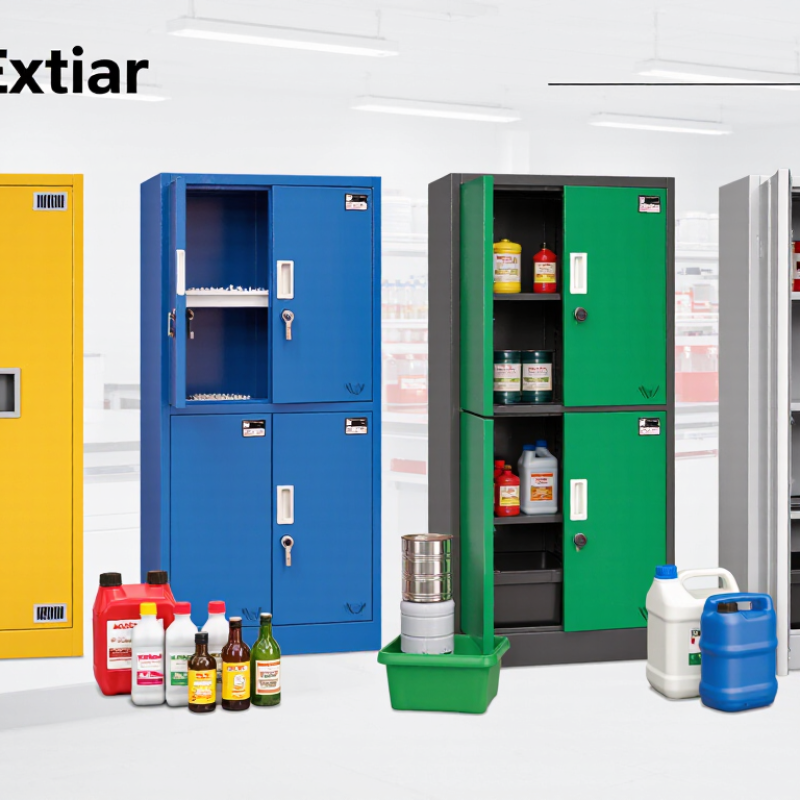
| Standard upright cabinet | General storage of approved solvent and fuel containers in workshops, laboratories, and industrial facilities. | Vertical enclosure with one or more adjustable shelves, a spill-containment sump, and doors suited to the required access pattern. | Verify usable internal space, shelf capacity, sump design, door operation, ventilation-opening provisions, and the cabinet’s listed or certified configuration. | For U.S. workplaces, review applicable OSHA requirements and fire codes, including NFPA 30 where adopted. Requirements vary by jurisdiction and liquid classification. |
| Wide or double-door cabinet | Storage of a larger number of compatible containers where frequent access or wider shelf space is useful. | Broad cabinet body with two doors; may include adjustable shelves and manual or self-closing door options. | Check doorway and installation access, door-clearance space, shelf loading, door-closing performance, and permitted aggregate storage quantities. | Do not assume a wider cabinet allows unlimited storage. Confirm quantity limits, cabinet spacing, and storage-area rules with the authority having jurisdiction. |
| Drum-storage cabinet | Approved larger containers, such as drums, containing flammable liquids used in industrial operations. | Large-format enclosure with reinforced floor or drum supports and a containment area designed for the intended container arrangement. | Confirm drum dimensions, loaded floor capacity, handling access, spill-containment capacity, and compatibility with dispensing equipment. | Check whether the applicable code permits the proposed drum size and quantity inside a cabinet. Bulk-storage rules may apply separately. |
| Outdoor weather-resistant cabinet | Flammable-liquid storage outside a building when outdoor placement is allowed by site and fire-code requirements. | Weather-resistant enclosure, typically with a protected finish, secure doors, and a liquid-retaining base. | Assess weather exposure, corrosion resistance, anchoring, drainage and spill control, access control, and separation from buildings, exits, and ignition sources. | Outdoor placement does not automatically make storage compliant. Check local fire-code limits, separation distances, security, and environmental requirements. |
| Fire-tested cabinet with a specified rating | Facilities that require documented fire-resistance performance under a particular national or regional standard. | Cabinet tested and certified to a stated standard and performance class; construction and door-closing features depend on the tested model. | Request current test or certification documentation and verify that the exact cabinet configuration, accessories, and installation conditions are covered. | In Europe, EN 14470-1 includes fire-resistance classes of 15, 30, 60, and 90 minutes. These classes are not interchangeable with requirements in other jurisdictions. |