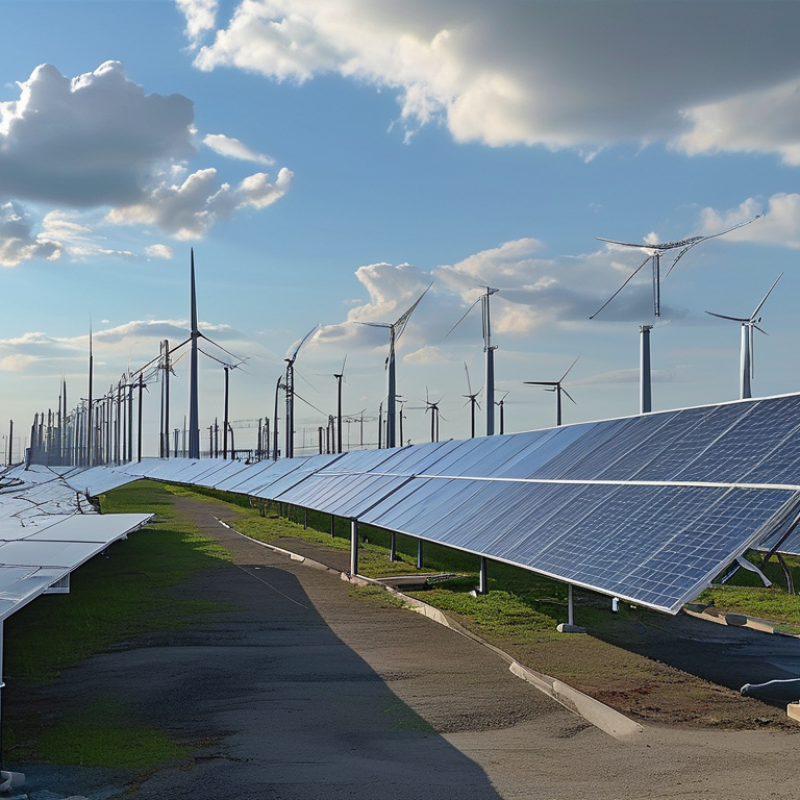
| Solar-Plus-Lithium-Ion Storage | Solar photovoltaic generation + lithium-ion battery system | 1–8 hours | 85–95% | Milliseconds to seconds | Approximately 3,000–10,000 full cycles, depending on chemistry and operating conditions | Solar shifting, peak shaving, frequency regulation, backup power and renewable self-consumption | Commercially mature
Evaluate thermal management, fire protection, degradation guarantees, augmentation strategy and local recycling requirements. |
| Battery-plus-Supercapacitor Hybrid | Lithium-ion battery + supercapacitor or ultracapacitor | Seconds to several hours | Approximately 80–95% | Milliseconds | Supercapacitors commonly support hundreds of thousands to millions of shallow cycles; battery life depends on reduced peak loading | High-power ramps, voltage support, regenerative braking, microgrids and applications with frequent short-duration fluctuations | Mature for specialized uses
Compare power-to-energy ratio, control-system quality, converter efficiency and the value of reduced battery stress. |
| Lithium-Ion-plus-Flow Battery | High-power lithium-ion battery + vanadium or other redox-flow battery | 2–12+ hours | Approximately 65–85% | Milliseconds to seconds | Lithium-ion: typically 3,000–10,000 cycles; flow systems: commonly 10,000–20,000+ cycles | Renewable firming, long-duration peak shifting, utility-scale microgrids and high-throughput projects | Commercially available
Assess electrolyte availability, pumping energy, footprint, ambient-temperature performance and the cost of frequent cycling. |
| Lithium-Ion-plus-Thermal Storage | Short-duration battery + molten salt, phase-change material, hot-water or other thermal energy storage | 4–24+ hours | Electric-to-electric: approximately 40–75%; higher when directly supplying thermal loads | Seconds to minutes | Often 10,000+ thermal cycles; project life can exceed 20 years with suitable materials and maintenance | Industrial heat, district heating and cooling, commercial buildings, concentrated solar power and grid energy shifting | Application dependent
Prioritize the thermal-load profile, insulation quality, heat-exchanger design, site integration and whether heat is used directly or reconverted to electricity. |
| Battery-plus-Green-Hydrogen | Battery system + electrolyzer + hydrogen storage + fuel cell or hydrogen turbine | 12 hours to multiple days or seasonal periods | Approximately 25–45% electricity-to-electricity; higher for direct hydrogen use | Seconds to minutes, depending on the power-conversion equipment | Battery subsystem: typically 3,000–10,000 cycles; electrolyzer and fuel-cell stacks require periodic replacement | Multi-day backup, remote microgrids, energy resilience, renewable curtailment management and heavy-duty fuel supply | Early commercial growth
Check renewable electricity supply, water consumption, hydrogen storage method, safety zoning, certification and delivered hydrogen cost. |
| Battery-plus-Compressed-Air Storage | Battery system + compressed-air energy storage in suitable vessels or geological formations | 4–100+ hours | Approximately 40–70% | Seconds to minutes | Potentially tens of thousands of cycles; life depends strongly on compressors, expanders and storage structures | Large-scale renewable integration, capacity firming and long-duration grid storage | Site specific
Review geological or vessel requirements, compression heat management, permitting, round-trip efficiency and minimum economic project scale. |
| AC-Coupled Multi-Technology Microgrid | Solar or wind generation + battery storage + dispatchable generator, thermal storage or hydrogen system | Seconds to several days | Approximately 60–90%, depending on the energy pathway and operating mode | Milliseconds to minutes | Determined by the battery and other subsystem technologies | Critical facilities, islands, mines, remote communities, data centers and weak-grid locations | Fast-growing solution
Assess microgrid controls, black-start capability, islanding performance, cybersecurity, fuel logistics and interoperability between inverters. |
| DC-Coupled Solar, Battery and Power Conversion System | Solar photovoltaic array + battery connected on a shared direct-current bus | 1–8 hours | Approximately 88–95% from DC bus to AC output, subject to system design | Milliseconds to seconds | Typically 3,000–10,000 battery cycles | Utility-scale solar-plus-storage, reduced inverter clipping and improved use of oversized photovoltaic capacity | Commercially mature
Compare clipping recovery, DC/DC converter architecture, battery oversizing, interconnection limits, warranty conditions and operational flexibility. |