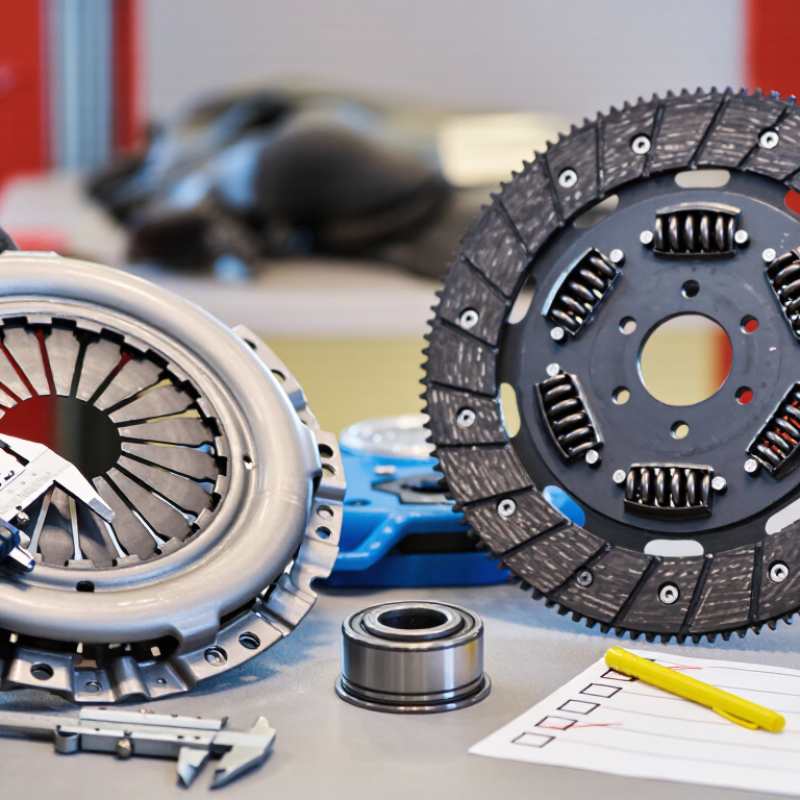
| 1. Confirm the 240mm fitment | Measure the friction diameter and verify the spline, hub profile, bolt pattern, pilot bearing, release bearing, and flywheel compatibility. | A “240mm” clutch normally refers to the nominal friction diameter, but the outer diameter, spline count, spline diameter, and cover dimensions can vary. | Correct diameter alone does not guarantee installation or proper disengagement. | Every replacement application, especially when changing the flywheel or transmission. |
| 2. Select the friction material carefully | Compare organic, ceramic, metallic, and aramid-based friction facings. | Organic: smooth engagement and low noise.
Ceramic or metallic: high heat resistance and aggressive engagement.
Aramid-based: progressive engagement with good wear resistance when properly matched. | Friction material influences heat tolerance, launch behavior, pedal feel, noise, wear rate, and drivability. | Organic for street use; ceramic or metallic for repeated high-temperature use; aramid-based materials for a smoother performance-oriented compromise. |
| 3. Compare disc design and sprung-hub construction | Check sprung versus rigid hubs, torsion springs, hub size, facing segments, and cushioning features. | A sprung hub absorbs torsional vibration; a rigid hub transfers torque more directly. Segmented facings can improve heat release but may engage more sharply. | Sprung hubs generally improve refinement and reduce gear-rattle risk, while rigid or highly segmented designs can provide faster torque transfer. | Use a sprung hub for most road cars. Consider a rigid hub only when the drivetrain is designed for its harsher response. |
| 4. Evaluate clamp load and torque capacity | Compare cover clamp load, friction coefficient, usable friction radius, and the engine’s peak torque. | Torque capacity depends on clamp load, friction material, mean effective radius, the number of friction surfaces, and the safety margin. Published capacity figures are application-specific, not universal. | Higher capacity can prevent slip, but excessive clamp load may increase pedal effort and stress the hydraulic system, release bearing, and crankshaft thrust system. | Choose a kit with a reasonable reserve above measured or documented engine torque rather than selecting the highest rating available. |
| 5. Inspect the pressure-plate design | Compare diaphragm-spring geometry, cover rigidity, heat treatment, friction surface finish, and self-adjusting features. | A diaphragm-spring cover is common in modern passenger vehicles. Some designs maintain more consistent clamp load as the disc wears, while non-adjusting designs may provide a simpler setup. | Cover design affects release effort, clamp-load consistency, heat recovery, and resistance to distortion. | For daily driving, prioritize consistent release effort and thermal stability over maximum clamp load. |
| 6. Match the performance level to the operating conditions | Consider vehicle weight, traffic conditions, towing, hill starts, track use, launch frequency, and engine modifications. | Standard: factory-like engagement and comfort.
Heavy-duty street: increased torque reserve with manageable pedal effort.
Competition: high heat capacity and rapid engagement, usually with more noise and reduced comfort. | A clutch designed for competition may perform poorly in traffic because it can be abrupt, noisy, and less tolerant of slipping during low-speed maneuvers. | Select the lowest performance level that safely handles the vehicle’s actual torque and heat demands. |
| 7. Check the complete kit and break-in requirements | Confirm whether the kit includes the disc, pressure plate, release bearing, alignment tool, pilot bearing or bushing, and installation hardware. | Replace worn related parts at the same time when required. The flywheel should be inspected for cracks, hot spots, runout, and correct resurfacing specifications. | Correct installation and bedding reduce clutch judder, premature glazing, uneven wear, and early slip. | Follow the kit’s break-in instructions; many street clutch facings require several hundred gentle engagement cycles before full-load use. |