7 Tips for Choosing the Right Pump Inverter
Choosing the right Pump Inverter can reduce energy use, protect equipment, and improve daily operation. However, the decision is rarely solved by comparing rated power alone. A pump may run quietly in a showroom, then struggle when pipe length, elevation, or water demand changes. That gap matters.
Dr. Lev Nelik, a recognized pump-industry consultant and author, offers a practical reminder: “Select the pump for the system, then control it with the drive.” This principle guides the seven tips ahead. The discussion examines motor compatibility, flow requirements, pressure stability, sensor accuracy, overload protection, enclosure ratings, and service support. Each point connects the inverter to real operating conditions, not just a product brochure.
Look closely at the numbers. A 7.5-kilowatt motor does not automatically require the same inverter settings as another 7.5-kilowatt motor. Cable length, starting torque, ambient heat, and duty cycle can change the selection. A small pressure sensor error may also cause constant speed adjustments. That wastes power and shortens component life.
Field experience adds another warning. The cheapest option can become expensive after repeated faults, difficult programming, or unavailable spare parts. Still, efficiency figures should not be accepted blindly. Actual savings depend on demand patterns, maintenance, and correct commissioning. A perfect calculation may fail in a dusty pump room.
This guide is designed for engineers, contractors, and facility managers who need a dependable Pump Inverter. It encourages careful checking, practical judgment, and honest review before purchase.
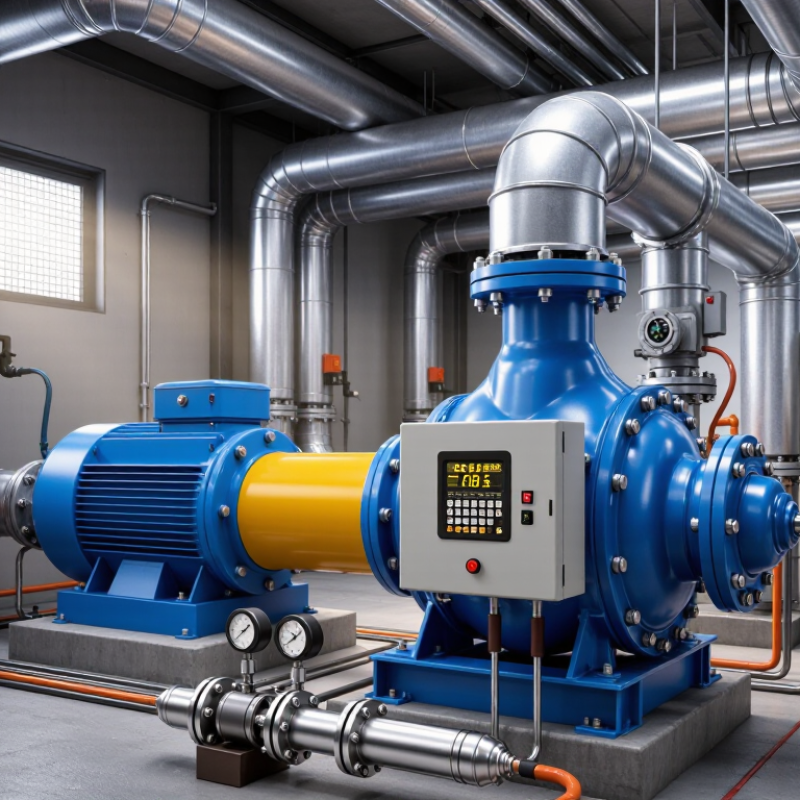
Identify the Pump’s Operating Requirements
Before choosing a pump inverter, identify the pump’s real operating requirements. Record flow rate, total head, fluid temperature, viscosity, density, and daily operating hours. Do not rely on the motor nameplate alone. A pump rated at 30 kW may operate far below that load for most of the day.
The U.S. Department of Energy reports that pumping systems can represent 25% to 50% of industrial facility electricity use. Its pumping-system guidance also shows that variable-speed control can reduce energy consumption significantly when demand changes. Measure the system curve, not just the pump curve. Check suction pressure, discharge pressure, pipe length, valve positions, and minimum flow requirements. Small errors matter. A 10% flow increase can require roughly 33% more pump power under affinity-law conditions.
Watch the operating pattern. Is demand steady, seasonal, or rapidly changing? A pump serving a storage tank may need gentle acceleration, while a process line may require tight pressure control. Confirm the inverter’s overload capacity, speed range, braking method, enclosure rating, and compatibility with the motor insulation. Hydraulic Institute guidance emphasizes evaluating the complete pumping system, including controls and piping. Field experience also suggests that calculated efficiency can look better than actual performance. Dirty filters, air leaks, and oversized pumps quietly distort results. Measure for several days before selecting the inverter.
Match the Inverter to Motor Specifications
7 Tips for Choosing the Right Pump Inverter
Match the Inverter to Motor Specifications
A pump inverter should match the motor, not just the pump’s advertised power. Read the motor nameplate carefully. Check rated voltage, full-load current, frequency, phase, and rotational speed. The inverter’s output current must meet or exceed the motor’s rated current. Horsepower alone can mislead.
Confirm the motor accepts variable-frequency operation. Some older motors overheat when running slowly. A motor designed for inverter control usually handles changing frequency more reliably. Check the required overload capacity, especially for pumps that start under pressure. Select the correct acceleration time. A sudden start can cause high current and pipe stress. A gentle ramp protects both components.
I once focused on wattage and missed the motor’s current rating. That was a poor shortcut. Current is often the more useful sizing reference. Also inspect the supply voltage and phase arrangement. A single-phase supply cannot automatically support every three-phase motor. Verify the inverter’s input and output requirements before installation. Small details matter.
Consider the operating environment too. Dust, humidity, heat, and long cable runs can affect performance. Choose suitable protection and allow space for cooling. Set the minimum frequency carefully, because very low speed may reduce pump cooling or lubrication. Record the final settings and test the pump at several flow conditions. A qualified technician should verify wiring, grounding, protection, and programming before regular operation.
7 Tips for Choosing the Right Pump Inverter: Match the Inverter to Motor Specifications
Typical three-phase motor values at 400 V and 50 Hz. Select an inverter with a continuous output-current rating equal to or higher than the motor’s rated current, while considering starting load, duty cycle, ambient temperature, and overload requirements.
The minimum inverter current shown is approximately 125% of the motor rated current, providing a practical selection margin for pump applications. Always verify the motor nameplate and the inverter manufacturer’s overload rating before installation.
Check Control Modes and Energy-Saving Features
Choosing the Right Pump Inverter: Check Control Modes and Energy-Saving Features
When selecting a pump inverter, start with the control mode, not the advertised power rating. Variable-frequency control adjusts motor speed as pressure or flow changes. This matters in buildings where demand falls sharply at night. A pressure sensor can reduce speed when only one tap remains open. The pump then avoids running at full speed unnecessarily. Quiet operation is another practical benefit near bedrooms.
Compare PID, constant-pressure, and flow-control modes. PID control can maintain stable pressure, but poor sensor placement causes hunting. The motor may repeatedly speed up and slow down. Place the sensor after major pipe losses when possible. Check sleep and wake functions too. They can stop the motor during zero-demand periods.
Soft-start and current limiting reduce mechanical shock. Ask for measured efficiency across several operating loads, rather than one peak figure. A pump may save energy at half speed, yet waste power if oversized. I have seen commissioning plans overlook this detail. It is easy to miss. Review fault logs, bypass options, and manual control before installation. Manual operation should remain clear during maintenance or sensor failure.