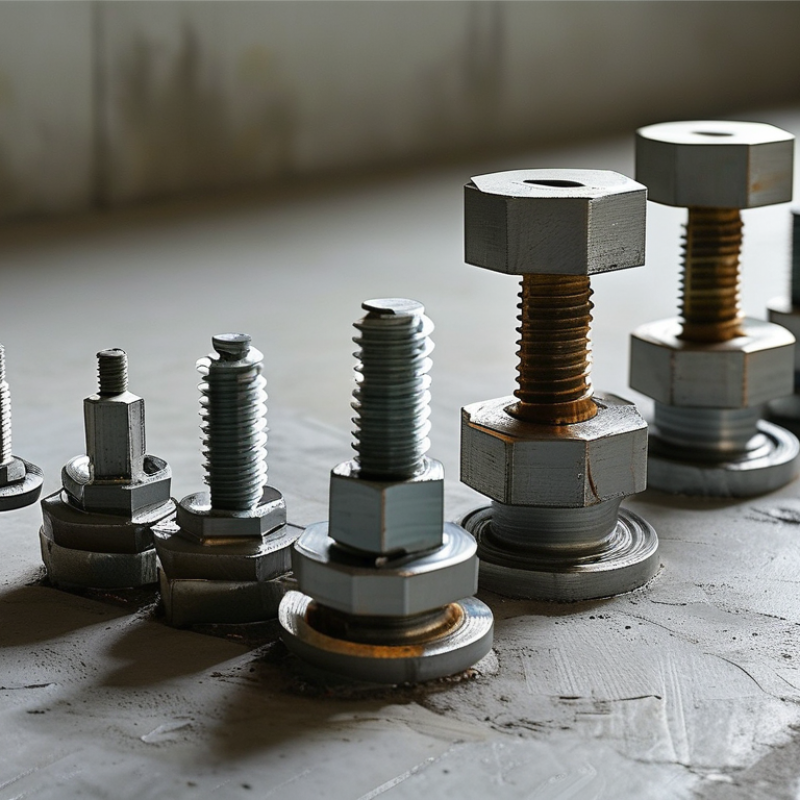
| Cast-in-Place Anchor Bolt | Embedded in fresh concrete before it hardens; the embedded end develops resistance through its head, hook, plate, or threaded geometry. | Structural steel columns, base plates, equipment supports, masonry walls, and concrete foundations. | Carbon steel, stainless steel, hot-dip galvanized steel, or zinc-plated steel. | High reliability when accurately positioned; suitable for significant tension and shear forces. | Requires accurate layout before concrete placement; relocation or correction after curing can be difficult. |
| Hooked Anchor Bolt | A bent hook, such as an L-shaped or J-shaped end, creates mechanical anchorage within the concrete. | Foundation base plates, light-to-medium structural connections, and embedded supports. | Usually carbon steel or galvanized steel. | Simple geometry and effective anchorage without a separate expansion mechanism. | Needs sufficient embedment and concrete edge distance; unsuitable for installation after concrete has cured. |
| Headed Anchor Bolt | A forged or welded head bears against the surrounding concrete and resists pullout. | Heavy structural columns, moment-resisting base connections, and heavily loaded equipment supports. | High-strength carbon steel, stainless steel, or galvanized steel. | Provides positive bearing resistance and is well suited to high tension loads. | Must be designed with adequate embedment, concrete strength, edge distance, and reinforcement. |
| Sleeve Anchor | Tightening the nut pulls a tapered stud into an expansion sleeve, pressing the sleeve against the sides of a drilled hole. | Attachment of fixtures, rails, light structural members, and equipment to concrete or masonry. | Zinc-plated carbon steel, stainless steel, or galvanized steel. | Easy to install in hardened concrete and available in many diameters and lengths. | Performance depends on hole quality, base-material strength, edge distance, and proper tightening. |
| Wedge Anchor | A wedge clip expands against the sides of a drilled hole as the nut is tightened, creating mechanical interlock. | Structural steel attachments, handrails, machinery, safety barriers, and concrete connections. | Carbon steel with zinc or galvanized coating; stainless steel for corrosive environments. | Strong resistance to tension and shear in sound, solid concrete. | Generally unsuitable for weak or hollow masonry; requires correct hole diameter and cleaning. |
| Drop-In Anchor | An internal expander is set inside a predrilled hole and expands against the hole wall when the setting tool is used. | Overhead threaded-rod installations, suspended services, cable supports, and mechanical systems. | Carbon steel, stainless steel, or corrosion-resistant plated steel. | Provides a flush internal thread and a clean finished surface after installation. | Requires a dedicated setting procedure; commonly intended for solid concrete and controlled installation conditions. |
| Undercut Anchor | A specially shaped hole creates a mechanical undercut; the anchor fills or engages that undercut to resist pullout. | High-load structural connections, façade systems, seismic applications, and safety-critical attachments. | High-strength carbon steel or stainless steel. | Strong mechanical interlock with reduced dependence on friction or expansion pressure. | Requires specialized drilling equipment, careful installation, and strict design verification. |
| Chemical or Adhesive Anchor | A threaded rod or reinforcing bar is bonded to the sides of a drilled hole with a resin-based anchoring adhesive. | Post-installed structural connections, reinforcing-bar extensions, equipment supports, and repairs. | Threaded rods or bars made from carbon steel, galvanized steel, or stainless steel. | Low expansion pressure can allow reduced edge distances and flexible embedment depths. | Capacity depends on hole cleaning, adhesive temperature, curing time, moisture, and installation quality. |
| Expansion Anchor | Torque or impact installation expands one or more components against the sides of a drilled hole. | General-purpose attachments to concrete, solid brick, and other suitable base materials. | Carbon steel, stainless steel, zinc-plated steel, or galvanized steel. | Fast post-installed solution with no curing period. | Expansion pressure may be unsuitable near concrete edges or in cracked and weak base materials. |
| Threaded Rod with Nut and Washer | Transfers clamping force through a nut and washer; anchorage is provided by an embedded or bonded end configuration. | Equipment mounting, pipe supports, structural attachments, and chemical-anchor systems. | Carbon steel, galvanized steel, stainless steel, or high-strength alloy steel. | Adjustable connection length and convenient compatibility with standard threaded components. | The rod, nut, washer, anchoring method, and base material must be designed as one complete system. |
| Seismic-Rated Anchor | Designed and qualified to maintain resistance under cyclic tension and shear caused by seismic movement. | Structural and nonstructural components in regions where earthquake design requirements apply. | Typically high-strength carbon steel or stainless steel with a tested protective finish. | May provide documented performance for cracked concrete and repeated loading when properly qualified. | Requires project-specific design data, approved installation procedures, and compliance with applicable building requirements. |