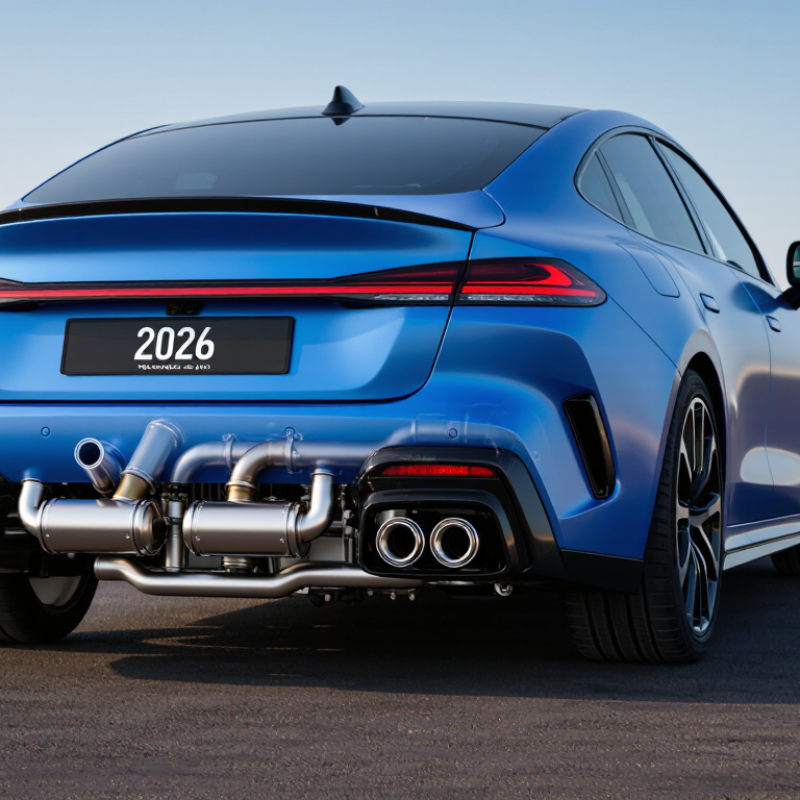
| True Dual Exhaust | Two separate exhaust paths, generally serving separate cylinder banks, with each path running toward its own outlet. | Provides independent routing for each bank and can support a balanced dual-outlet layout when the vehicle is designed for it. | Requires suitable engine, chassis, and underbody clearance. Installation can be more involved, and results depend on pipe sizing and system design. | Vehicles with compatible engine layouts and space for two complete exhaust paths. |
| Single-In, Dual-Out Exhaust | One main pipe feeds a muffler or other exhaust components, then splits into two tailpipes near the rear. | Creates a dual-outlet appearance while retaining a largely single-path system; it may be simpler to package than a full true-dual layout. | The two outlets do not mean the system has two independent paths from the engine. The split and outlet placement must match the vehicle. | Drivers seeking two rear outlets without converting the entire exhaust to separate paths. |
| Dual Cat-Back System | Replaces exhaust components downstream of the catalytic converters with two pipes, typically including piping, mufflers, and tailpipes. | Offers a broad range of sound and outlet-layout options while retaining the factory catalytic converters when properly designed for the vehicle. | Fitment and available clearance vary by vehicle. A cat-back system does not necessarily include headers or catalytic converters. | Those looking to change the exhaust sound or rear-section layout while keeping the factory catalytic converters. |
| Dual Axle-Back System | Replaces the exhaust components behind the rear axle, commonly the mufflers and tailpipes, with a dual-outlet arrangement. | Usually involves fewer replaced components than a cat-back system and can change the rear appearance and sound. | It leaves most of the factory exhaust piping in place, so changes to overall flow are limited by the retained components. | Those seeking a rear-section sound or appearance change with a more limited system replacement. |
| Header-Back Dual System | Runs from the exhaust headers or manifolds through the remaining exhaust components to the outlets; the system may use two separate paths. | Replaces a larger portion of the exhaust, allowing the overall routing and component combination to be selected as a complete system. | More extensive installation; emissions equipment, sensors, noise rules, and vehicle compatibility must be checked carefully. | Vehicle builds requiring a more comprehensive exhaust replacement and compatible with the selected parts and local regulations. |
| Dual Side-Exit System | Uses two outlets positioned along the sides of the vehicle rather than at the rear; it can be paired with different upstream system layouts. | Provides an alternative outlet position and can suit certain vehicle designs or build preferences. | Requires adequate clearance from the body, tires, fuel lines, and occupants. Outlet position must comply with applicable safety and noise requirements. | Vehicles designed or modified to accommodate side outlets safely. |