| Conventional line-frequency transformer | Transfers AC energy through magnetic coupling at the supply frequency; turns ratio sets the nominal voltage change. | 50 or 60 Hz | From small units to utility-scale equipment | Often about 97–99% for well-designed medium- and large-power units; varies with rating and load. | Robust, mature technology with straightforward galvanic isolation. | Distribution, industrial AC systems, and applications that do not require high-frequency conversion or fast electronic control. |
| Isolated flyback converter | A switch stores energy in the magnetic component and transfers it to the output during the switching cycle; feedback adjusts the output voltage. | Typically tens to a few hundred kilohertz | Commonly a few watts to around 150 W; higher ratings are possible with suitable designs. | Roughly 75–90% for many designs, depending on power, topology, and operating conditions. | Relatively simple and economical for low-power isolated outputs. | Auxiliary supplies, adapters, and low-power control electronics. |
| LLC resonant converter with a high-frequency transformer | Resonant switching drives a high-frequency transformer; frequency or control timing is adjusted to regulate the output while reducing switching losses. | Typically tens to several hundred kilohertz | Often hundreds of watts to several kilowatts | Commonly about 90–97% for the converter stage, depending on design and load. | High efficiency and power density when designed for its intended operating range. | Server and telecom power supplies, industrial supplies, and other regulated isolated DC outputs. |
| Dual-active-bridge (DAB) converter | Two active bridges exchange power through a high-frequency transformer; phase shift between bridge waveforms controls power flow, which can be bidirectional. | Typically tens to a few hundred kilohertz | Commonly kilowatts to hundreds of kilowatts, subject to system design. | Often about 95–98% near its designed operating conditions; efficiency varies with voltage ratio and load. | Controlled bidirectional power transfer with galvanic isolation. | Battery energy storage, electric-vehicle charging systems, and DC microgrids. |
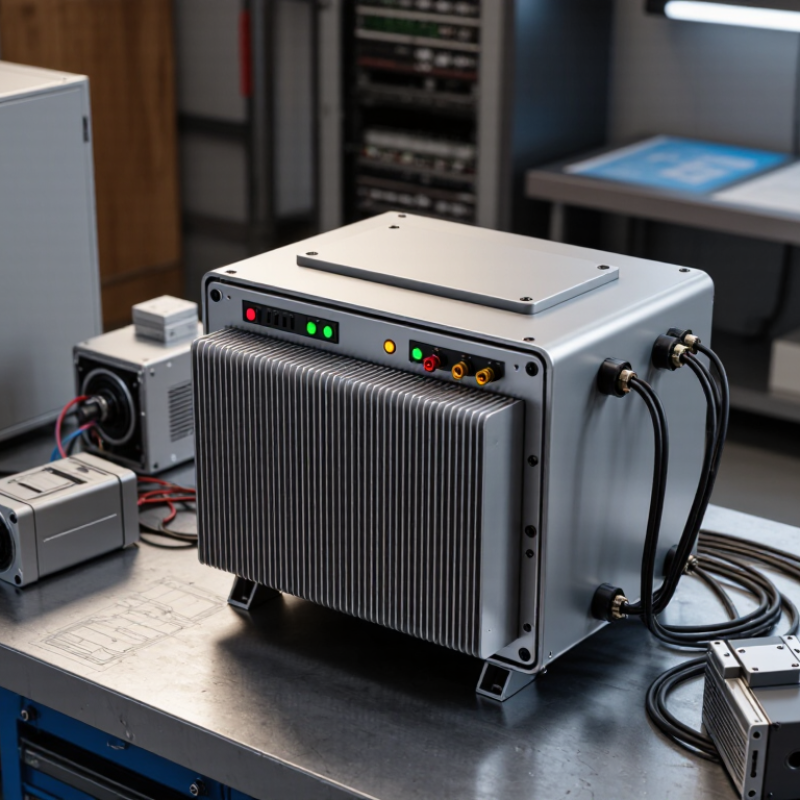
| Solid-state transformer (SST) system | Uses power-electronic conversion stages and usually a high-frequency isolation stage to transform voltage and actively manage power flow, voltage, or reactive power. | Switching frequency is topology-dependent, commonly in the kilohertz range or higher. | Modular systems range from tens of kilowatts to megawatt-class installations. | Typically about 95–98% for the complete conversion system in reported designs; results depend strongly on topology and operating point. | Combines voltage conversion with fast electronic control and potential AC/DC interfacing. | Applications needing controllable, multifunction power conversion, such as advanced distribution, traction, and charging infrastructure. |