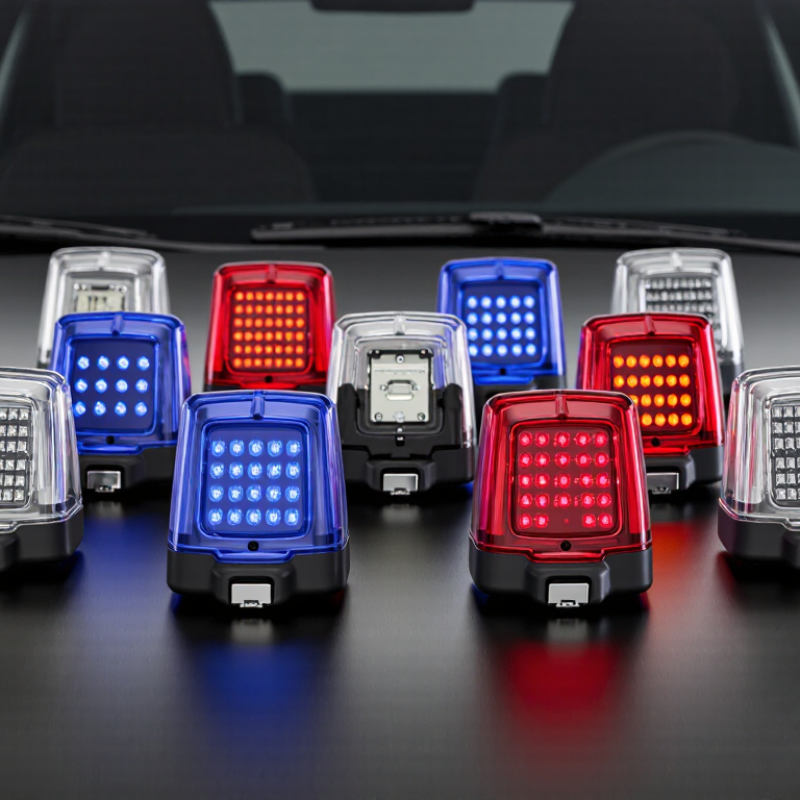
Choosing a police LED lightbar starts with the vehicle, not the product list. A compact patrol car may need a low-profile bar to preserve clearance under parking structures. Larger SUVs can support wider housings and stronger mounting points. Measure the roof before ordering. I have seen installations fail because the bar looked suitable, but the mounting feet missed the vehicle’s reinforced areas.
Duty requirements matter just as much. Urban patrol work often benefits from wide side visibility and controlled rear lighting. Highway operations may require stronger forward coverage and clear recognition at longer distances. Select flash patterns that support safe communication without creating unnecessary distraction. A brighter bar is not always better. Light output, lens design, beam direction, and nighttime glare must work together.
Check voltage compatibility, current draw, waterproofing, temperature ratings, and cable routing. Confirm that the vehicle’s electrical system can handle continuous operation with radios, cameras, and other equipment. For international buyers, review local approval marks, color restrictions, mounting rules, and electromagnetic compatibility requirements before shipment. Requirements vary widely. Do not rely on a supplier’s general statement alone.
Ask for photometric data, installation instructions, warranty terms, and service support. Test the bar on the actual vehicle, both in daylight and darkness. That step is often skipped. It should not be. Even a well-built lightbar can perform poorly when mounted too low, angled incorrectly, or surrounded by roof equipment. A careful fit protects visibility, reliability, and the vehicle’s working life.