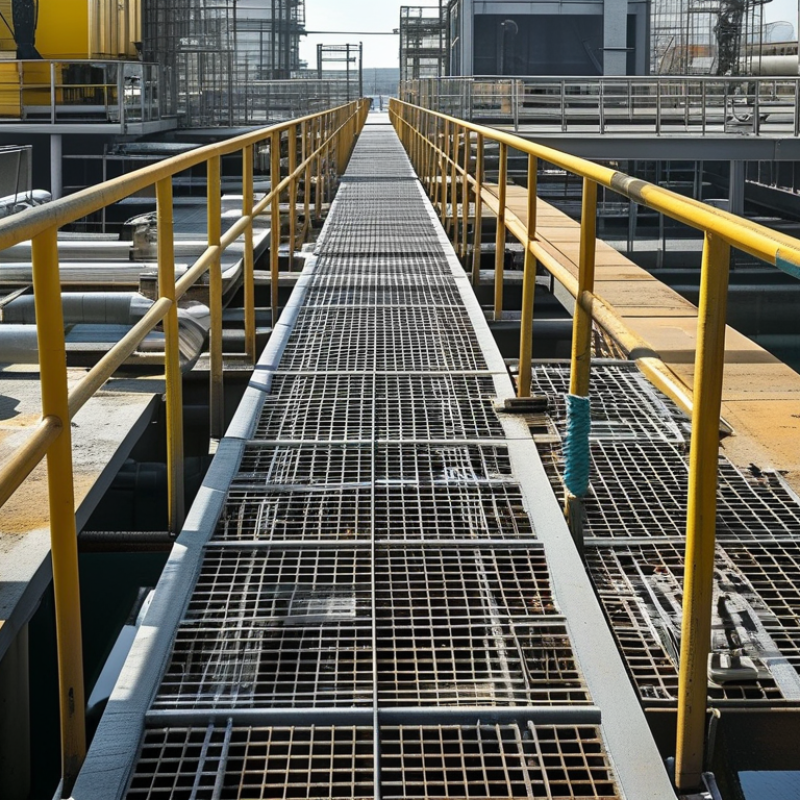
Catwalk steel grating is a modular walking surface made from load-bearing steel bars and crossbars. Open spaces between the bars reduce weight and allow water, dust, and light to pass through. Serrated surfaces can improve traction around oil, rain, or process residue.
The World Steel Association’s World Steel in Figures 2024 reports about 1.89 billion tonnes of crude steel production in 2023. This scale reflects steel’s continuing importance in industrial infrastructure. In factories, grating forms access walkways around tanks, conveyors, boilers, and maintenance platforms. It also supports stair treads, machine enclosures, drainage covers, and elevated service routes. Engineers usually check span, load, deflection, corrosion exposure, and connection details before installation. A practical mistake is treating “standard” panels as suitable for every load.
Architectural projects use catwalk grating differently. Designers place it on rooftop plant areas, façade maintenance paths, bridges, mezzanines, and exterior stairs. The transparent pattern can preserve daylight and visual openness better than solid plate. It may also reduce structural dead load, which matters during renovations. ISO 14122-2 provides internationally recognized guidance for permanent access platforms and walkways used with machinery. Local building and workplace requirements still need review.
Industrial durability depends on the environment. Hot-dip galvanizing is common for outdoor or humid locations, while specialized coatings may suit chemical exposure. The U.S. Bureau of Labor Statistics continues to identify falls as a significant workplace hazard, making guardrails, toe boards, safe gaps, and slip resistance essential. The grating itself is not a complete safety system. Even experienced teams can overlook drainage, cleaning access, or future equipment replacement.
Careful.