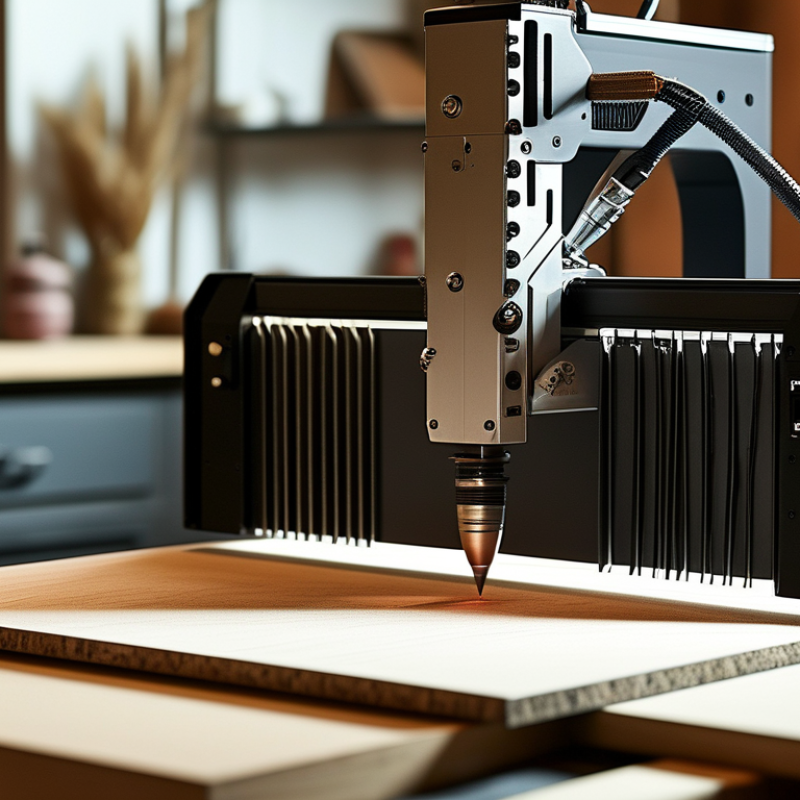
| Compact Diode Cutter A | 400 × 400 mm | Blue diode laser; approximately 5–10 W optical output | Wood, cardboard, paper, leather, and dark opaque acrylic | Usually supports common vector formats such as SVG, DXF, and PNG through desktop control software | Easy
Manual focusing and simple material presets | USB; some configurations also support Wi-Fi | Open-frame design requires an enclosure, active exhaust, eye protection, and continuous supervision | Beginners, classrooms, and small craft projects |
| Enclosed Diode Cutter B | 400 × 400 mm | Blue diode laser; approximately 10–20 W optical output | Wood, leather, paper, fabric, and dark acrylic; limited performance on transparent materials | Commonly works with SVG, DXF, JPG, PNG, and G-code-based workflows; verify the exact controller format | Easy to moderate
Enclosure and air assist reduce setup effort | USB and Wi-Fi are common; camera alignment may be available | Interlocked lid, exhaust port, air assist, and emergency stop are desirable safety features | Home workshops needing safer, cleaner operation |
| Compact CO₂ Cutter C | 300 × 200 mm | CO₂ laser tube; approximately 30–40 W rated power | Acrylic, wood, plywood, leather, rubber, paper, and some textiles | Often compatible with vector design software and raster engraving workflows; controller support should be checked before purchase | Moderate
Requires mirror alignment, cooling, and regular maintenance | USB or Ethernet; direct wireless control is less consistent across controllers | Fully enclosed cabinet, water cooling, exhaust fan, air assist, and lid interlock are essential | Users who prioritize acrylic cutting and stronger material capability |
| Dual-Source Cutter D | 400 × 400 mm | Diode laser plus infrared laser; typically optimized for different material colors and surfaces | Wood, leather, coated metal marking, paper, and dark acrylic | Usually accepts SVG, DXF, PNG, JPG, and common raster engraving files | Easy to moderate
Automatic focusing and material libraries are useful | USB, Wi-Fi, and mobile or desktop control may be available | Enclosure, lid sensor, exhaust, air filtration, and emergency stop should be included | Makers who need both cutting and metal-surface marking |
| Ultra-Compact Cutter E | 200 × 200 mm or smaller | Low-power diode laser; approximately 2–5 W optical output | Paper, cardboard, thin wood, cork, and leather | Basic vector and image import; advanced plug-ins may not be supported | Very easy
Minimal calibration and low material throughput | USB is standard; wireless functions depend on the controller | A protective cover and local exhaust are still required; never operate unattended | Portable use, small labels, prototypes, and occasional hobby work |
| Precision Diode Cutter F | 400 × 400 mm or 450 × 450 mm | Blue diode laser; approximately 20–40 W optical output | Thicker wood, plywood, leather, paper, and dark acrylic with multiple passes where appropriate | Broad compatibility with SVG, DXF, AI, PNG, JPG, and G-code workflows is typical | Moderate
Air assist, focus calibration, and test grids improve results | USB and Wi-Fi; some systems provide camera positioning | Enclosure, exhaust, air assist, flame detection, and emergency stop are strongly recommended | Frequent makers and small businesses needing a larger compact work area |