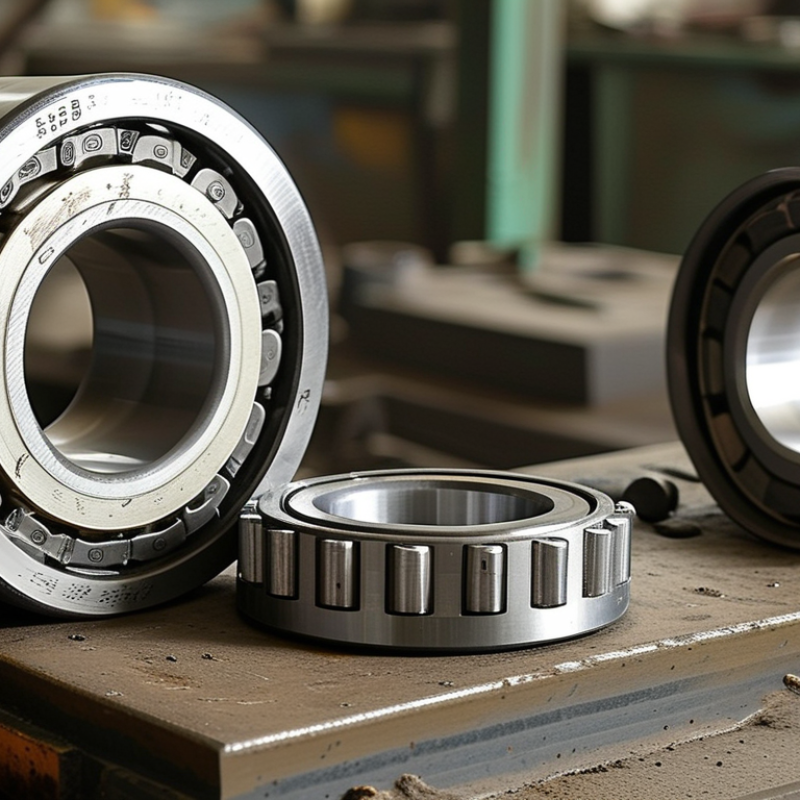
| Bearing designation | HB88509 or the exact application-specific equivalent | A similar-looking part number may have different dimensions, seals, or mounting geometry. | Match the complete part number with the vehicle or equipment service manual. |
| Inner bore diameter | Must match the propeller-shaft journal or mounting shaft diameter exactly; do not select by nominal bearing name alone. | An incorrect bore can cause looseness, shaft damage, or installation failure. | Measure the shaft with a calibrated vernier caliper or micrometer at several points. |
| Outer diameter and housing fit | Use the exact housing outside diameter and mounting profile specified for the application. | The housing controls alignment and transfers vibration loads to the vehicle frame or support bracket. | Compare the replacement part with the removed assembly and check mounting-hole position. |
| Bearing steel | Through-hardened high-carbon chromium bearing steel, commonly equivalent to AISI 52100 / 100Cr6. | This steel provides high rolling-contact fatigue resistance, hardness, and wear resistance when correctly heat-treated. | Request the material and heat-treatment specification or supplier certificate. |
| Seal material | Nitrile rubber (NBR) for ordinary automotive temperatures; fluoroelastomer (FKM) for higher heat or chemical exposure. | The seal protects grease from water and dirt while retaining lubricant inside the bearing. | Confirm the seal code, operating-temperature range, and compatibility with the required grease. |
| Seal arrangement | Prefer a double-sealed configuration for exposed propeller-shaft applications, unless the service design specifies otherwise. | Two seals improve resistance to road splash, dust, and lubricant loss. | Inspect the bearing for sealed sides, seal seating, and damage before installation. |
| Cage material | Pressed steel for general automotive use; machined or reinforced polymer designs may be used when specified by the application. | The cage maintains rolling-element spacing and must tolerate the expected speed, heat, and vibration. | Check the technical drawing and ensure the cage type matches the original design. |
| Rubber support compound | Oil-resistant elastomer with a hardness and deflection rate suitable for the original support system. | The rubber support absorbs vibration while keeping the propeller shaft correctly aligned. | Look for cracks, hardening, swelling, or excessive softness and compare the support geometry with the original. |
| Housing material | Stamped or formed steel for high structural strength; aluminum may be used where lower mass and corrosion resistance are specified. | The housing must resist distortion under shaft load, vibration, and vehicle movement. | Check for correct thickness, flat mounting surfaces, corrosion protection, and dimensional stability. |
| Dynamic load capacity | Select a bearing with a basic dynamic load rating equal to or greater than the original application requirement. | Dynamic load rating is used to assess rolling-fatigue life under rotating loads. | Compare the manufacturer’s published C rating with the service calculation or original specification. |
| Static load capacity | The basic static load rating should safely cover shock loads, stationary loads, and installation-related forces. | Insufficient static capacity can produce permanent dents in the raceways or rolling elements. | Review the published C0 rating, especially for heavy-duty or high-shock applications. |
| Internal clearance | Use the clearance class specified for the original assembly; standard clearance is common, while C3 is used only when operating conditions require it. | Clearance affects heat generation, noise, shaft fit, and operating life. | Confirm the clearance code on the bearing or packaging and follow the service specification. |
| Lubricant | Factory-filled, sealed-for-life grease compatible with the seal material and expected temperature range. | Correct grease reduces friction, wear, corrosion, and heat generation. | Do not mix greases unless compatibility is confirmed; replace contaminated or damaged sealed bearings. |
| Operating temperature | Choose seals and grease rated for the measured service temperature, including heat transferred from the exhaust and drivetrain. | Excessive heat can harden seals, degrade grease, and reduce bearing fatigue life. | Use temperature data from the application and compare it with the published operating range. |
| Rotational speed | The permissible speed must exceed the maximum propeller-shaft speed with an appropriate safety margin. | Overspeed can increase vibration, heat, seal wear, and the risk of premature failure. | Compare the bearing’s reference or limiting speed with the vehicle’s maximum shaft speed. |
| Alignment and mounting | The bearing must be centered on the shaft and installed with the support bracket in its original position. | Misalignment causes uneven loading, vibration, seal damage, and accelerated wear. | Inspect the shaft, bracket, fasteners, and mounting surfaces; follow the specified tightening procedure. |
| Environmental resistance | Use corrosion-protected metal surfaces and sealed construction for water, salt, dust, and road-debris exposure. | Road contamination can damage seals, corrode raceways, and contaminate the lubricant. | Check coating quality, seal condition, drainage exposure, and evidence of corrosion after installation. |