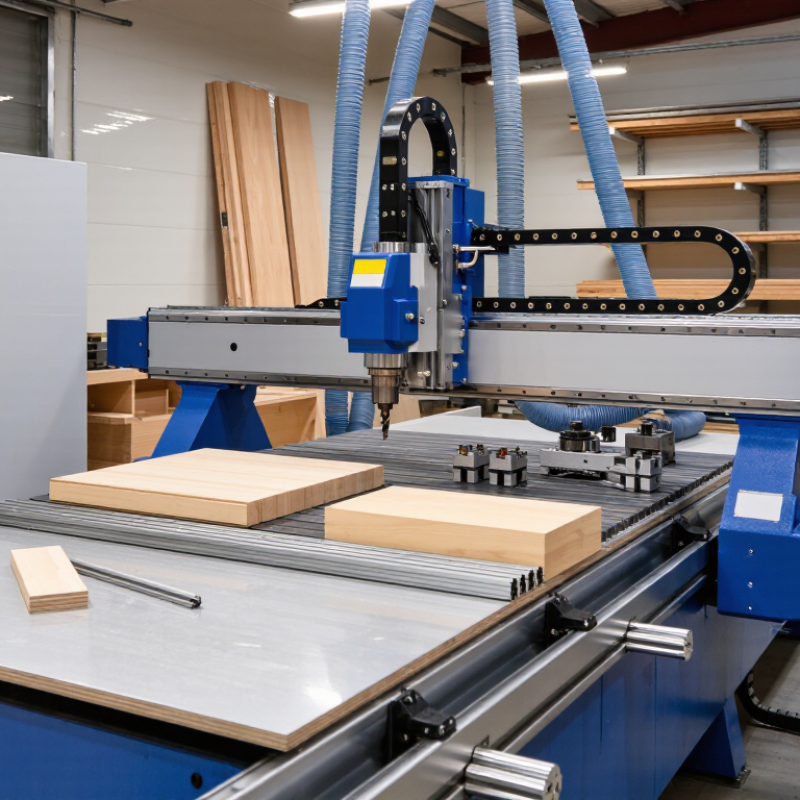
How to Choose a CNC Multifunctional Side Hole Drill?

Choosing a CNC Multifunctional Side Hole Drill is not simply a matter of comparing spindle speed or machine price. The right decision begins with the workpiece, hole pattern, material, and production rhythm. A cabinet panel, aluminum profile, and solid hardwood component create very different drilling demands. Each detail matters.

Industry educator Mike Lynch offers a practical principle: “The machine should serve the process, not replace it.” This idea is valuable when evaluating multifunctional equipment. A capable drill should improve accuracy, reduce repositioning, and support repeatable production. It should not force operators into complicated adjustments every hour.

Look closely at spindle power, drilling depth, tool compatibility, clamping stability, and axis movement. Ask whether the machine can maintain clean side holes without visible tear-out or unwanted vibration. Check the control system, programming method, dust collection, and access to technical support. These features often determine daily performance more than attractive specifications.

Measure the real workflow.

A machine may advertise impressive speed, yet slow loading or frequent manual alignment can erase those gains. I have also seen buyers focus heavily on automation while overlooking maintenance access. That is an easy mistake. Filters clog, tools wear, and sensors eventually need attention.

This guide explains how to choose a CNC Multifunctional Side Hole Drill with practical judgment. It considers production volume, material behavior, operator skill, workspace limits, and long-term reliability. No machine is perfect. The strongest choice is the one that fits the process honestly, including its weaknesses.

How to Choose a CNC Multifunctional Side Hole Drill?

What Is a CNC Multifunctional Side Hole Drill?

A CNC multifunctional side hole drill is a computer-controlled machine for drilling horizontal holes in panels, boards, and cabinet components. Unlike a single-function drill, it can often perform side boring, positioning, grooving, and limited routing in one setup. The spindle moves along programmed X, Y, and Z axes. Some models also use automatic clamps, tool changing, and barcode-based work instructions.

This machine matters when hole locations must remain consistent across repeated panels. A practical example is a cabinet side panel requiring dowel holes, connector holes, and a rear groove. The operator loads the panel, checks its reference edge, and starts the cycle. According to Grand View Research, the global CNC machine market was estimated at about 83.7 billion U.S. dollars in 2023. That growth reflects wider demand for programmable precision and shorter production cycles.

Automation is not automatically accuracy. The International Federation of Robotics reported 541,302 industrial robot installations worldwide in 2023, indicating stronger factory automation investment. Yet material thickness, dust, tool wear, and incorrect datum settings can still create visible errors. I have found that a fast spindle cannot repair poor clamping. A small offset may appear only after assembly. Therefore, choosing a CNC multifunctional side hole drill requires checking working dimensions, spindle power, positioning tolerance, dust extraction, software usability, and service documentation. The reports offer useful direction, but real sample testing remains necessary.

Which Materials and Hole Types Can It Process?

How to Choose a CNC Multifunctional Side Hole Drill?

Which Materials and Hole Types Can It Process?

A CNC multifunctional side hole drill is mainly selected by material behavior, not appearance. In cabinet production, it commonly processes solid wood, plywood, MDF, particleboard, and laminated panels. FAO’s Global Forest Products Facts and Figures 2023 reported global wood-based panel production above 400 million cubic meters. That scale reflects strong demand for repeatable panel machining.

These machines can produce horizontal through-holes, blind holes, dowel holes, cam-lock bores, and connector openings. Some configurations also handle angled drilling or threaded-insert preparation. However, tool geometry matters. A brad-point bit suits wood fibers, while carbide tooling performs better on abrasive laminates. Plastic panels require controlled feed rates to prevent melting. Aluminum is different. Only use it when the machine, spindle, coolant strategy, and tooling are designed for metal.

A practical test cut remains essential. Specifications can look convincing. They may still hide vibration problems. I have seen clean top surfaces paired with rough side exits. This often comes from poor clamping, excessive speed, or a dull bit. The ISO 230-2 standard provides a recognized method for checking CNC positioning accuracy, but it cannot replace production trials.

Tips: Match the tool to the material first. Test both blind and through-holes. Measure diameter, depth, edge quality, and cycle time. Leave room for imperfect panels.

How to Match Machine Specifications with Production Needs

A CNC multifunctional side hole drill should match your production reality, not a showroom specification. Start with hole diameter, material, depth, and the required angular range. Aluminum may need higher spindle speed, while steel demands stronger torque and rigid clamping. Check spindle power, tool capacity, axis travel, and positioning accuracy together.

According to ISO 230-2 testing principles, positioning accuracy and repeatability should be measured under defined conditions. Ask for both values, not only the advertised resolution. The 2024 IFR World Robotics report recorded 541,302 industrial robot installations worldwide in 2023. This growth shows why cycle time and automation interfaces matter. A drill with lower output can still work well for varied orders. However, it may become a bottleneck in high-volume production. I have seen this mistake in real workshops.

Tips: Calculate takt time before choosing spindle speed. Compare it with loading, drilling, tool-change, and inspection time. Reserve at least 15% extra capacity for material variation and future orders. Check coolant flow, chip evacuation, and fixture clearance around the side hole. The U.S. Department of Energy notes that compressed air can represent about 10% of industrial electricity use, so inspect air demand carefully. A compact machine with modest consumption may reduce operating cost. Yet, this estimate varies by plant conditions. Verify it with a power meter and a short production trial.

What Features Improve Drilling Accuracy and Efficiency?

How to Choose a CNC Multifunctional Side Hole Drill?

What Features Improve Drilling Accuracy and Efficiency?

A reliable machine begins with a rigid frame and stable side-drilling spindle. Vibration can widen a hole or leave rough edges, especially in thick panels. Look for linear guides with low play and a servo-driven feed system. The feed should slow near the surface, then maintain steady pressure through the board. That control reduces breakout and protects small drills. A quick tool-change system also saves time between different hole sizes. Small gains matter during long production runs.

Accuracy improves further when the machine supports automatic positioning and workpiece sensing. A laser or probe can check the panel edge before drilling. This helps compensate for slight length differences and misplaced boards. Clear digital parameters are valuable because operators can repeat depth, spacing, and speed without guessing. Dust extraction near the drilling point keeps the reference surface visible. It also reduces debris inside moving parts. In practical testing, I would inspect the first ten panels, not only the first one.

Efficiency depends on workflow, not speed alone. A good control system should store common patterns and show alarms in plain language. Easy access to clamps and a visible drilling area reduce setup errors. Yet no feature removes every risk. A perfect setting rarely survives changes in wood density or humidity. I would leave room for manual correction and record failed settings honestly. That habit often improves results more than chasing maximum spindle speed.

How to Choose a CNC Multifunctional Side Hole Drill?

Features that improve drilling accuracy and production efficiency

The relative engineering index compares key machine features on a 0–100 scale. Linear guide rigidity, spindle runout control, automatic workpiece positioning, and closed-loop servo feedback mainly improve hole accuracy. Higher spindle speed, automatic tool changing, and optimized chip evacuation help reduce cycle time and increase production efficiency.

How to Evaluate Safety, Maintenance, and Overall Value

How to Choose a CNC Multifunctional Side Hole Drill

Safety, maintenance, and total value deserve more attention than a low purchase price. In 2023, the U.S. Bureau of Labor Statistics recorded 5,283 fatal workplace injuries. That figure covers all industries, but it reinforces a practical point: guarding cannot be treated as decoration. Check enclosed cutting zones, reliable interlocks, visible emergency stops, and safe chip removal. ISO 12100 recommends identifying hazards throughout a machine’s life cycle. Ask for documented risk assessments, not verbal assurances. A polished panel can still hide weak protection.

Maintenance determines whether the drill remains productive after installation. Inspect spindle runout, collets, clamps, sensors, lubrication points, and dust extraction during a live demonstration. Request service intervals and realistic replacement costs. The U.S. Department of Energy’s Operations and Maintenance Best Practices Guide links preventive maintenance with improved reliability and reduced operating costs. However, maintenance schedules are not magic. Poor training, contaminated air, or delayed calibration can defeat them quickly. Track downtime, repair response, energy use, and tool life for several months. These figures reveal value better than brochure claims. Deloitte’s 2023 Global Smart Manufacturing Survey reported that 86% of surveyed leaders viewed smart manufacturing as important for competitiveness, but connectivity only helps when operators can use it.

Tips: Test every safety function. Read the alarm history. Compare total ownership costs. Keep a simple maintenance log. Ask who supplies training, parts, and technical support. Leave room for doubt.

How to Choose a CNC Multifunctional Side Hole Drill? - How to Evaluate Safety, Maintenance, and Overall Value
Evaluation Dimension Entry-Level Configuration Production Configuration Heavy-Duty Configuration
Recommended Application Prototype work, small batches, custom furniture, and occasional side-hole drilling. Daily cabinet, panel-furniture, and batch-production work with frequent job changes. High-volume manufacturing, multiple shifts, large workpieces, and continuous production.
Typical Horizontal Spindle Arrangement One drilling unit with manual or semi-automatic tool adjustment. One or two independently controlled drilling units with CNC positioning. Multiple independently controlled drilling units, often combined with routing or milling functions.
Typical Spindle Motor Power Approximately 2.2–4 kW total, suitable for standard wood-based panels. Approximately 4–7.5 kW total, providing better productivity and cutting reserve. Approximately 7.5–11 kW or more, intended for demanding duty cycles and harder materials.
Typical Drilling Range Approximately 3–15 mm hole diameter, depending on the tool system. Approximately 3–20 mm hole diameter with broader tooling compatibility. Approximately 3–30 mm hole diameter or larger when equipped with suitable tooling.
Positioning Repeatability Typically around ±0.05 mm under stable operating conditions. Typically around ±0.03 mm with a calibrated CNC positioning system. Typically around ±0.02 mm when the machine structure, drive system, and calibration are properly maintained.
Workpiece Flexibility Best for standard panel sizes and a limited range of thicknesses. Suitable for mixed panel sizes, common cabinet components, and frequent product changes. Suitable for wider size ranges, thicker panels, heavier components, and complex drilling patterns.
Dust Extraction Requirement Usually requires approximately 2,000–3,000 m³/h of effective extraction capacity. Usually requires approximately 3,000–4,500 m³/h, depending on the number of active tools. Usually requires approximately 4,500–7,000 m³/h or more for several cutting and drilling operations.
Safety Guarding Basic to Good
Should include fixed guards, an accessible emergency-stop button, and protected moving parts.
Good
Prefer a full enclosure, monitored access doors, emergency stops, and controlled restart protection.
Excellent
Prefer full perimeter guarding, coded interlocks, safety-rated monitoring, controlled access, and clear status indicators.
Safety Standards to Verify Verify conformity with applicable local machinery regulations and electrical safety requirements. Check machine risk assessment, emergency-stop performance, guarding, electrical safety, and safety-control documentation. Request documented compliance with applicable requirements such as ISO 12100, ISO 13849-1, and IEC 60204-1, where relevant to the installation region.
Emergency-Stop and Restart Protection Emergency stop should remove hazardous motion and require a deliberate manual reset. Emergency stop should stop hazardous movement and prevent automatic restart after power recovery or guard opening. Multiple emergency stops, safety relays or safety PLC functions, and controlled restart logic are recommended for larger systems.
Compressed-Air Requirement Typically 0.6–0.8 MPa clean, dry compressed air; consumption is generally lower. Typically 0.6–0.8 MPa with sufficient flow for clamps, tool changes, and pneumatic actuators. Typically 0.6–0.8 MPa with a higher flow reserve and a dedicated air-treatment system.
Daily Maintenance Clean chips and dust, inspect drills, check clamps, and verify emergency-stop operation. Complete daily cleaning, inspect sensors and cables, check lubrication points, and examine spindle noise or vibration. Perform documented cleaning and inspection routines, including guarding, sensors, extraction ducts, tool holders, and pneumatic systems.
Periodic Maintenance Tool inspection and lubrication according to the operation manual; check alignment after relocation. Regularly inspect linear guides, ball screws, belts, spindle bearings, clamps, and calibration accuracy. Use a preventive-maintenance schedule based on operating hours, including alignment verification, electrical cabinet inspection, and condition monitoring.
Operator Skill Requirement Basic CNC and woodworking safety training is required. Operators should understand CNC programming, tool selection, workholding, dust control, and fault recovery. Requires trained operators and maintenance personnel familiar with CNC controls, electrical systems, pneumatics, tooling, and risk-control procedures.
Changeover and Programming Manual setup is acceptable but may increase changeover time. Offline programming, job libraries, barcode input, and automatic parameter recall can improve productivity. Advanced production management, networked job transfer, barcode or nesting integration, and automated tool management are valuable.
Expected Productivity Level Basic Lower initial cost, but more manual handling and longer setup time. Good Balanced throughput, flexibility, and operating cost for regular production. Excellent Highest throughput potential when utilization, staffing, and extraction capacity are sufficient.
Initial Investment Lower Lower purchase and installation cost, but fewer automation features. Medium Higher initial investment balanced by improved productivity and repeatability. Higher Highest purchase, installation, tooling, extraction, and training requirements.
Operating Cost Factors Lower power demand, but labor and setup time can represent a larger share of total cost. Balanced energy, labor, tooling, maintenance, and downtime costs. Higher energy, tooling, extraction, and maintenance costs, offset by greater output when fully utilized.
Serviceability and Spare Parts Choose accessible components, standard bearings, clear wiring labels, and readily available consumables. Prioritize documented spare-parts lists, remote diagnostics, service response, and replaceable wear components. Require a preventive-service plan, critical spare-parts inventory, technical support, and documented recovery procedures.
Overall Value Assessment Best value when workload is intermittent and the buyer prioritizes low entry cost over maximum throughput. Usually the best balance for regular workshops because safety, flexibility, productivity, and lifecycle cost are balanced. Best value only when utilization is high enough to justify the larger investment and maintenance requirements.
Recommended Purchase Decision Select only after confirming that manual setup, production volume, and safety provisions meet workplace requirements. A strong general-purpose choice for manufacturers seeking reliable daily operation and manageable total ownership cost. Select when documented production demand, skilled staff, extraction infrastructure, and preventive maintenance resources are available.
The figures shown are typical evaluation ranges rather than specifications for a particular machine. Actual spindle power, accuracy, drilling capacity, air consumption, extraction flow, safety functions, and maintenance intervals must be confirmed in the manufacturer’s technical documentation and verified against applicable local regulations before purchase.
Top