| Portable Tool Box | 450–650 × 250–350 × 250–350 mm | 3–8 kg | 15–30 kg | Carry handle; no wheels; easy to move between vehicles and work areas. | 30–70 L; suitable for hand tools, fasteners, and compact diagnostic equipment. | Should have a balanced handle, rounded edges, and a removable tray to reduce lifting strain. | Works well in small workshops, service vans, construction sites, and locations without level flooring. | Mobile technicians and basic maintenance kits. | High Mobility |
| Rolling Tool Cart | 700–900 × 400–550 × 850–1050 mm | 25–55 kg | 150–300 kg | Four casters, usually two fixed and two swivel; typically includes a side handle and wheel brakes. | 100–220 L; multiple drawers and an open lower shelf provide flexible access. | Top working surface is generally comfortable for standing tasks; drawer height should keep frequently used tools between waist and shoulder level. | Best on smooth, hard floors with turning clearance of approximately 1.2 m or more. | General vehicle repair, assembly work, and shared workshop use. | Balanced Choice |
| Heavy-Duty Roller Cabinet | 900–1400 × 500–750 × 900–1200 mm | 70–180 kg | 500–1000 kg | Large industrial casters; strong maneuverability when unloaded, but difficult to reposition after full loading. | 250–700 L; deep drawers can hold power tools, impact sockets, and larger service equipment. | Full-extension drawers and load-rated slides improve access; heavy drawers should include secure latching and anti-tip protection. | Requires a stable floor, adequate door width, and dedicated parking space; check elevator and delivery access. | Professional workshops, fleet maintenance, and high-volume service operations. | High Capacity |
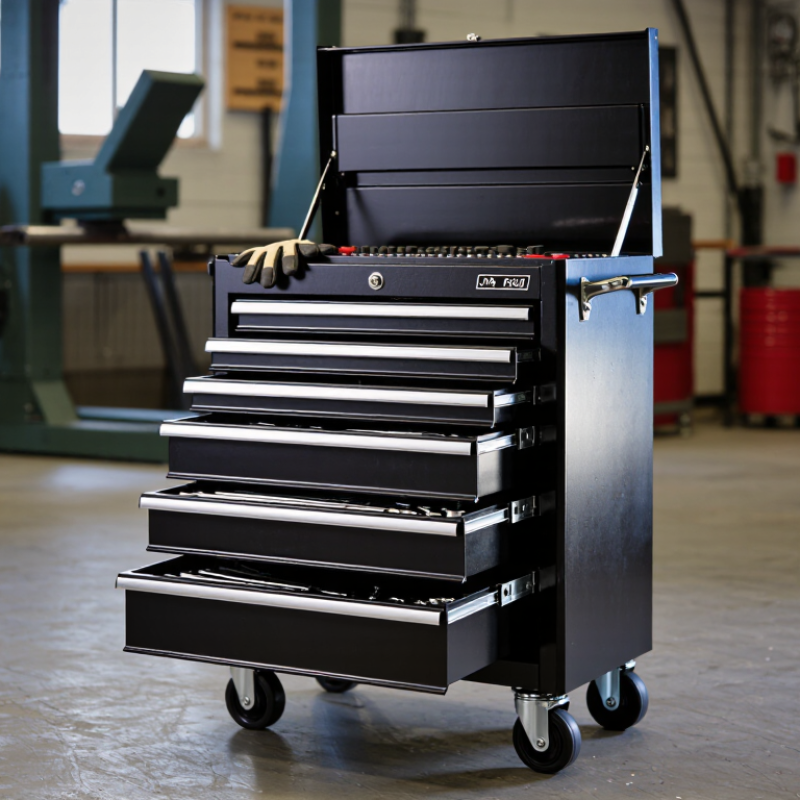
| Top Chest with Roller Cabinet | 900–1400 × 500–750 × 1400–1900 mm | 110–260 kg | 600–1200 kg | Mobile lower cabinet with a stationary upper chest; moving the complete unit requires a strong, level floor. | 350–900 L; combines shallow-access drawers with deep lower storage. | Upper drawers improve visibility, but the highest compartments may exceed comfortable reach for shorter users. | Suitable for spacious workshops with ceiling clearance of at least 2.1 m and permanent tool-storage zones. | Mechanics who need extensive tool organization and a dedicated workstation. | Maximum Storage |
| Service Van Tool Cabinet | 800–1200 × 350–550 × 800–1200 mm | 45–120 kg | 250–600 kg | Normally mounted or anchored inside a vehicle; mobility depends on the vehicle rather than casters. | 180–450 L; optimized for organized drawers and secure storage during transport. | Drawer pull-out length, anti-slip liners, and positive latches help prevent movement and repetitive bending. | Must match vehicle width, door opening, mounting points, payload limit, and available aisle space. | Field service, roadside repair, utilities, and mobile maintenance teams. | Vehicle Optimized |
| Wall-Mounted Tool Cabinet | 600–1200 × 200–350 × 500–900 mm | 20–70 kg | 80–250 kg | Not designed for movement; fixed installation preserves floor space. | 70–250 L; best for frequently used hand tools and lightweight supplies. | Installation height should keep common tools within the user’s comfortable reach and avoid excessive overhead work. | Appropriate for narrow workshops, garages, and areas where floor space is limited; wall structure must support the combined load. | Small workspaces and supplementary storage above benches. | Space Saving |
| Under-Bench Tool Cabinet | 500–1000 × 450–650 × 600–850 mm | 35–100 kg | 200–500 kg | May use casters, leveling feet, or fixed mounting; movement is limited when positioned under a bench. | 120–350 L; efficient for drawers, socket sets, and medium-sized equipment. | Provides a stable workbench arrangement, but lower drawers require bending or kneeling during access. | Fits below compatible benches; allow enough legroom, drawer clearance, and service access. | Workstations requiring a compact, integrated storage solution. | Efficient Layout |
| Modular Stackable System | 400–700 × 250–500 × 300–1000 mm | 8–35 kg per module | 50–180 kg per assembled stack | Usually includes detachable wheels or a trolley base; modules can be separated for stairs and transport. | 60–250 L; capacity can be expanded by adding compatible modules. | Light individual modules reduce lifting effort, but tall stacks should be secured to prevent tipping. | Suitable for changing work locations, limited storage areas, and mixed indoor/outdoor applications. | Technicians who need flexible organization and transport in stages. | Flexible Mobility |