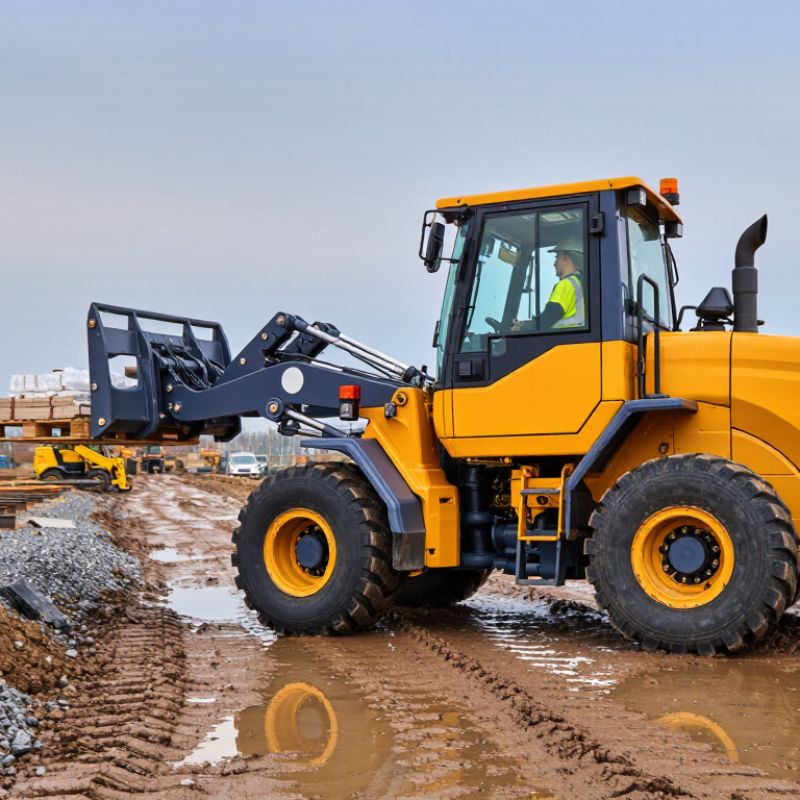
| Compact rough-terrain forklift | 2,000–5,000 lb
(907–2,268 kg) | 8–14 ft
(2.4–4.3 m) | Tight outdoor construction areas, landscaping projects, farms, and material movement over firm gravel or packed soil. | Load backrest Fork locking pins Wide-tread tires Visible load chart
Verify the rated capacity at the actual lift height and load center. | Seat belt or restraint Overhead guard Horn Backup alarm or warning device | Confirm operator training and evaluation under 29 CFR 1910.178(l); inspect the data plate, forks, tires, brakes, steering, horn, and restraint system before use. |
| Standard rough-terrain forklift | 5,000–10,000 lb
(2,268–4,536 kg) | 10–20 ft
(3.0–6.1 m) | General construction, lumber handling, utility work, agricultural yards, and uneven outdoor surfaces. | High-clearance chassis Self-leveling or tilt control Load backrest Pneumatic tires
Confirm the machine remains within its rated capacity on slopes and uneven ground. | ROPS/FOPS where applicable Seat restraint Mirrors or camera Work lights | Apply the requirements of 29 CFR 1910.178 for powered industrial trucks and use additional construction-site controls under 29 CFR 1926.602 where applicable. |
| Heavy-duty rough-terrain forklift | 10,000–20,000 lb
(4,536–9,072 kg) | 10–18 ft
(3.0–5.5 m) | Heavy building materials, steel products, concrete components, industrial yards, and large job sites. | High-capacity forks Hydraulic load holding Tire-load compatibility Counterweight protection
Check the load center, attachment weight, ground bearing capacity, and tire condition before lifting. | Enclosed operator area Seat restraint Enhanced visibility system Fire extinguisher mounting provision | A competent person should verify the travel route, overhead clearance, surface strength, pedestrian separation, and lift plan before operation. |
| Telehandler with fork carriage | 5,000–12,000 lb
(2,268–5,443 kg) | 20–55 ft
(6.1–16.8 m) | Elevated placement of pallets, roof materials, framing components, and loads across rough or sloped terrain. | Boom load chart Attachment lock Frame leveling Stabilizers where fitted
Use the chart for the exact boom angle, reach, attachment, and load center; do not rely only on the maximum capacity. | Operator restraint ROPS/FOPS Boom-angle and height indicators Rear visibility aids | Keep people clear of the suspended or elevated load. Verify whether the planned task falls under applicable construction equipment, lifting, or personnel-platform requirements. |
| Four-wheel-drive forklift for steep or soft ground | 4,000–10,000 lb
(1,814–4,536 kg) | 8–18 ft
(2.4–5.5 m) | Mud, sand, loose aggregate, rutted access roads, and outdoor work areas where traction and ground clearance are critical. | 4WD traction Differential lock Low center of gravity Slope-rated load chart
Inspect soil stability and operate with the load upgrade or downgrade as required by the operating instructions. | Seat restraint ROPS/FOPS High-visibility lighting Emergency stopping system | Establish a site slope limit and travel direction. OSHA requires loads to be kept upgrade when traveling on grades that exceed the stated threshold in the applicable operating rule. |
| Forklift with removable attachment | 2,000–10,000 lb
(907–4,536 kg), depending on attachment | Varies by attachment and mast | Pallets, bins, pipe, drums, clamps, hooks, and other loads requiring specialized handling. | Attachment data plate Positive locking mechanism Reduced-capacity marking Hydraulic hose protection
Recalculate capacity when an attachment changes weight, load center, or visibility. | Guarded controls Clear sight lines Seat restraint Audible warning device | Attachments must be approved for the truck and used according to the attachment and truck instructions. Train operators on the changed capacity and handling characteristics. |
| Diesel rough-terrain forklift for long outdoor shifts | 5,000–12,000 lb
(2,268–5,443 kg) | 10–20 ft
(3.0–6.1 m) | Remote construction sites, aggregate yards, farms, and outdoor operations with limited charging infrastructure. | Pneumatic tires Cooling-system protection Load backrest Brake performance monitor | ROPS/FOPS Seat restraint Backup warning device Work lights | Control exhaust exposure, refueling, hot surfaces, and fire risks. Do not use internal-combustion equipment in enclosed areas unless ventilation and emissions controls are suitable. |
| Electric rough-terrain forklift | 3,000–8,000 lb
(1,361–3,629 kg) | 8–16 ft
(2.4–4.9 m) | Noise-sensitive outdoor sites, indoor-outdoor transitions, campuses, warehouses, and projects requiring low local emissions. | Battery restraint Traction control Load chart Water-resistant electrical enclosure | Seat restraint Overhead guard Low-noise warning device Battery-status display | Verify battery charging and storage controls, charging ventilation, electrical protection, wet-ground limitations, and safe pedestrian notification methods. |
| Universal pre-purchase safety gate | Must exceed the heaviest planned load at its actual load center | Must meet the highest required placement height with a safety margin | Applies to every off-road forklift selection before purchase, rental, or deployment. | ✓ Confirm data plate and load chart
✓ Inspect forks, mast, chains, hydraulics, tires, brakes, steering, and guards
✓ Verify attachment compatibility and capacity derating | ✓ Seat belt or operator restraint
✓ Overhead guard and applicable ROPS/FOPS protection
✓ Horn, warning devices, lights, mirrors or camera | OSHA identifies approximately 35,000 serious forklift injuries annually in its commonly cited safety information. Use documented operator training, daily inspections, maintenance records, traffic controls, pedestrian separation, and a site-specific risk assessment to reduce exposure. |