| Travel Humidor | Approximately 5–20 cigars | Rigid plastic, aluminum, carbon fiber-style composite, or foam-lined shell | Good for short trips when the seal is intact; limited internal volume makes humidity changes faster | Check the compression seal, hinge strength, water resistance, and impact protection | Excellent | Best for transportation. Compact and durable, but not intended for long-term storage or large collections. |
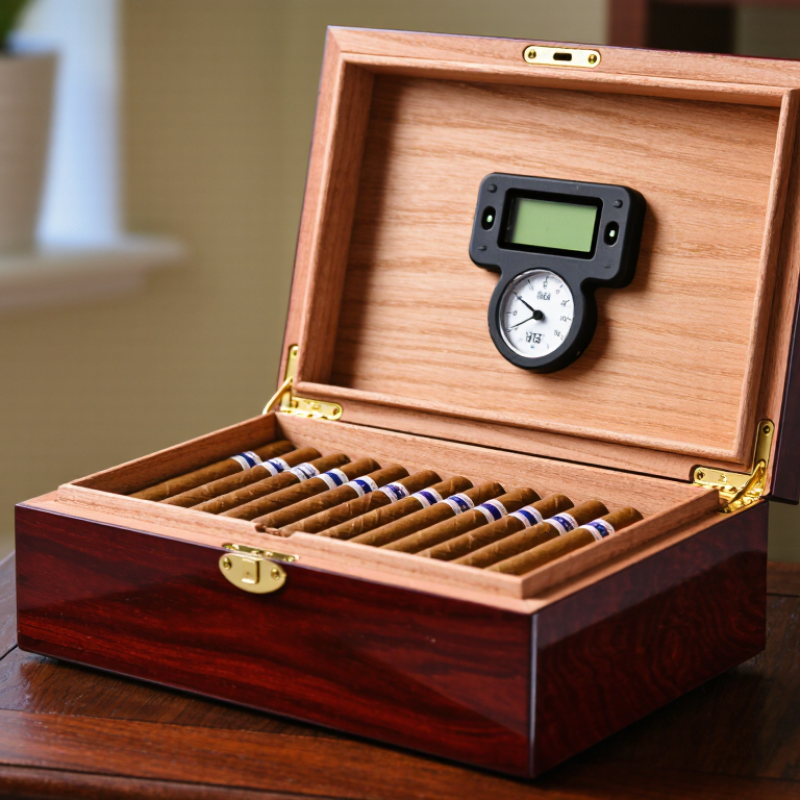
| Desktop Humidor | Approximately 25–150 cigars | Wood exterior with Spanish cedar, American cedar, or another suitable wood lining | Generally good when properly seasoned and filled; performance depends heavily on seal quality and room conditions | Look for even panel joints, a tight lid, stable hinges, a flat base, and a continuous interior lining | Limited | Best general-purpose choice for home use. Offers a balance of capacity, cost, and ease of maintenance. |
| Glass-Top Humidor | Approximately 25–100 cigars | Wood body with a glass viewing panel and a wood-lined interior | Can be stable, but the glass panel adds another potential sealing point and allows light exposure | Inspect the glass-to-frame gasket, lid alignment, corner joints, and resistance to condensation | Limited | Useful when display visibility matters. Keep away from direct sunlight and strong temperature fluctuations. |
| Chest Humidor | Approximately 50–300 cigars | Thick wood panels, commonly with a cedar-lined interior and removable trays | Usually better thermal and humidity buffering than a small box because of greater mass and volume | Prioritize thick panels, a weighty lid, a reliable seal, strong hinges, and removable trays for airflow | Low | Best for a growing collection. Requires more space and may need longer seasoning before use. |
| Cabinet Humidor | Approximately 300–2,000+ cigars | Wood cabinet, cedar shelves or trays, gasketed doors, and manual or electronic humidification | High potential stability when properly filled, sealed, and maintained; empty cabinets can be harder to stabilize | Check door compression, shelf airflow, vertical alignment, insulation, drain protection, and humidifier access | Very low | Best for large collections and organized storage. Requires floor space, monitoring, and more careful climate management. |
| Acrylic Humidor | Approximately 10–100 cigars | Clear acrylic or polycarbonate with a gasketed lid and removable humidity device | Often predictable because the enclosure is non-porous; humidity depends mainly on the seal and humidification system | Check lid flatness, gasket continuity, latch pressure, plastic thickness, and resistance to cracking | Good | Easy to inspect and clean. It provides less traditional wood buffering and should be protected from heat and direct light. |
| Electric Humidor | Approximately 20–400+ cigars | Insulated cabinet or metal enclosure, shelves, fan, sensor, and powered humidification system | Can provide precise control, but sensor calibration, airflow, water quality, and power reliability are important | Look for a replaceable sensor, quiet fan, even airflow, sealed door, removable water reservoir, and clear controls | Low | Best for users who want automated control. It adds electrical maintenance, noise, energy use, and component failure risk. |
| Spanish Cedar Lining | Material choice rather than a capacity type | Spanish cedar veneer, panels, shelves, or trays | Absorbs and releases moisture gradually; it can support stable conditions when the wood is properly prepared | Check that the lining is firmly fitted, free from excessive gaps, and not coated with a moisture-blocking finish | Not applicable | Traditional interior material with a distinct aroma. It should be clean, dry, and free from visible mold or excessive resin. |
| Solid Wood Exterior | Material choice rather than a capacity type | Solid hardwood or softwood panels with a separate interior lining | Durable and attractive, but wood movement from seasonal humidity can affect lid alignment and sealing | Look for straight panels, stable joinery, smooth edges, and allowance for natural wood movement | Varies | Provides a substantial appearance and good durability. Quality depends more on joinery and sealing than on thickness alone. |
| Wood Veneer Construction | Material choice rather than a capacity type | Thin decorative wood veneer over plywood, medium-density fiberboard, or another stable core | Can perform well when the interior is properly lined and the box is well sealed | Inspect veneer adhesion, core stability, edge banding, corner joints, and interior lining coverage | Varies | Often lighter and more dimensionally stable than thick solid wood. Poor edge sealing or weak cores can reduce service life. |
| Airtight Construction | Construction feature rather than a capacity type | Gasket, compression fit, aligned lid or door, and sealed joints | Usually more important than exterior appearance; a poor seal causes rapid humidity loss and frequent refilling | Perform the paper test: close a sheet of paper in several points around the lid or door and check for consistent resistance | Not applicable | Essential for every humidor. A tight seal should be paired with controlled humidification rather than excessive moisture. |
| Removable Trays and Dividers | Useful in medium and large humidors | Usually cedar, hardwood, plastic, or metal supports | Improves air circulation when gaps are provided; tightly packed trays can create uneven humidity zones | Check for ventilation gaps, smooth edges, stable supports, easy removal, and enough clearance from the lid | Not applicable | Recommended for organized storage. Avoid blocking airflow around cigars or placing trays directly against sealed walls. |
| Digital Hygrometer | Accessory for any humidor size | Electronic sensor with a display or remote reading function | Provides convenient monitoring, but readings can drift and should be checked periodically | Choose a unit with a stated accuracy specification and test it using a salt-test method or a calibrated reference | Excellent | Recommended for routine monitoring. Place the sensor where it does not touch the humidifier or sit directly above wet material. |