How to Choose a Conical Burr Hand Grinder?
Choosing a Conical Burr Hand Grinder is less about finding the most expensive model and more about matching its design to your coffee routine. A grinder that feels steady in the hand, adjusts clearly, and produces a reasonably even grind can make brewing more repeatable. Small details matter. Check the burr material, adjustment range, handle length, and how easily the grounds container comes off. These features affect daily use, not just the product description.
Think about how you brew before comparing models. Espresso usually needs fine, precise adjustments, while pour-over and French press call for different grind ranges. Some hand grinders handle several methods well, but switching settings may take patience. Notice how many clicks separate adjustments, and whether the setting can be returned reliably. A click is not always a universal measurement; burr design and calibration differ between grinders.
Comfort matters, too. A narrow body may be easy to pack, yet harder to hold while grinding dense, light-roast beans. Try to find trustworthy reviews that describe real use, including grind time and cleaning. Specs help, but they do not tell the whole story. Even good grinders can feel awkward at first. That is worth admitting. This guide will help you weigh grind consistency, adjustment control, portability, durability, and price, so you can choose a Conical Burr Hand Grinder that suits your counter, travel bag, and brewing habits. A practical fit beats an impressive feature list.
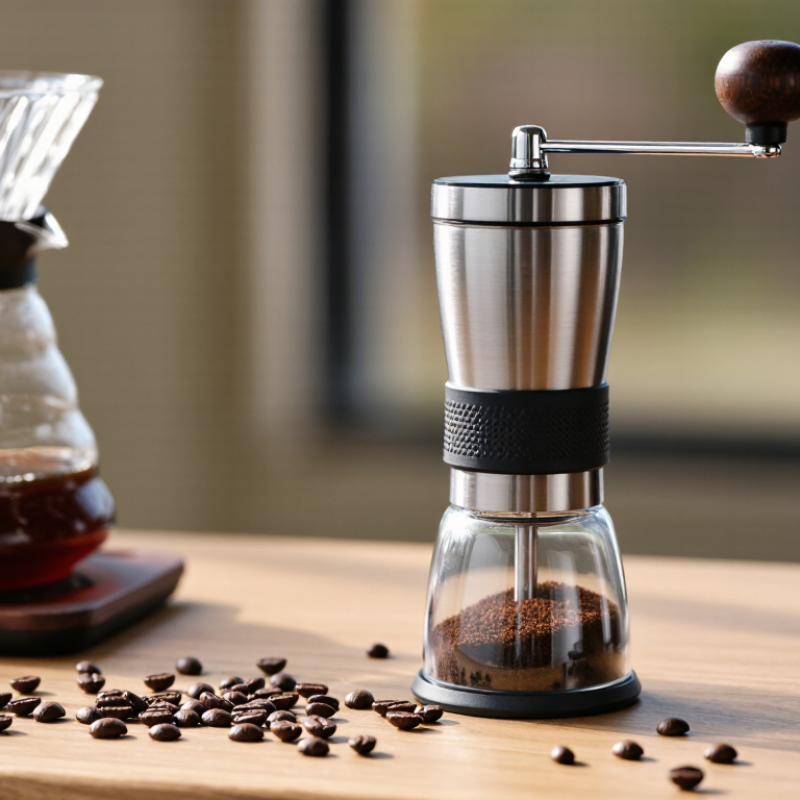
Identify Your Brewing Methods and Grind Requirements
Your brewing method sets the grind range you need. For pour-over, water passes through the coffee bed relatively quickly, so a medium grind often gives a balanced starting point. Grounds should feel like coarse sand, not powder. If the cup tastes thin or sour, try a finer setting. If it tastes harsh or dry, go slightly coarser.
Espresso needs a much finer grind and small, repeatable adjustments. A hand grinder with stable burr alignment and clear settings can make those changes easier to track. French press usually works better with a coarse grind, while AeroPress recipes vary widely. That variation matters. One setting may suit a short, concentrated brew but not a longer steep. Test one change at a time, and write down the setting, dose, and brew time. It is easy to forget.
Think about how much coffee you make, too. Grinding a single cup by hand is manageable; preparing several servings can feel slow. A comfortable handle and steady grip help, especially with dense beans. I would not assume the finest adjustment range is automatically best. If you mostly brew pour-over, smooth, consistent grinding may matter more than espresso-level precision. Taste is the check: note what changed, then adjust with care.
How to Choose a Conical Burr Hand Grinder? - Identify Your Brewing Methods and Grind Requirements
| Brewing method | Typical grind range | Adjustment needs | Useful grinder features | Selection notes |
| Espresso | Fine; dial-in may require small changes | Very fine, repeatable adjustment steps | Stable burr alignment, low play, clear setting references | Check that the grinder is explicitly suitable for espresso. Some hand grinders have adjustment steps too large for convenient espresso dialing-in. |
| Moka pot | Fine to medium-fine | Moderately precise adjustment | Consistent grinding and an easy-to-read setting scale | A grind slightly coarser than espresso is a common starting point; adjust for the brewer and taste. |
| Pour-over | Medium to medium-fine | Small, repeatable changes help tune brew time and taste | Consistent particle size and secure adjustment mechanism | Filter shape, pouring technique, dose, and recipe affect the best setting. Look for a grinder that is easy to adjust between brews. |
| Drip coffee maker | Medium | Moderate adjustment range is generally sufficient | Useful dose capacity and straightforward setting recall | Choose capacity based on how much coffee you make. A coarser or finer setting may be needed for a particular brewer or brew size. |
| AeroPress | Fine to coarse, depending on recipe | A broad, easy-to-use range | Simple setting changes and compact portability | Recipes vary considerably in steep time and grind size, so a versatile adjustment range is more useful than one fixed setting. |
| French press or cold brew | Medium-coarse to coarse | Reliable coarse settings; a wide range is helpful for other brew styles | Stable burrs and consistent grinding at coarser settings | Coarser grounds are commonly used for immersion brewing. Brewing time and recipe still influence the preferred grind. |
Quick checklist: Match the grinder’s adjustment range to your main brewing method, consider whether you need to switch between methods, and check its dose capacity, handle comfort, portability, and ease of cleaning. Grind ranges are starting points rather than fixed rules; adjust to taste and brew performance.
Evaluate Handle Comfort, Capacity, and Build Quality
When choosing a conical burr hand grinder, pay attention to how it feels during a full grind, not just how it looks on a shelf. A handle with a rounded grip can reduce pressure on your palm, while a narrow or slippery knob may become tiring with dense beans. Try turning it slowly, if possible. The crank should move without rubbing against your fingers or wobbling noticeably. Small details matter.
Capacity affects your daily routine. A compact grinder may hold enough beans for one cup, but brewing for two can mean grinding twice and refilling. Check the usable capacity rather than relying on the body’s size; the burr chamber and grounds container may leave less room than expected. A larger hopper is convenient, yet it can make the grinder bulkier to carry or store. There is a trade-off.
Build quality shows up in the parts you touch repeatedly: the crank joint, adjustment mechanism, and catch cup. Metal components often feel sturdy, but weight alone does not prove durability. Look for parts that sit firmly and adjust in clear, repeatable steps. A little movement may not affect every brew, though it can become annoying over time. I would inspect the lid fit, too; loose lids are easy to dismiss until beans spill across the counter. No grinder is perfect, and comfort may matter more than a polished finish.
Compare Maintenance Needs, Price, and Overall Value
A conical burr hand grinder is an investment in daily effort as well as coffee quality. Compare cleaning needs before comparing price. Grounds cling around burrs and exit chutes, especially after oily beans. A grinder that opens without tools is easier to brush out. Check whether its burrs can be removed and replaced, and whether the handle and adjustment mechanism feel sturdy. These details affect years of use.
Tips: Brush the burrs every few weeks, or more often if grounds build up. Avoid rinsing metal parts unless the maker confirms they are water-safe. A low purchase price can be misleading if replacement parts are hard to find. On the other hand, expensive features may add little if you brew one cup at a time. I once underestimated how much a loose adjustment ring would bother me.
Compare total value over time. Consider the grinder’s capacity, grind consistency, repair options, and how long it takes to prepare a dose. If possible, test the handle with a small turn; it should feel smooth, not gritty. A reliable choice is one you will actually enjoy using, even on a rushed morning.
How to Choose a Conical Burr Hand Grinder
Compare typical grinder tiers by upkeep, purchase price, and estimated overall value. Scores are illustrative comparisons, not measured ratings; higher scores mean more maintenance effort, a higher price, or better value.
Entry-level grinders generally cost less but may need more frequent adjustment or replacement. Midrange models often balance upkeep and price, while premium models can offer durable construction at a higher upfront cost. Regular brushing and keeping burrs dry help maintain any grinder.