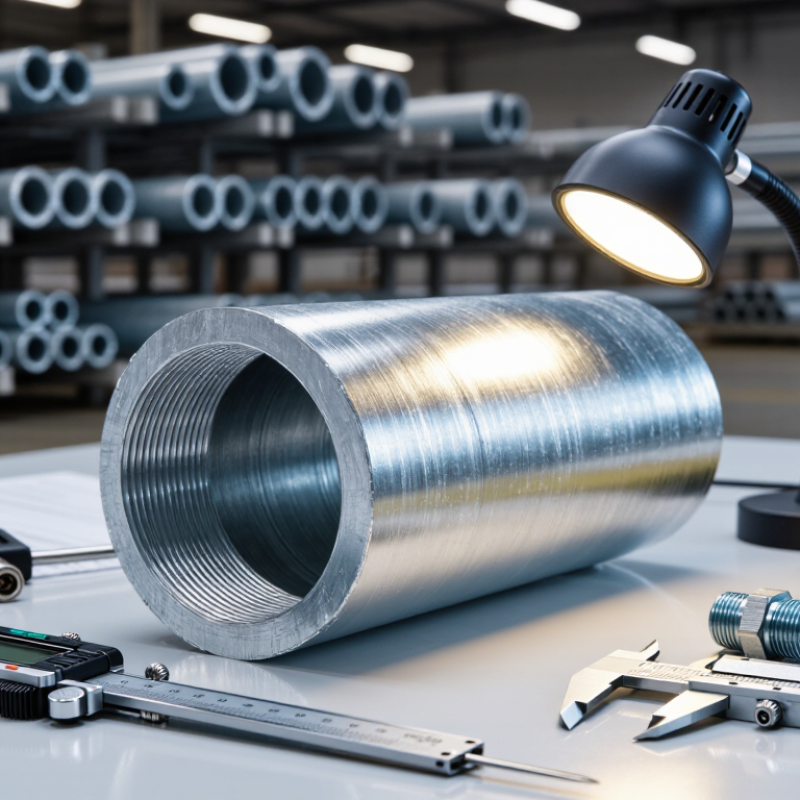
Choosing galvanized steel pipe for water requires more than checking its diameter and pressure rating. Zinc protection must be specified clearly, preferably against ASTM A123/A123M, while the pipe itself follows ASTM A53/A53M. These standards address different concerns. A53 identifies the pipe’s manufacturing and performance requirements. A123 controls hot-dip galvanized coating quality.
Ask for coating thickness, coating mass, and surface coverage. For steel at least 6.4 mm thick, A123 commonly requires a minimum average coating thickness of 85 micrometres, or about 610 g/m². Thinner steel has lower specified values, such as 70 micrometres and 505 g/m², or 45 micrometres and 381 g/m². Check the current edition and product category before ordering. Small differences matter.
Coverage must be continuous inside and outside, including edges and fittings. Look for bare spots, heavy runs, peeling, or exposed threads. A magnetic thickness gauge can identify thin areas, but coating mass testing provides another useful check. The certificate is helpful, not magical. I have seen paperwork look excellent while field handling damaged the coating. Protect cut ends and repair approved damaged areas carefully. For drinking water, confirm local health requirements and verify that the complete pipe system is suitable, not only the zinc layer. Water chemistry can also shorten service life, especially when it is acidic or unusually soft.