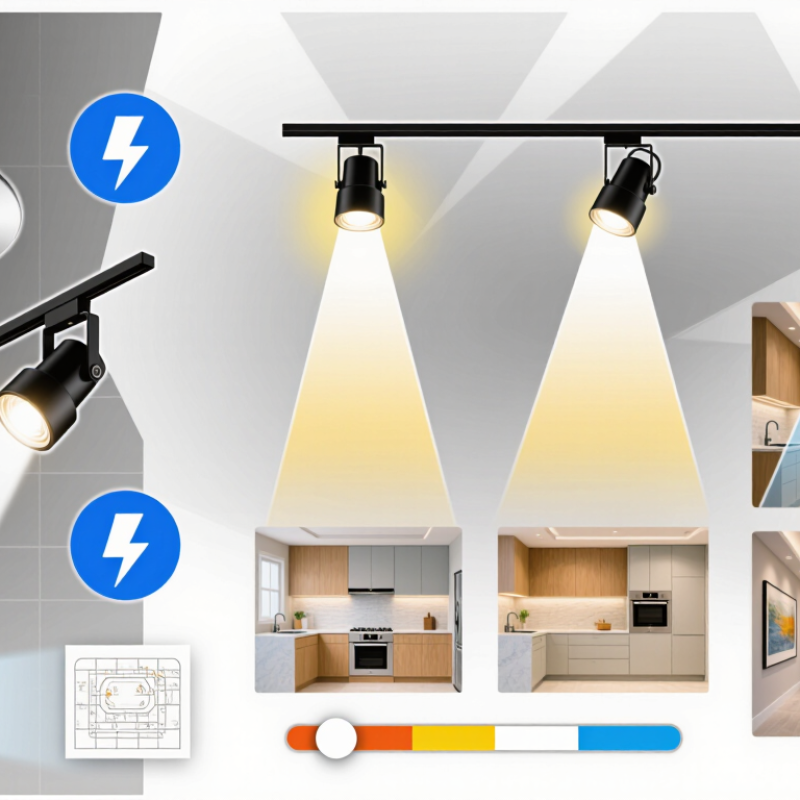
| LED light source | A semiconductor converts electrical energy into light when current flows through it. | LEDs produce light efficiently and generate heat that must be managed at the LED junction and heat sink. | Choose a fixture with suitable output, a well-designed heat sink, and a stated operating temperature range. |
| Optics and reflector | A lens, reflector, or combination of both directs and shapes the light emitted by the LED. | Optics determine beam spread, distribution, and how sharply the light is focused. | Look for an adjustable or replaceable beam option if the target or mounting position may change. |
| Beam angle | The approximate angle across which the fixture distributes its beam; definitions can vary by manufacturer. | A narrow beam concentrates light on a smaller area, while a wider beam covers more area with less concentrated illumination. | As a general guide, about 10°–20° is narrow, 25°–40° is medium, and 45° or wider is broad. Confirm the fixture’s beam specification. |
| Brightness and lumens | Lumens measure the total visible light output of a fixture. | For a given output, a narrow beam can create higher illuminance on a small target than a wide beam. | Compare lumens for total output and beam angle for distribution. Select output based on mounting height, target size, and ambient light. |
| Color temperature | Correlated color temperature (CCT), measured in kelvins (K), describes whether white light looks warmer or cooler. | Lower values generally appear warmer; higher values generally appear cooler. | Common choices include 2700K–3000K for warm-looking light, around 3500K–4000K for neutral white, and 5000K or above for cooler white. |
| Color rendering (CRI) | The Color Rendering Index (CRI) indicates how faithfully a light source renders colors compared with a reference source. | Higher CRI can help colors look more natural, though CRI alone does not describe every aspect of color quality. | For spaces where color appearance matters, consider CRI 90 or higher; for general use, compare the stated CRI with the application’s needs. |
| Dimming and controls | Dimming performance depends on the LED driver, fixture, and control system working together. | Incompatible components may cause flicker, limited dimming range, or buzzing. | Check that the fixture explicitly supports the intended dimmer or control method, and verify the minimum dimming level. |
| Electrical compatibility | Input voltage and driver requirements must match the installation supply. | The driver regulates power supplied to the LEDs; the fixture’s specified input range determines where it can be installed. | Check the product’s input-voltage rating and installation instructions before purchase. Use a qualified electrician where required. |
| Indoor or outdoor rating | An IP rating identifies protection against solid objects and water under specified test conditions. | Outdoor exposure, dust, or moisture can damage a fixture that is not rated for the installation environment. | For exposed locations, select a fixture with an IP rating appropriate to the actual exposure and follow local electrical codes. |
| Mounting and adjustability | Spotlights may be recessed, surface-mounted, track-mounted, or mounted on a wall or landscape stake. | Mounting position and aiming range affect where the beam lands and whether glare occurs. | Check cutout or mounting dimensions, aiming limits, and clearance. Aim the beam at the target rather than directly into viewers’ eyes. |
| Efficiency and service life | Lighting efficacy is measured in lumens per watt (lm/W); rated life is usually an estimate based on stated test conditions. | Higher efficacy can deliver more light per unit of power, while heat and operating conditions can affect LED performance over time. | Compare lm/W alongside lumen output, warranty terms, and the stated lifetime conditions rather than relying on a lifetime number alone. |