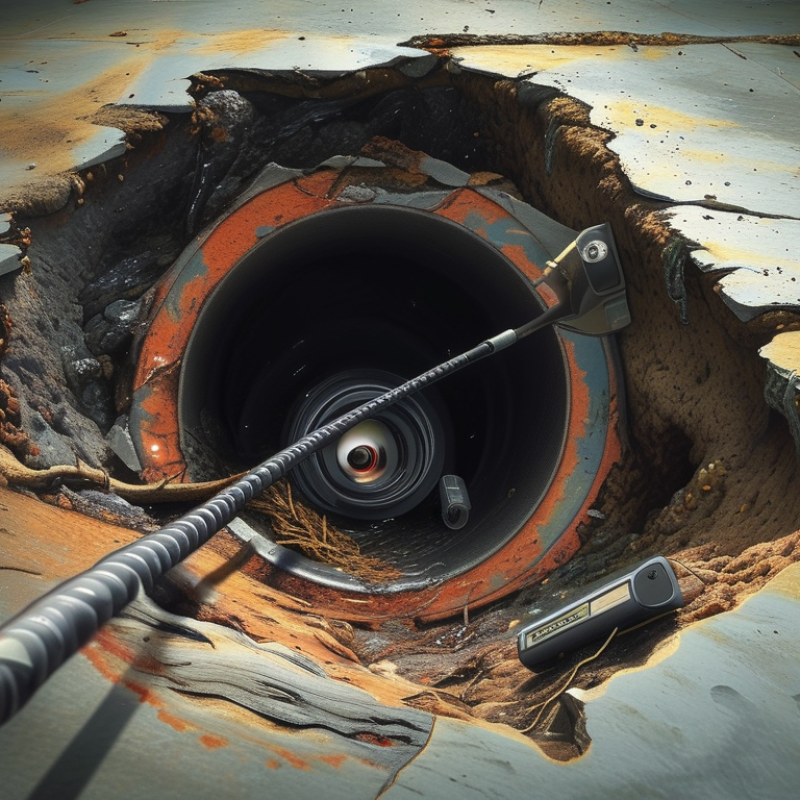
| Micro Push Camera | Approximately 6–12 mm camera head; flexible push cable generally 20–40 m | About 25–75 mm | Forward-facing view; compact lens and LED lighting; usually fixed viewing direction | Basic video recording; some systems include a small transmitter for sonde locating | Fits very small drains and tight bends; lightweight; quick to deploy | Shorter range; limited light output and image detail; not suitable for large, heavily obstructed lines | Small residential drains, appliance connections, and narrow branches |
| Standard Push Camera | Approximately 18–30 mm camera head; push cable commonly 30–60 m | About 50–150 mm | Forward-facing color camera with adjustable LED illumination; wide-angle lenses are common | Video recording, distance counter, and optional sonde for locating the camera underground | Portable; relatively affordable; effective for routine inspections and moderate distances | Requires manual pushing; performance can be reduced by standing water, grease, roots, or sharp offsets | House drains, branch lines, and general maintenance inspections |
| Self-Leveling Push Camera | Approximately 23–40 mm camera head; push cable commonly 40–90 m | About 75–250 mm | Self-leveling lens keeps the image upright; improved view of pipe walls, joints, and defects | Distance measurement, video capture, sonde locating, and often an on-screen microphone or text overlay | Produces easier-to-read inspection footage; useful for documenting structural conditions | Higher cost and larger head than basic push cameras; may have difficulty in very small pipes | Professional residential, commercial, and municipal lateral inspections |
| Pan-and-Tilt Camera | Approximately 38–80 mm camera head; cable length often 60–120 m | About 100–600 mm | Remote horizontal panning and vertical tilting; typically includes zoom and high-intensity lighting | Accurate distance tracking, sonde locating, image or video recording, and detailed defect assessment | Views multiple directions without moving the vehicle; examines connections, joints, and sidewall defects in detail | Larger equipment; requires more operating skill and adequate access space; less suitable for very tight bends | Detailed commercial, industrial, and larger municipal pipe inspections |
| Crawler Camera | Camera and crawler body commonly 100–250 mm wide; tether length often 100–300 m | About 150–1500 mm, depending on crawler configuration | High-resolution forward view; many systems provide pan, tilt, zoom, and self-leveling functions | Powered travel, distance counter, sonde locating, on-screen text, video recording, and inspection reporting | Covers long distances with less manual cable pushing; performs well in large-diameter lines | Needs a suitable access point and relatively clear pipe; expensive, heavy, and unsuitable for very small drains | Large commercial, industrial, stormwater, and municipal pipelines |
| Multi-Directional Camera | Commonly 40–100 mm camera head; cable length varies by system | About 150–1000 mm | Multiple cameras or pan-and-tilt movement provide forward, rear, and side views | Detailed recording, distance tracking, locating functions, and comprehensive connection or defect documentation | Provides broader coverage of the pipe interior and reduces blind spots during complex inspections | More complex controls; higher purchase and maintenance costs; requires trained operators | High-value assets, complex networks, and inspections requiring extensive documentation |
| Floating Camera System | Compact camera body mounted on a float; tether length commonly 50–300 m | Generally 300–2000 mm or larger | Forward-facing or pan-and-tilt camera; designed to inspect while floating with the flow or controlled water movement | Video recording, distance measurement, and optional locating capability; access and flow conditions must be managed | Useful where a wheeled crawler cannot travel; can inspect long, large-diameter lines | Image stability depends on water flow; cannot normally inspect dry pipes or negotiate every obstruction | Large sewers, submerged sections, and pipelines with suitable controlled flow |