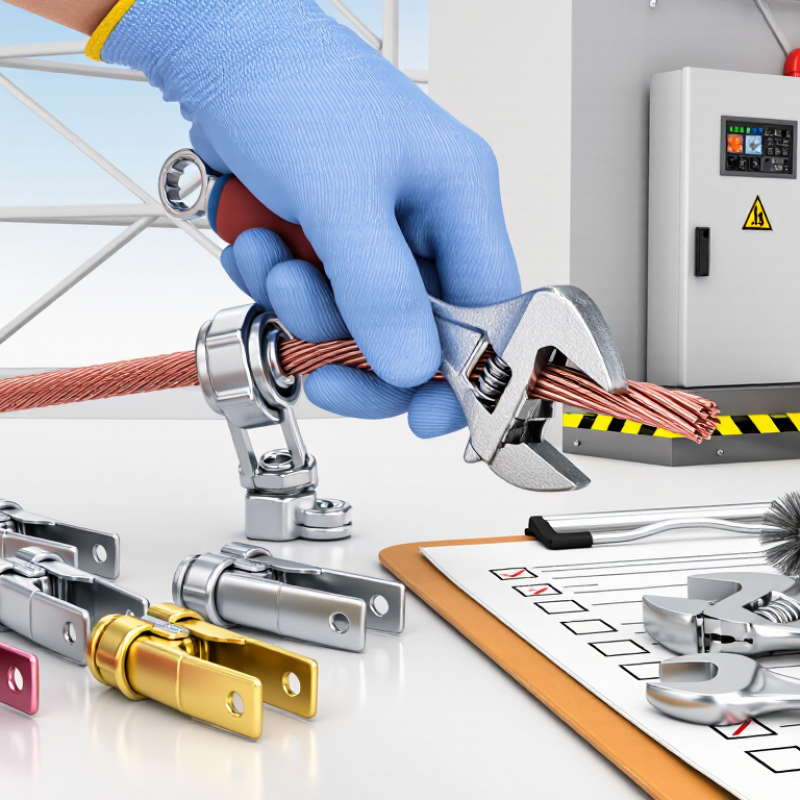
| Copper-Bonded Ground Rod Kit | Electrical service grounding, utility structures, light commercial installations, and general earthing systems. | Verify compatibility with applicable requirements such as UL 467, IEC 62561-2, and local electrical codes. | Confirm rod diameter, length, clamp range, conductor size, and suitability for the required fault-current path. | High
Thick copper bonding over a steel core provides good mechanical strength and corrosion resistance when the coating is undamaged. | Inspect above-ground connections for looseness, mechanical damage, oxidation, and water ingress. Test continuity or earth resistance according to the site program. | Moderate
Requires suitable soil preparation, driving equipment, and correct clamp installation. | Choose when a durable driven electrode is practical and the soil conditions are not excessively corrosive or rocky. |
| Stainless-Steel Grounding Clamp Kit | Bonding conductors to pipes, structural steel, equipment frames, and grounding electrodes in corrosive or outdoor environments. | Look for testing or certification applicable to grounding and bonding hardware, including IEC 62561-1 or UL 467 where relevant. | Check conductor capacity, clamp range, tightening torque, contact pressure, and compatibility with the connected metals. | High
Stainless steel generally performs well in humid, industrial, and coastal locations, but galvanic compatibility must still be assessed. | Check torque markings, surface condition, signs of galvanic corrosion, and whether the connection remains accessible for inspection. | Low
Normally installed with standard hand tools when the mounting surface is prepared correctly. | Choose for exposed connections where mechanical strength, corrosion resistance, and simple inspection are important. |
| Tinned Copper Braid Bonding Kit | Flexible bonding of doors, panels, cable trays, expansion joints, equipment enclosures, and moving assemblies. | Confirm conductor construction, current rating, temperature rating, and compliance with the applicable installation code or equipment specification. | Use a braid with adequate cross-sectional area and length. Avoid sharp bends, excessive tension, and routing that can cause abrasion. | Medium to High
Tinning improves resistance to oxidation and helps reduce direct contact between copper and dissimilar metals. | Inspect braid strands, lugs, fasteners, and termination points for fraying, fatigue, looseness, and contamination. | Low
Flexible connections are generally quick to install when suitable lugs and hardware are provided. | Choose where vibration, movement, hinged access, or thermal expansion could stress a rigid grounding conductor. |
| Exothermic-Welded Connection Kit | Permanent connections between grounding conductors, electrodes, structural steel, and buried grid conductors. | Use procedures and materials qualified for the project; grounding-system design should follow applicable local codes and engineering requirements. | Provides a continuous metallic connection with no bolted contact interface. Follow mold, conductor-size, charge, and safety instructions precisely. | High
A properly completed weld is well suited to buried environments and has no mechanical fastener to loosen. | Normally requires little routine maintenance after installation, but accessible test points and periodic system testing remain necessary. | High
Requires trained personnel, heat-resistant equipment, weather control, and strict fire-safety procedures. | Choose for permanent buried joints, high-reliability systems, or locations where future access will be difficult. |
| Mechanical Compression Grounding Kit | Bonding conductors to electrodes, busbars, structural members, and equipment where a bolted or compression connection is preferred. | Check applicable requirements such as IEC 62561-1, UL 467, conductor compatibility, and the manufacturer's verified installation method. | Confirm the correct die, conductor combination, compression sequence, torque, and required contact area. | Medium
Performance depends heavily on correct preparation, compression quality, sealing, and protection from moisture. | Inspect for looseness, oxidation, moisture entry, deformation, and conductor pull-out. Re-torque only when permitted by the installation procedure. | Moderate
Requires the correct compression tool and trained installation personnel. | Choose when a controlled, repeatable connection is required and installation access allows proper tooling. |
| Grounding Busbar and Bonding Link Kit | Main earthing terminals, telecommunications rooms, control panels, data centers, and equipment bonding networks. | Review the applicable electrical code, enclosure requirements, short-circuit withstand requirements, and project bonding design. | Size the bar and links for expected fault current, conductor quantity, clearances, and available connection points. | Medium
Indoor installations are generally durable; outdoor or contaminated locations require suitable plating, enclosure protection, and sealing. | Inspect fastener torque, labels, conductor identification, corrosion, and the accessibility of removable links used for testing. | Low
Usually straightforward when the mounting surface and cable entry layout are prepared in advance. | Choose when multiple bonding conductors need a clear, organized, and testable termination point. |
| Ground Enhancement Material with Electrode Kit | High-resistivity, rocky, dry, or space-constrained sites where achieving the required earth resistance with conventional electrodes is difficult. | Confirm that the material is approved or accepted for the intended application and does not create unacceptable environmental or corrosion effects. | Requires soil-resistivity assessment, electrode layout, moisture considerations, and verification through earth-resistance testing. | Medium
Long-term performance depends on material stability, site moisture, chemical compatibility, and correct installation depth. | Periodic resistance testing is important. Inspect accessible connections and check for settlement, drying, erosion, or changes in site conditions. | High
Installation may require excavation, controlled backfill, moisture management, and detailed site preparation. | Choose only after soil testing shows that conventional electrode arrangements are unlikely to meet the design target. |