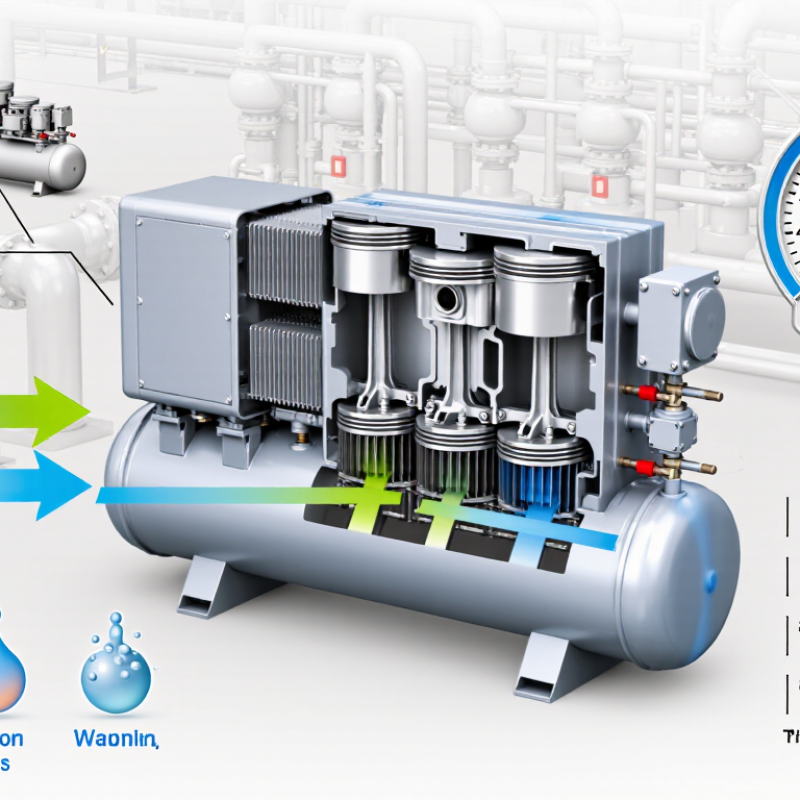
How to Choose the Right Reciprocating Compressor?
Select the Best Compressor for Total Lifecycle Value
Choosing a reciprocating compressor starts with the operating envelope, not the purchase price. Define gas composition, suction pressure, discharge pressure, flow range, temperature, and expected running hours. A compressor sized only for today may struggle when production changes. That mistake can create unstable operation and expensive modifications.
Calculate lifecycle value across energy, maintenance, downtime, spare parts, and disposal. Ask for tested efficiency data at your actual pressure ratio. Review cylinder capacity, rod load, valve life, lubrication needs, and pulsation control. During commissioning, record vibration, discharge temperature, oil consumption, and motor load. These readings create a useful baseline for future troubleshooting.
Small details matter.
In the field, clean suction filters and correct valve clearances often protect performance more than complex software. Select components that technicians can inspect safely and replace without long delays. Confirm service support, documentation quality, training, and spare-part availability before approval. A lower-cost unit may lose its advantage after one unplanned shutdown. I have seen spreadsheets overlook crane access, winter heating, and technician travel. They should not. Even reliable estimates need review against real site conditions, historical maintenance records, and independent technical advice. Lifecycle value is not fixed; it changes with operating discipline, load variation, and the quality of decisions made after installation.