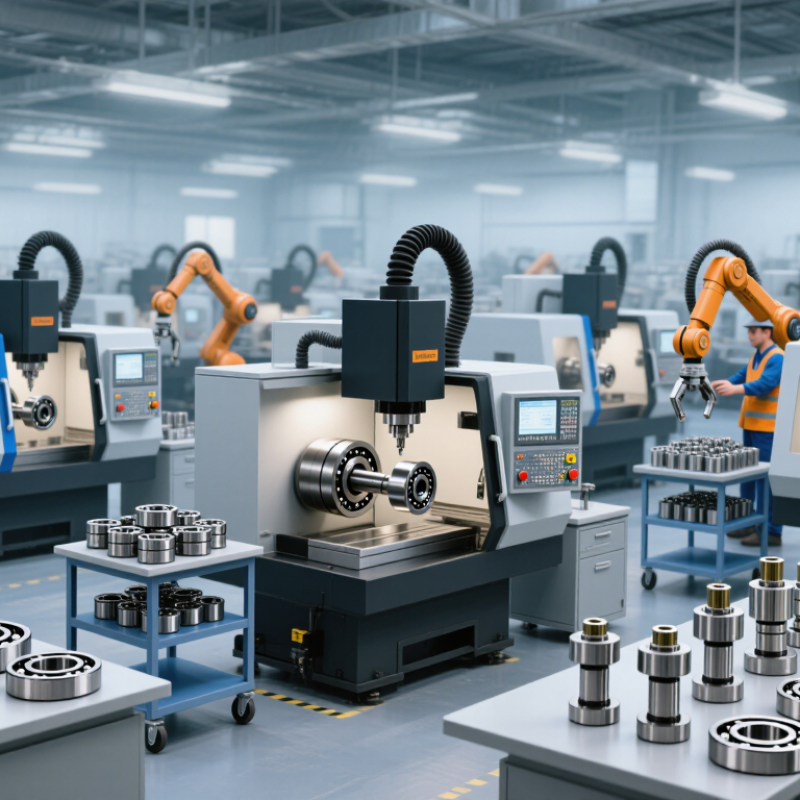
Ball bearings are small components with a large influence on CNC machine accuracy. They support rotating shafts, guide motion, and reduce friction around spindles and drive systems. In high-speed machining, a bearing may face radial loads, axial loads, heat, vibration, and contamination at once. Its performance affects surface finish, positioning repeatability, tool life, and maintenance intervals. Quiet running matters.
CNC manufacturers and equipment builders select bearings by speed rating, preload, stiffness, sealing, lubrication, and expected duty cycle. Angular-contact designs often manage combined loads in spindle assemblies. Precision bearings in ball screws help convert motor rotation into controlled linear movement. Guideways also depend on rolling elements to maintain smooth travel across repeated cycles. A few microns matter. Technicians should inspect temperature rise, unusual noise, grease condition, and play during commissioning. Measured vibration trends can reveal problems earlier than visible damage. Clean installation is equally important. One grain of abrasive dust can mark a raceway and shorten service life.
The global industry includes specialized bearing producers, CNC builders, and maintenance suppliers. Reliable manufacturers publish tolerance data, load ratings, testing methods, and traceability records. Buyers should compare evidence, not only catalog prices. No bearing is perfect. Excessive preload can improve rigidity but create heat, and my own assumption that tighter always means better has proven unreliable. Real operating conditions should guide the specification, especially with coolant, long shifts, or thermal cycling.