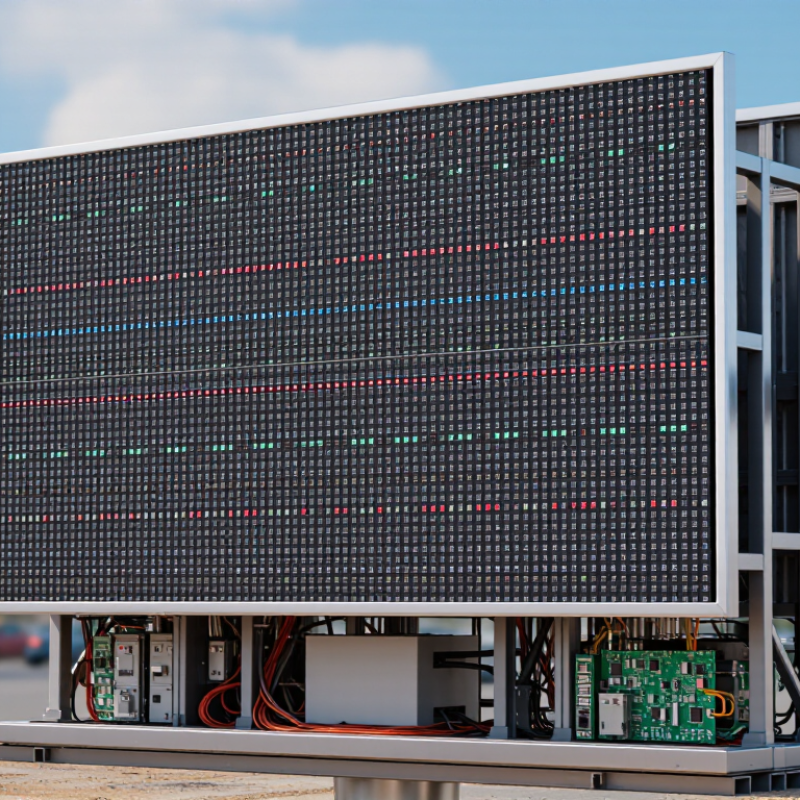
| LED Modules | Common pixel pitches: approximately 3–10 mm; RGB LED pixels | Produce the colored light used to display text, images, video, and animations. | Modular construction allows damaged sections to be replaced without replacing the entire display. |
| LED Lamps | Red, green, and blue light-emitting diodes combined within each pixel | Mix primary colors at different brightness levels to create a broad range of visible colors. | High-brightness LEDs help maintain image visibility in daylight and changing weather conditions. |
| Cabinet Enclosure | Weather-resistant metal or composite housing; sealed modular structure | Holds the LED modules, power supplies, control electronics, and internal wiring in position. | Protects internal components from rain, dust, wind, and accidental physical contact. |
| Front Protection | Protective mask, module face, or coated front surface | Provides a finished display surface and helps shield LED pixels from impact and contamination. | Reduces exposure to moisture, dirt, and ultraviolet radiation while preserving light output. |
| Power Supply Units | Converts AC input electricity into low-voltage DC power; commonly 5 V DC for LED modules | Delivers stable electrical power to LED modules, receiving cards, and related electronics. | Efficient power conversion and suitable ventilation help maintain reliable operation and reduce heat buildup. |
| Receiving Cards | Digital signal interface installed inside display cabinets | Receives image data from the sending system and distributes it to individual LED modules. | Supports synchronized playback across multiple cabinets and helps maintain accurate image timing. |
| Sending or Control System | Computer, media player, controller, or network-connected control unit | Creates, schedules, transfers, and manages the content shown on the display. | Allows operators to update messages remotely or locally and control brightness, timing, and playback. |
| Data Cables and Connectors | Shielded signal cables, network connections, and locking internal connectors | Carry digital display data between the controller, receiving cards, and LED modules. | Weather-protected connections help reduce signal interruptions caused by moisture, vibration, or temperature changes. |
| Brightness Sensor | Ambient-light sensor with automatic brightness adjustment | Measures surrounding light levels and adjusts LED output accordingly. | Improves daytime readability while helping reduce glare and unnecessary energy use at night. |
| Cooling and Ventilation System | Passive ventilation, fans, heat sinks, or a combination of thermal-management methods | Removes heat generated by LEDs, power supplies, and control electronics. | Helps keep operating temperatures within the components' rated limits during prolonged outdoor use. |
| Structural Frame | Steel or aluminum support structure designed for the sign's size and installation location | Supports the display cabinet and transfers its weight and environmental loads to the mounting points. | Provides stability against wind, vibration, and mechanical stress when properly engineered and installed. |
| Grounding and Surge Protection | Protective grounding, circuit breakers, and surge-protection devices | Reduces electrical risks and helps protect sensitive electronics from voltage surges. | Improves safety during thunderstorms, grid disturbances, and other outdoor electrical events. |
| Pixel Control and Refresh Circuitry | Pulse-width modulation and multiplexed LED driving circuits | Controls the brightness and switching timing of individual pixels or groups of pixels. | Supports smooth images, consistent color reproduction, and reduced flicker when correctly configured. |
| Maintenance Access System | Front-service or rear-service access, depending on cabinet design | Allows technicians to inspect, repair, and replace modules or electronic components. | Shortens maintenance time and helps keep the display operational in difficult outdoor locations. |