What Is Outdoor Lighting and How Does It Work?

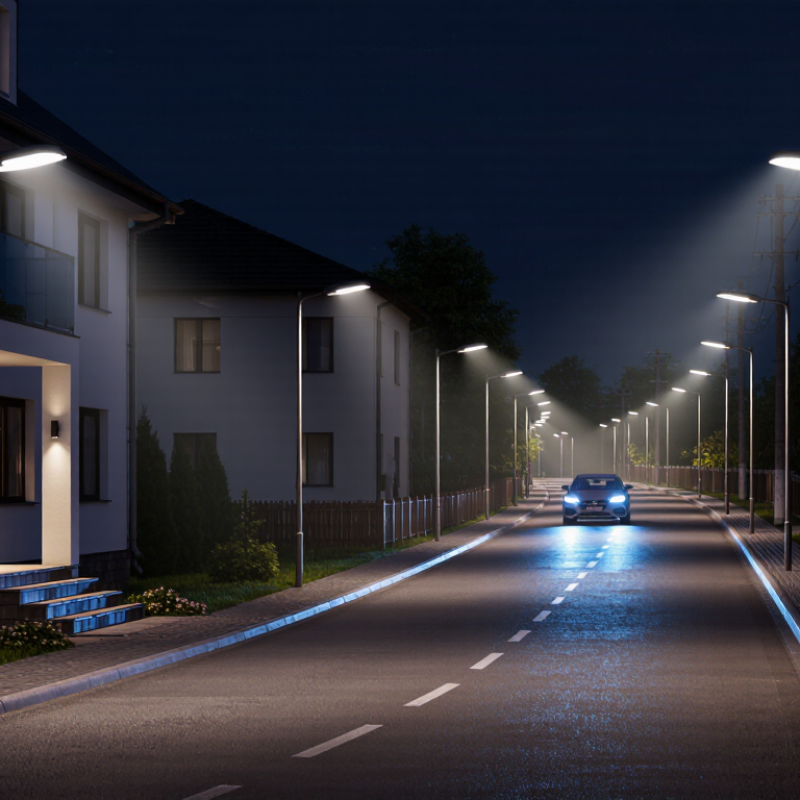
Outdoor Lighting is more than a lamp beside a door or a row of streetlights. It is the planned use of light outdoors to support visibility, movement, security, and the appearance of a place. A porch fixture can reveal a wet step; a shielded streetlight can help a driver see the road without sending glare into nearby windows. Good design depends on where light falls, how bright it is, and when it operates. Small choices matter.

The U.S. Department of Energy’s reports on LED street lighting describe substantial energy-saving potential compared with older streetlight technologies. The exact savings depend on the fixture, operating schedule, and local conditions. The Illuminating Engineering Society (IES) also provides technical guidance for roadway and outdoor lighting design. These sources help explain why modern systems often use efficient LEDs, carefully aimed optics, and controls such as timers or dimmers. More light is not automatically better.

Lighting researcher Dr. Mark Rea is often associated with the concise observation, “Light is a drug.” The phrase points to a useful caution: light can affect people as well as surroundings. For outdoor projects, that means considering glare, spill into homes, and unnecessary nighttime brightness alongside visibility. This guide explains how Outdoor Lighting works—from electricity and light sources to fixtures, beam direction, and controls. It also leaves room for a practical question: does every corner really need to be lit?

What Is Outdoor Lighting and How Does It Work?

What Outdoor Lighting Is and What It Is Designed to Do

What Outdoor Lighting Is and What It Is Designed to Do

Outdoor lighting uses fixtures to make exterior spaces easier to see and use after dark. It can illuminate paths, steps, entrances, patios, and garden features. Good lighting supports orientation and everyday tasks; it is not simply about making a yard brighter. A softly lit doorway can be more useful than a powerful lamp that creates glare.

Each fixture directs light toward a particular area. Placement, beam direction, brightness, and color all affect what people see. Shielded fixtures can reduce glare, while timers or motion sensors can help control when lights operate. Lighting does not fix an uneven step or replace a clear path. A layout can look balanced on paper and still feel too bright at night.

Tips: Start small. Light steps and entrances first, then check the space after dark. Look for harsh reflections on windows and deep shadows along walkways. Adjust the angle or brightness before adding more fixtures.

What Is Outdoor Lighting and How Does It Work? — What Outdoor Lighting Is and What It Is Designed to Do
Lighting Dimension What It Is How It Works Primary Design Purpose Typical Applications
Path and Walkway Lighting Low-level fixtures that illuminate pedestrian routes, steps, and transitions. Light is directed downward or outward at a controlled angle to improve visibility along walking surfaces. Support safe movement and help define the layout of an outdoor area. Garden paths, sidewalks, stairs, entrances, and driveways.
Area and Flood Lighting Fixtures designed to illuminate broad outdoor spaces or large surfaces. A wider beam spreads light across yards, parking areas, building exteriors, or work zones. Increase general visibility and provide functional illumination over a large area. Driveways, patios, loading areas, sports areas, and building surroundings.
Accent Lighting Focused lighting used to emphasize selected landscape or architectural features. A narrow or adjustable beam concentrates light on objects such as trees, walls, sculptures, or signs. Create visual emphasis, depth, and nighttime character without lighting every surface equally. Landscape features, façades, columns, trees, fountains, and outdoor artwork.
Wall and Entry Lighting Fixtures mounted on exterior walls near doors, gates, garages, or service areas. The fixture directs light onto nearby surfaces and access points, often using a downward or diffused output. Improve visibility at entrances and provide practical illumination around access points. Front doors, back doors, garages, gates, porches, and utility areas.
Security Lighting Lighting intended to improve visibility around vulnerable or poorly observed areas. Wide-area fixtures may operate continuously or be activated by a motion sensor, timer, or photocell. Reduce dark areas, support observation, and make movement around a property easier to detect. Side yards, rear entrances, parking areas, fences, and storage zones.
Solar Outdoor Lighting Self-contained lighting that uses a photovoltaic panel, battery, controller, and LED light source. The panel converts daylight into electricity; the battery stores energy for use after dark, usually through automatic controls. Provide lighting where wiring is difficult or where independent operation is preferred. Paths, gardens, remote signs, decorative areas, and temporary installations.
Low-Voltage Lighting Outdoor lighting supplied at a reduced voltage through a transformer rather than directly from standard mains voltage. A transformer lowers the incoming voltage, and cables distribute power to connected fixtures. Provide flexible landscape illumination with lower operating voltage on the fixture side of the system. Residential landscapes, gardens, paths, patios, and small architectural features.
LED Light Sources Solid-state light sources that produce illumination when electrical current passes through a semiconductor. An LED driver regulates electrical power, while the diode converts much of that energy into visible light. Deliver efficient, long-lasting illumination in compact outdoor fixtures. Path lights, floodlights, wall lights, bollards, step lights, and decorative fixtures.
Controls and Automation Devices and settings that determine when outdoor lights turn on, turn off, or change operation. Timers follow scheduled periods; photocells respond to ambient light; motion sensors respond to detected movement. Reduce unnecessary operation, improve convenience, and support consistent lighting behavior. Entrances, security zones, pathways, driveways, and energy-managed installations.
Color Temperature The visual warmth or coolness of white light, measured in kelvins (K). Lower color-temperature values appear warmer and more amber; higher values appear cooler and more bluish. Influence atmosphere, visibility, and how landscape colors and building materials appear at night. Warm residential landscapes, neutral work areas, entrances, façades, and public spaces.
Brightness and Light Output The amount of visible light produced by a fixture, commonly expressed in lumens (lm). Higher lumen output generally produces more available light, although beam angle, mounting height, and surface reflectance also affect results. Match illumination levels to the task, area size, and desired visual effect. Task lighting, pathways, building exteriors, landscape accents, and security areas.
Weather Resistance The ability of a fixture enclosure to limit the entry of solids and water, commonly described by an IP rating. The enclosure, seals, and cable entries are designed and tested to provide a stated level of protection against environmental exposure. Help the fixture operate reliably in outdoor conditions such as rain, dust, and moisture. Exposed walls, gardens, pool surroundings, driveways, coastal areas, and uncovered walkways.
Glare and Light Spill Control Design practices that limit uncomfortable brightness and unwanted light directed outside the intended area. Shielding, aiming, lower mounting heights, appropriate beam angles, and dimming keep light focused where it is needed. Improve visual comfort, preserve nighttime visibility, and reduce disturbance to neighboring areas and the sky. Residential boundaries, streetscapes, pathways, gardens, entrances, and environmentally sensitive locations.

The Main Components of an Outdoor Lighting System

Outdoor lighting is a planned system that delivers light around homes, gardens, paths, and outdoor work areas. Its performance depends on several connected components, not only the visible fixtures. Each part must handle moisture, temperature changes, and regular outdoor exposure.

The power source begins the system. A standard electrical supply may feed a low-voltage transformer, which reduces voltage for safer landscape lighting. The transformer also controls operating times on many installations. Weather-resistant cables carry electricity to each fixture, while connectors join cable sections securely. I always check these connections carefully because loose joints can cause flickering or complete failure. They can also collect water.

Fixtures shape and direct the light. Path lights spread illumination across walkways, while spotlights highlight trees, walls, or architectural details. Well-designed fixtures use sealed housings and corrosion-resistant materials. Their position matters as much as their brightness. A light aimed too high may shine into windows or create glare. A light placed too close to a plant may produce harsh shadows.

Controls form another important layer. Timers, photocells, motion sensors, and smart controls can adjust when lights operate. Photocells respond to darkness, while motion sensors activate lighting when movement occurs. I have found that simple controls are often more reliable in damp locations. However, this is not universal. Every site has different needs. Proper cable burial depth, drainage, and circuit protection also require careful planning. For line-voltage work, a qualified electrician should inspect the installation and follow local electrical rules.

How Outdoor Lights Receive and Use Power

Outdoor lighting converts electrical energy into visible light around homes, gardens, paths, and public spaces. Most fixtures receive power from a household electrical circuit. A cable carries electricity to a switch, timer, sensor, or control system before it reaches the lamp.

Many landscape systems use a low-voltage transformer. The transformer reduces standard household voltage, helping make outdoor installation more manageable when suitable protection is used. The cable then runs through shallow trenches or protective conduits. Connections must remain sealed, because moisture can cause corrosion, short circuits, or sudden flickering.

Solar lights work differently. A small photovoltaic panel collects sunlight during the day and stores energy in a rechargeable battery. At night, a light sensor activates the lamp. Cloudy weather can shorten operating time. That detail is easy to overlook. Battery age, panel direction, and nearby shade also affect performance.

Some lights use motion sensors or timers instead of simple switches. A sensor detects movement and closes the electrical circuit for a set period. Timers follow programmed hours, even when nobody is outside. In practical inspections, loose connectors are a frequent weakness. A light may appear functional while losing power through a damp joint. I would not assume brightness proves safety. The wiring, insulation, grounding, and weather resistance still require careful checking. Sometimes, a simpler layout performs better than an overcomplicated control system.

What Is Outdoor Lighting and How Does It Work?

How Outdoor Lights Receive and Use Power

Outdoor lights receive power from an electrical outlet, a low-voltage transformer, or a rechargeable battery supplied by a solar panel. The power is converted into light by the lamp or LED, while the remaining energy is released mainly as heat.

The wattage values are representative ratings rather than universal specifications; actual power use varies by fixture design, brightness, operating mode, and supply system. For example, a 10-watt light operating for 8 hours uses 80 watt-hours, or 0.08 kilowatt-hours, of electricity.

How Outdoor Lighting Controls and Distributes Light

What Is Outdoor Lighting and How Does It Work?

How Outdoor Lighting Controls and Distributes Light

Outdoor lighting combines fixtures, wiring, sensors, and controls to place light where people need it. A fixture shapes the beam through optics, reflectors, or lenses. Mounting height and spacing then determine coverage, brightness, and shadow patterns. A narrow beam can highlight a pathway, while a wider distribution can improve visibility across a parking area.

Controls decide when and how strongly lighting operates. Photocells switch fixtures on at dusk, while timers follow programmed schedules. Motion sensors increase output when activity appears, then reduce it afterward. Dimming systems can also lower brightness during quiet hours.

The U.S. Department of Energy reports that advanced lighting controls can often reduce lighting energy use by 20–60%, depending on the application and control strategy. The International Energy Agency has also reported that lighting represents about 15% of global electricity consumption, making control quality important.

Good design is not only about using less energy. It must limit glare, uneven brightness, and light trespass. The Illuminating Engineering Society recommends evaluating illuminance, uniformity, and visual comfort together. In practice, a sensor may react to moving branches or passing animals. That creates unwanted switching. A poorly aimed fixture can still waste light, even with efficient controls. Field testing matters. Designers should check the pavement, nearby windows, shadows, and nighttime conditions before final adjustment.

Common Outdoor Lighting Types and Their Uses

What Is Outdoor Lighting and How Does It Work?

Outdoor lighting includes fixtures designed to illuminate paths, entrances, gardens, patios, and building exteriors. Most systems use electricity, while solar fixtures collect daylight and store energy in a battery. A sensor, timer, or smart control can switch lights on when darkness arrives. The best choice depends on purpose, weather exposure, mounting location, and required brightness.

Common types serve different needs. Path lights create a gentle guide along walkways and steps. Wall lights improve visibility near doors, garages, and side entrances.

Floodlights cover larger areas, such as driveways or backyards, but excessive brightness can cause glare. Spotlights highlight trees, signs, or architectural details.

String lights add atmosphere to seating areas, although they usually provide limited task lighting. Low-voltage systems are often easier to install and adjust than mains-powered fixtures.

Tips: Aim light downward when possible. Use warm light for relaxing spaces and brighter light for work areas. Check the fixture’s weather rating before installation. Keep cables protected and away from standing water. Motion sensors can reduce unnecessary operation. Small changes matter.

I once placed a spotlight too close to a tree, and the branches cast distracting shadows. Moving it back solved most of the problem. Still, outdoor lighting is not perfectly predictable. Wet paving reflects light, plants grow, and seasonal darkness changes. Test fixtures after sunset, then adjust their angles and spacing. For mains-powered installations, consult a qualified electrician.
Top