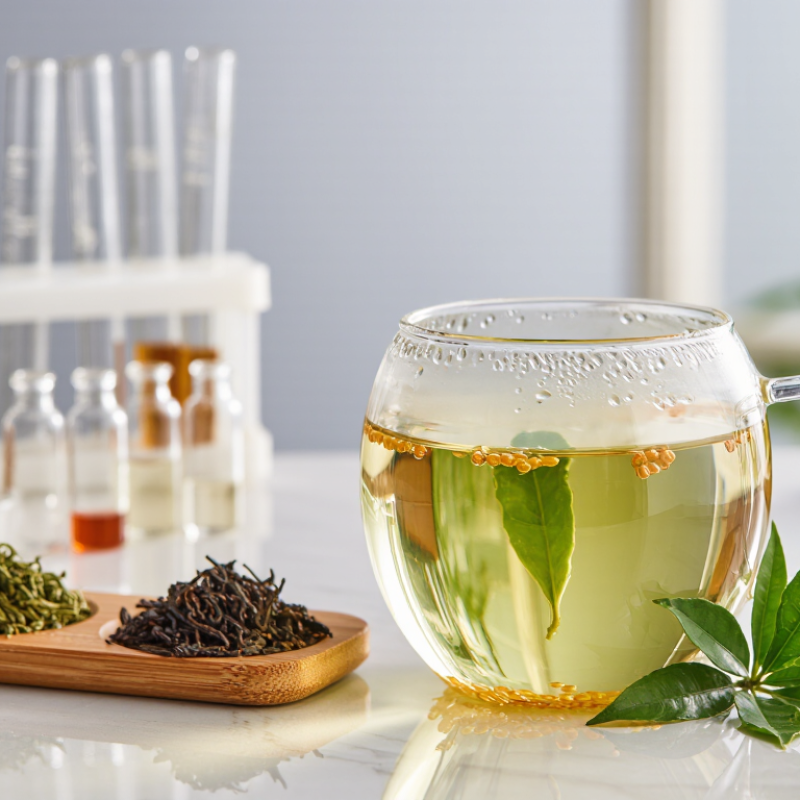
| Definition | Tea polyphenol extract is a concentrated botanical extract obtained from tea leaves, usually from Camellia sinensis. | It is traded as a functional ingredient for food, beverage, nutraceutical, cosmetic, and personal-care applications. | The commercial material may be supplied as a powder, liquid concentrate, or standardized extract. |
| Primary Plant Source | Green tea, black tea, oolong tea, and other products derived from the tea plant. | The tea type and processing method influence the polyphenol profile, color, flavor, and intended use. | Green tea extracts generally retain higher levels of catechins because they undergo limited enzymatic oxidation during processing. |
| Major Active Constituents | Catechins such as EGCG, EGC, ECG, and EC; black tea also contains theaflavins and thearubigins. | Buyers select the extract according to the target compound, total polyphenol level, sensory profile, and application requirements. | A certificate of analysis should identify the tested marker compounds and the analytical method used. |
| Typical Appearance | Fine powder or liquid extract ranging from light beige and greenish-brown to dark brown. | Appearance affects the suitability of the ingredient for clear beverages, colored foods, capsules, creams, and other finished products. | Color can vary with tea variety, extraction conditions, oxidation level, drying method, and storage. |
| Solubility | Water solubility depends on the extract composition, concentration, pH, temperature, and presence of other ingredients. | Solubility determines whether the extract is suitable for instant drinks, liquid formulations, tablets, or topical products. | Suppliers should provide dispersion or solubility guidance when the extract is intended for beverage or liquid applications. |
| Antioxidant Function | Tea polyphenols can donate hydrogen or electrons and help reduce oxidative reactions in formulated products. | This property supports use in functional foods, beverages, dietary supplements, and cosmetic formulations. | Antioxidant performance is affected by pH, light, oxygen, heat, metal ions, and interactions with other formulation ingredients. |
| Sensory Characteristics | Tea polyphenol extracts may have astringent, bitter, grassy, roasted, or tea-like notes. | Sensory intensity is important when sourcing ingredients for beverages, confectionery, nutrition products, and oral-care formulations. | Flavor masking, lower-dose formats, or purified fractions may be considered when taste is a limiting factor. |
| Food and Beverage Uses | Used in functional drinks, powdered drink mixes, nutrition products, confectionery, bakery products, and other food formulations. | The extract can provide a botanical positioning, antioxidant functionality, or tea-derived flavor and color. | Food-grade status, permitted use levels, allergen information, and local labeling requirements should be confirmed for the destination market. |
| Nutraceutical Uses | Used in capsules, tablets, powders, and other dietary supplement formats. | Sourcing decisions commonly focus on catechin standardization, caffeine level, contamination controls, and batch consistency. | Product claims must comply with the applicable regulations in the country where the finished supplement is sold. |
| Cosmetic and Personal-Care Uses | Used in skin-care, hair-care, cleansing, and other topical formulations as a botanical antioxidant ingredient. | Cosmetic buyers typically evaluate color, odor, skin compatibility, preservative system compatibility, and microbial quality. | A cosmetic-grade specification and appropriate safety documentation should be reviewed before commercial use. |
| Extraction Methods | Common methods include water extraction, hydroalcoholic extraction, and other food-compatible solvent processes. | The process affects yield, residual solvent profile, catechin retention, sensory properties, and production cost. | The technical file should state the extraction solvent, concentration process, drying method, and any carrier materials. |
| Standardization Parameters | Common parameters include total polyphenols, total catechins, EGCG, caffeine, moisture, and ash. | Standardization enables comparison between lots and helps manufacturers maintain consistent finished-product performance. | The target specification should distinguish between “total polyphenols,” “total catechins,” and individual catechin content. |
| Quality and Safety Testing | Typical tests include identity, assay, moisture, microbiological limits, heavy metals, pesticide residues, and residual solvents where applicable. | Testing reduces supply-chain risk and supports import clearance, customer qualification, and finished-product compliance. | Each production lot should be supported by a current certificate of analysis and relevant traceability records. |
| Caffeine Content | Caffeine may be naturally present because tea leaves contain caffeine; the level varies by raw material and processing. | Caffeine content can affect formulation, labeling, consumer suitability, and regulatory review. | Low-caffeine or decaffeinated grades should be specified when caffeine-sensitive applications require them. |
| Packaging and Storage | The extract is generally protected from moisture, oxygen, heat, and direct light in sealed, food-compatible packaging. | Correct storage helps preserve polyphenol content, color, flavor, and flowability during international transport and warehousing. | The supplier should state storage conditions, shelf life, packaging format, and recommended handling after opening. |
| Supply-Chain Traceability | Relevant records include botanical identity, growing or collection region, processing batch, extraction batch, and shipment lot. | Traceability supports quality investigations, recall readiness, sustainability reviews, and consistent procurement. | Buyers should request documented lot coding and a clear change-control process for raw materials and production methods. |
| Key Sourcing Risks | Potential risks include inconsistent active content, excessive bitterness, oxidation, moisture uptake, pesticide residues, and adulteration. | Risk assessment helps buyers choose suitable specifications, testing plans, packaging, and supplier qualification procedures. | A written technical agreement should define acceptance criteria, retest procedures, nonconformance handling, and change notification. |