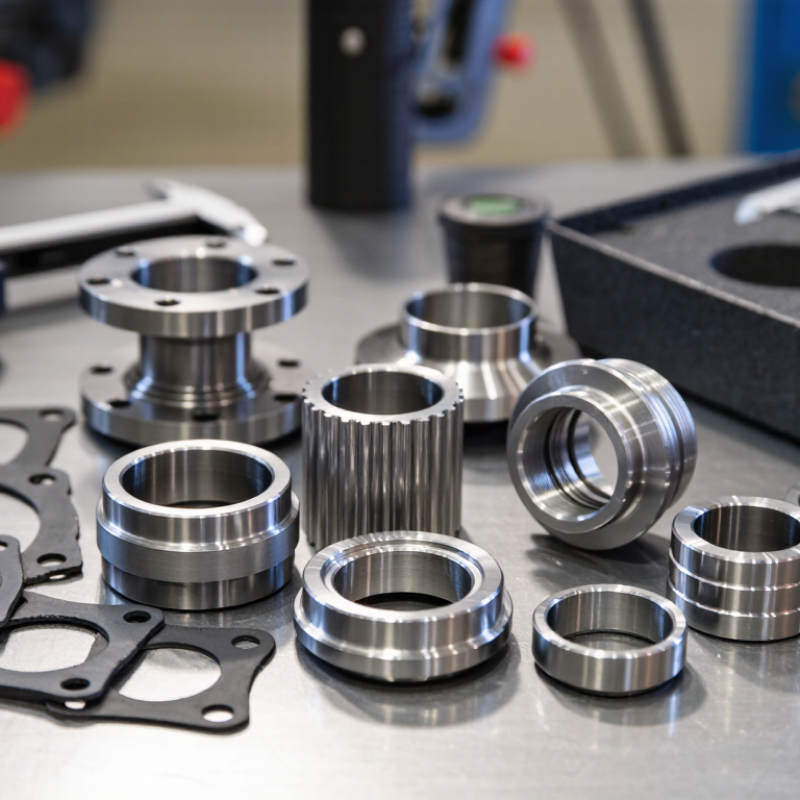
| Product Type | Metal Ring Type Joint Gasket | A precision-machined metallic gasket designed for pressure-sealing applications between ring-type joint flanges, valves, wellhead equipment, and high-pressure piping connections. |
| Common Ring Profiles | Oval and Octagonal | Oval rings are commonly used in traditional ring-type joint connections. Octagonal rings provide line-contact sealing and are widely selected for modern high-pressure flange assemblies. |
| Applicable Dimensional Standard | ASME B16.20 | The standard covers metallic gaskets for pipe flanges, including ring type joint gasket dimensions, markings, materials, and relevant manufacturing requirements. |
| Common Pressure-Flange Standard | ASME B16.5 / ASME B16.47 | ASME B16.5 is commonly used for flanges and flanged fittings through NPS 24. ASME B16.47 applies to large-diameter steel flanges generally from NPS 26 through NPS 60. |
| Oil and Gas Equipment Reference | API Specification 6A | For applicable wellhead and Christmas-tree equipment, ring gaskets may be specified in accordance with API 6A requirements together with the purchaser’s approved material and inspection documentation. |
| Carbon and Low-Alloy Steel | ASTM A182 F5, F9, F11, F22 | Selected for elevated-temperature or alloy-steel flange systems where improved strength and oxidation resistance are required. Final grade selection should match the flange material and operating conditions. |
| Austenitic Stainless Steel | SS 304, 304L, 316, 316L, 321, 347 | Used where corrosion resistance is important. Grade 316 and 316L generally provide better resistance to chloride-containing environments than 304 and 304L. |
| Nickel-Based Alloys | Alloy 625, Alloy 718 | Used for demanding corrosive, high-temperature, or sour-service applications when specified by the design authority. Compatibility with the flange and process medium must be verified. |
| Dimensional Range | R, RX, and BX Series | Ring series and nominal dimensions must be selected according to the mating flange groove, nominal pipe size, pressure class, and applicable standard. The gasket must not be substituted across incompatible groove designs. |
| Surface Finish | Controlled Sealing Surfaces | The sealing surface should be free from cracks, laps, dents, burrs, deep scratches, scale, and other defects that could prevent uniform contact or damage the flange groove. |
| Hardness Control | Lower Than the Mating Flange | Ring gasket hardness is normally controlled below the hardness of the mating flange groove to reduce the risk of permanent flange damage. The exact limit depends on the selected standard, material grade, and service specification. |
| Manufacturing Process | Forging or Bar Stock + CNC Machining | Typical production includes material identification, forging or approved bar-stock preparation, CNC turning, deburring, dimensional inspection, hardness testing, cleaning, and protective packaging. |
| Dimensional Inspection | 100% Critical-Dimension Verification | Inspection commonly covers outside diameter, inside diameter, height, pitch diameter, ring profile, ovality, surface condition, and conformity with the approved drawing or applicable standard. |
| Material Traceability | Heat Number and Inspection Certificate | Traceability should connect each gasket or production lot with the material heat number, chemical analysis, mechanical results where applicable, dimensional records, and inspection release documentation. |
| Quality Documentation | EN 10204 Type 3.1 or Project-Specified Certificate | A material certificate may include chemical composition, mechanical properties, heat treatment condition, hardness results, product identification, and confirmation of compliance with the purchase order. |
| Sour-Service Consideration | NACE MR0175 / ISO 15156 | For hydrogen-sulfide-containing oil and gas environments, material selection and hardness limits should be reviewed against NACE MR0175/ISO 15156 and the specific project requirements. |
| Temperature Capability | Material- and Media-Dependent | Metal ring gaskets can be suitable for high-temperature service, but the allowable operating temperature depends on the alloy, flange design, pressure, oxidation or corrosion conditions, and applicable engineering code. |
| Pressure Capability | Flange-Class and Design-Dependent | A ring gasket does not independently define the pressure rating of an assembly. The permissible pressure is governed by the complete flange, gasket, bolting, temperature, and piping-system design. |
| Identification Marking | Size, Series, Material, and Heat Reference | Permanent or durable marking should identify the ring number or size, profile or series, material designation, and traceability reference where required by the applicable standard or purchase order. |
| Packaging and Storage | Individual Protection Recommended | Store rings in clean, dry conditions with protective separators or individual packaging. Avoid metal-to-metal impact, moisture, corrosive contaminants, and deformation of the sealing profile. |