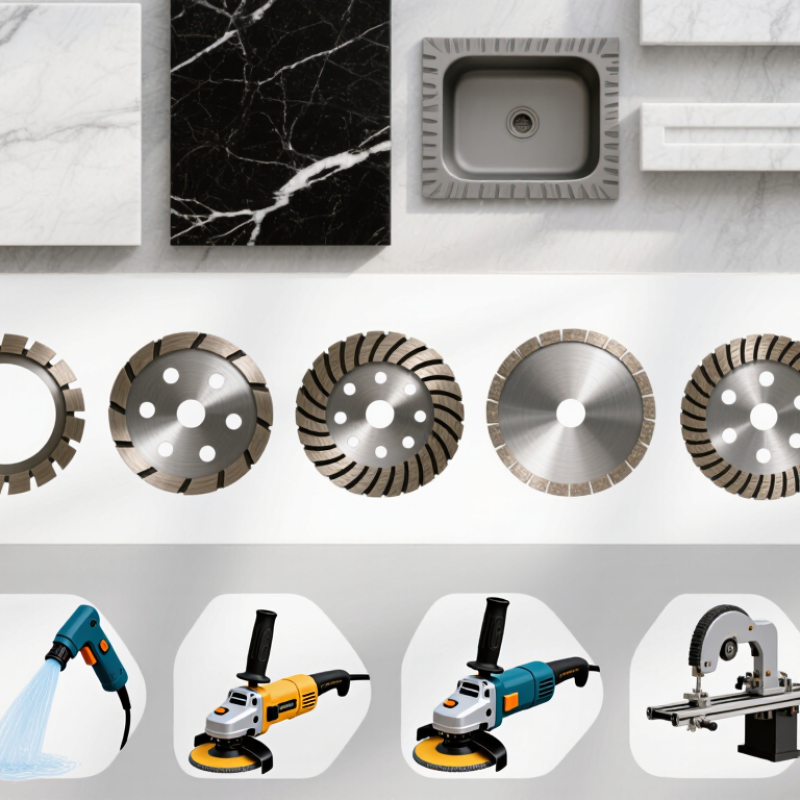
| 1 | Continuous-Rim Sintered Diamond Disc | Fully continuous diamond rim with sintered segments bonded to the steel core. | Wet preferredDry only when permitted | Clean, chip-controlled cuts in marble slabs, tiles, vanity tops and architectural panels. | 105–400 mm for portable tools and small masonry machines; larger sizes are available for stationary saws. | Usually the smoothest cut and best edge finish. Cutting speed is moderate compared with segmented designs. | Use a rigid, correctly guarded machine. Water reduces heat and dust. Confirm that the disc is rated for marble and that the maximum operating speed is at least the machine spindle speed. |
| 2 | Turbo-Rim Diamond Disc | Continuous rim with a serrated or wave-shaped cutting edge that improves debris removal. | Wet or dry, as specified | General-purpose cutting of marble tiles, trim pieces, countertops and thin stone sections. | 105–350 mm | Faster than a plain continuous rim while generally retaining good edge quality. | Dry cutting requires effective dust extraction and respiratory protection. Avoid excessive lateral pressure, twisting and overheating, especially on thin polished marble. |
| 3 | Segmented Sintered Diamond Disc | Separate diamond segments with gullets between them for cooling and debris clearance. | Wet preferredDry versions available | Fast rough cuts, thick marble blocks, masonry saw work and applications where edge finish is less critical. | 115–500 mm for portable and site saws; larger diameters suit stationary equipment. | High material-removal rate and good cooling through the gullets, but it can produce more edge chipping than a continuous rim. | Check segment integrity before use. Do not use a disc with missing, cracked or loose segments. Wet operation is preferable for long cuts and reduced airborne dust. |
| 4 | Electroplated Diamond Disc | One or more layers of diamond particles are electrically fixed to the rim or cutting surface. | Wet or dry, as specified | Detailed shaping, small-diameter cutting, narrow kerfs, profile work and occasional marble repair work. | 50–230 mm | Very sharp initial cutting action and a thin kerf; exposed diamond gives good access to intricate areas. | Diamond exposure decreases as the plated layer wears. Do not dress, hammer or side-load the rim. Select a disc with a suitable arbor and speed rating for the tool. |
| 5 | Vacuum-Brazed Diamond Disc | Diamond particles are metallurgically brazed to the steel rim, normally in a continuous or segmented pattern. | Dry commonly usedWet if permitted | Portable dry cutting, repair work, irregular site conditions and occasional shaping of marble. | 100–230 mm | High diamond exposure and aggressive cutting with a relatively thin kerf; service life depends strongly on pressure, heat and material abrasiveness. | Use short passes and allow cooling when dry cutting. Follow the disc maker’s wet/dry instructions; water must not be used with a tool or disc combination that is not designed for it. |
| 6 | Thin-Kerf Marble Tile Disc | Ultra-thin continuous or fine turbo rim designed to minimize material loss. | Wet preferredDry options available | Thin marble tiles, mosaics, backsplashes and precision trim cuts. | 105–180 mm | Low material waste and precise cuts; more sensitive to bending, vibration and side loading than thicker discs. | Use a stable guide or tile saw, maintain a straight feed and never force the disc through the material. Verify the minimum material thickness and maximum speed markings. |
| 7 | Continuous-Rim Precision Disc for Polished Marble | Fine diamond concentration and a reinforced continuous rim optimized for surface-finish control. | Wet recommended | High-visibility edges, polished slabs, premium interior surfaces and low-chip cutting. | 200–450 mm | Excellent edge quality when used on a rigid machine with controlled feed; typically slower than coarse turbo or segmented discs. | Use abundant, clean cooling water and a properly aligned machine. Excessive feed pressure, worn bearings or poor flanges can cause vibration and edge damage. |
| 8 | Silent-Core Diamond Disc | Diamond rim mounted on a tensioned or laminated steel core designed to reduce vibration and noise. | Wet preferredDry only if marked | Large-format slab cutting, workshops, interior fabrication and noise-sensitive production areas. | 250–600 mm and larger for stationary saws | Lower operating noise and improved cut stability, with consistent performance on long straight cuts. | Do not bend, weld, modify or repair the core. Inspect for warping and tension damage. Use the correct flange diameter and spindle speed for the saw. |
| 9 | Multi-Rim or Double-Rim Diamond Disc | Two closely spaced diamond cutting rims or a reinforced rim configuration for improved stability. | Wet recommended | Thicker marble, reinforced panels and applications requiring a more stable kerf than a thin single rim. | 180–400 mm | Good rigidity and controlled cutting in deeper sections; kerf width and power demand are greater than those of thin-kerf discs. | Confirm the available machine power and cutting depth. Keep the disc perpendicular to the workpiece and never use the side faces for grinding unless specifically designed for that purpose. |
| 10 | Diamond Rim Dressing or Reconditioning Disc | Specialized diamond construction intended to restore cutting exposure or remove glazing from compatible cutting tools. | Wet commonly used | Workshop maintenance of compatible diamond tools; not a general-purpose replacement for a marble cutting disc. | 100–300 mm, depending on the machine and dressing method | Can improve cutting action on a glazed tool when the procedure is approved; incorrect use may permanently damage the disc. | Use only with an approved dressing procedure and compatible equipment. It must not be treated as a normal marble-cutting wheel. Follow all product-specific instructions and guarding requirements. |