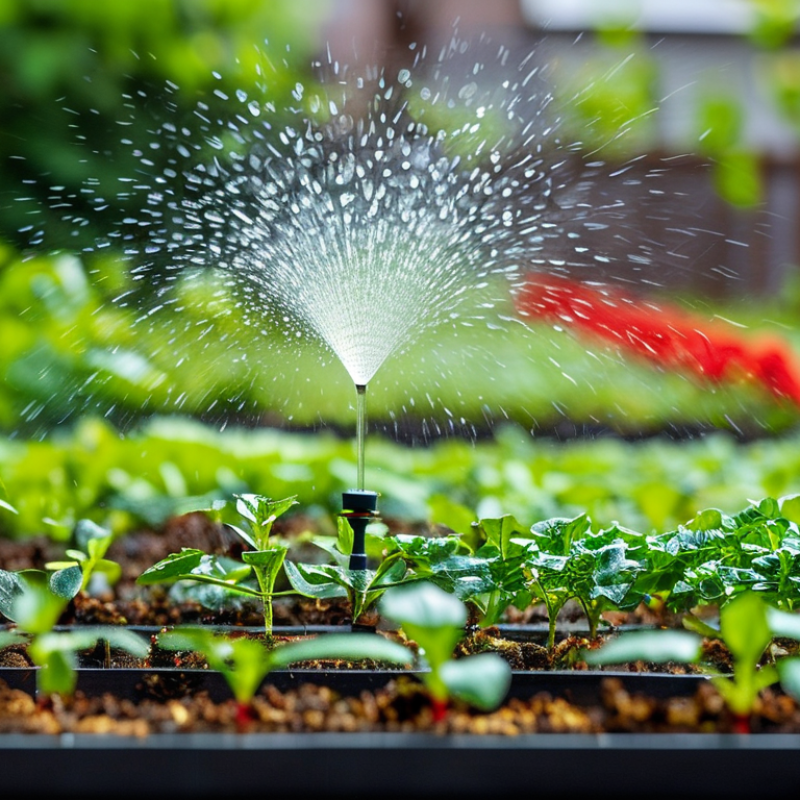
| 1 | Adjustable full-circle micro-sprinkler | 35–120 L/h | 1.5–2.5 bar | 3–6 m | High | Flush monthly; inspect adjustment mechanism | 5–8 years | Vegetable beds, nurseries, and mixed planting areas | Flexible flow control reduces overwatering, but the adjustment screw should be protected from sediment and mineral buildup. |
| 2 | Pressure-compensating micro-sprinkler | 40–120 L/h | 1.5–4.0 bar | 3–6 m | Very high | Filter at 120 mesh or finer; flush laterals periodically | 6–10 years | Sloping ground and long irrigation laterals | Maintains a more consistent discharge across pressure variation, improving uniformity on uneven terrain. |
| 3 | Inverted micro-sprinkler | 30–100 L/h | 1.5–3.0 bar | 3–5 m | High | Check hanging supports and clean the nozzle every 4–8 weeks | 5–8 years | Greenhouses, shade houses, and overhead crop layouts | Keeps the emitter away from soil splash and can provide even overhead coverage when mounted securely. |
| 4 | Full-circle spinner micro-sprinkler | 40–150 L/h | 1.5–3.5 bar | 4–8 m | High | Clean spinner and nozzle; verify rotation during inspections | 4–7 years | Orchards, nurseries, and broad plant beds | Rotating distribution produces a wide wetted pattern; poor filtration can stop the spinner and create dry zones. |
| 5 | Half-circle micro-sprinkler | 25–90 L/h | 1.0–2.5 bar | 2.5–5 m | High | Flush lines and check boundary alignment | 5–8 years | Edge rows, narrow beds, and perimeter planting | Limits water outside the planted area and is efficient where a full-circle pattern would wet paths or walls. |
| 6 | Quarter-circle micro-sprinkler | 20–70 L/h | 1.0–2.5 bar | 2–4 m | High | Inspect angle deflector and flush the branch line | 5–8 years | Corners, raised beds, and small landscaped sections | Provides accurate corner coverage with low overspray when correctly positioned and operated within its pressure range. |
| 7 | Strip-pattern micro-sprinkler | 30–100 L/h | 1.5–3.0 bar | 1.5–3 m wide strip | High | Clean the strip deflector and confirm orientation | 4–7 years | Long, narrow beds and greenhouse benches | Reduces water applied to adjacent walkways, although alignment must be checked after cultivation or maintenance work. |
| 8 | Low-angle micro-sprinkler | 35–110 L/h | 1.5–3.0 bar | 3–6 m | Medium-high | Inspect for blocked outlets and check spray clearance | 4–7 years | Wind-exposed beds and low-growing crops | Lower spray trajectory can reduce wind drift compared with taller spray patterns, but nearby foliage may obstruct coverage. |
| 9 | Fogger or fine-mist micro-sprinkler | 15–60 L/h | 2.0–4.0 bar | 1–3 m | Medium | Use fine filtration; inspect nozzles frequently for clogging | 3–6 years | Propagation, humidity control, and delicate seedlings | Creates fine droplets for cooling and humidity, but wind, evaporation, and hard-water deposits can reduce irrigation efficiency. |
| 10 | Stake-mounted shrub micro-sprinkler | 40–150 L/h | 1.5–3.5 bar | 3–7 m | Medium-high | Check stake stability, tubing connections, and spray pattern | 4–8 years | Individual shrubs, containers, and young trees | Easy to reposition as plants grow; stable mounting and protected tubing are essential for consistent long-term coverage. |