10 Best Plastic Pall Ring Suppliers for Global Buyers
Choosing the right supplier for Plastic Pall Ring packing can influence tower efficiency, maintenance costs, and long-term process stability. Global buyers often compare suppliers by more than price. They examine material quality, manufacturing consistency, delivery capability, and technical support. A reliable supplier should provide clear specifications, including ring size, wall thickness, material grade, void fraction, and operating temperature limits. These details matter when the rings support gas absorption, stripping, or chemical scrubbing systems.
This guide introduces 10 Best Plastic Pall Ring Suppliers for Global Buyers. It focuses on manufacturers and distributors with practical industry experience, documented quality procedures, and international service capabilities. Product photos alone are not enough. Buyers should request samples, test reports, packaging details, and references from comparable applications. A warehouse inspection or video factory tour can also reveal useful information, such as storage conditions and packing discipline.
Performance depends on the whole system. Poor liquid distribution can reduce the benefits of even high-quality packing. Supplier claims should therefore be checked against engineering data and actual operating conditions. No supplier is perfect. Lead times can change, technical responses may vary, and regional logistics can create surprises. That is worth remembering.
The selected companies are assessed with a balanced view of experience, product knowledge, credibility, and buyer support. The goal is not to promote one universal choice. It is to help procurement teams compare realistic options and ask better questions before placing an order. Small details matter, especially when a tower runs continuously.
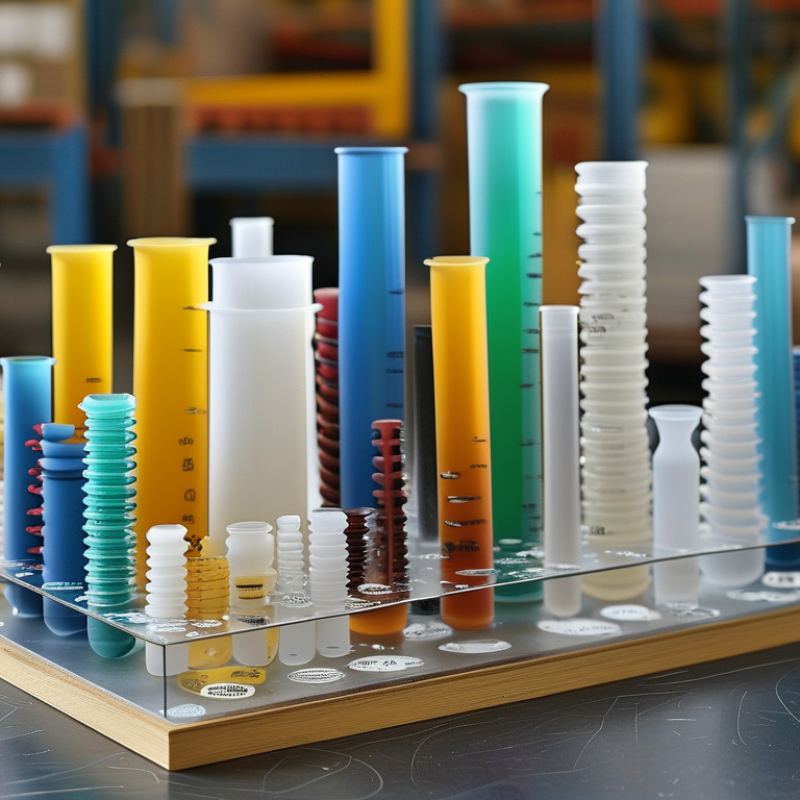
Plastic Pall Ring Fundamentals: 90–95% Void Fraction and 30–250 m²/m³ Area
Plastic Pall Rings are lightweight tower packings designed to expose more surface while limiting pressure loss. Their defining feature is a void fraction of roughly 90–95%. This open structure allows gas and liquid to move through the bed with less obstruction. In absorbers and scrubbers, that may support higher throughput and steadier operation. It is not a guarantee. Performance also depends on ring size, material, liquid distribution, and packing depth.
Specific surface area commonly ranges from 30 to 250 m²/m³. Lower-area rings usually offer lower pressure drop and easier drainage. Higher-area rings improve gas-liquid contact but may increase fouling risks. Smaller rings can help mass transfer, yet they demand careful distribution and cleaner operating conditions. A practical selection needs both hydraulic and process data. More area is not always better.
Global buyers should request technical drawings, resin information, dimensional tolerances, void-fraction data, and batch inspection records. Ask how surface area was calculated. Different test methods can produce different numbers. Published figures may be optimistic. Check the packing inside a sample container, too. Rings that nest tightly may reduce the advertised open volume. During installation, avoid dropping bags from excessive heights; deformation can affect the bed’s structure. The overlooked detail matters.
Selection Criteria: 25–90 mm Sizes, PP/PVDF Materials, and Pressure Drop
For global buyers, plastic Pall rings should be screened by size, polymer, and hydraulic behavior. The practical range is 25–90 mm. Smaller rings provide greater surface area, but they can create higher pressure drop and fouling risk. Larger rings reduce resistance, yet they may weaken mass-transfer efficiency at low liquid rates.
Material selection requires operating evidence. Polypropylene suits many moderate-temperature absorption and stripping services. PVDF is a stronger candidate for aggressive chemical exposure and higher temperature demands. Confirm temperature limits, chemical compatibility, density, and mechanical strength from the supplier’s test documentation. The GPSA Engineering Data Book, 14th edition, links packed-column pressure drop to gas loading, liquid loading, packing geometry, and flooding margin. Size alone cannot predict performance.
Pressure drop needs a real operating calculation. Published packed-tower design guidance commonly uses approximately 0.3–1.5 kPa per metre as an initial screening range for plastic random packing, but actual values can differ sharply. Check the supplier’s dry and irrigated pressure-drop curves. Ask for data at your gas velocity, liquid rate, and packing depth. Small details matter. A 2–3 mm manufacturing variation may affect voidage and loading behavior. A clean spreadsheet can still mislead. Use pilot data when emissions control, fan capacity, or vacuum operation is critical. Citeable references should include the GPSA Engineering Data Book and the U.S. EPA Air Pollution Control Cost Manual, which both emphasize verified hydraulic design over catalogue averages.
Top 10 Supplier Profiles: Manufacturing Capacity, Certifications, and Export Markets
A reliable plastic Pall ring supplier should show more than attractive product photos. The ten profiles below compare factory scale, certifications, and export experience. These details help buyers assess production stability and technical credibility.
Supplier 1 operates two molding lines and reports 800 cubic meters monthly capacity. Its ISO 9001 system supports batch traceability.
Supplier 2 focuses on small and medium orders, with ISO 14001 certification and recycled-material controls.
Supplier 3 maintains automated inspection equipment and exports across Southeast Asia and the Middle East.
Supplier 4 offers fire-retardant grades, supported by laboratory test reports and RoHS documentation.
Supplier 5 serves European distributors and provides REACH-related material declarations.
Supplier 6 runs a larger plant, but buyers should verify whether stated capacity includes other plastic products.
Supplier 7 specializes in custom sizes and keeps standard molds available for faster delivery.
Supplier 8 has experience shipping to North America, South America, and Africa. It provides packing photographs, container-loading records, and pre-shipment samples.
Supplier 9 holds quality certification but gives limited public information about production equipment. That gap deserves questions.
Supplier 10 supports engineering consultations and reports stable exports to chemical-processing markets.
From practical sourcing work, I would check melt-flow consistency, ring dimensions, crushing strength, and packing density. Certificates matter. Recent inspection records matter more. Capacity claims can change during peak seasons, especially when one factory serves several industries. Requesting a live factory audit or independent inspection may reveal production limits that brochures do not mention.
Performance Benchmark: Surface Area, Flooding Capacity, and Chemical Resistance
For global buyers, plastic Pall rings should be compared through measurable performance, not catalogue claims. The GPSA Engineering Data Book reports that modern random-pack designs commonly operate below 70–80% of calculated flooding velocity. This margin helps manage liquid surges and uneven distribution. In practical trials, 25 mm Pall rings often provide about 200–210 m²/m³ of geometric surface area, while 50 mm sizes commonly provide near 100–120 m²/m³. Smaller rings improve contact area. They also raise pressure drop and fouling risk.
Flooding capacity depends on ring geometry, packing density, liquid viscosity, and tower diameter. The American Institute of Chemical Engineers’ packed-column correlations show that capacity must be checked using both gas and liquid loading, rather than size alone. A useful benchmark is stable operation near 60–75% of predicted flooding, especially where feed conditions fluctuate. That number is not universal. Poor liquid distribution can reduce real performance sharply.
Chemical resistance requires equal attention. Polypropylene typically suits many aqueous acids, alkalis, and salts, with common service guidance placing continuous use near 80–90°C, depending on stress and concentration. Polyvinyl chloride can offer stronger temperature resistance in selected systems, while polyethylene may perform well under impact and lower-temperature service. The U.S. EPA Air Pollution Control Cost Manual emphasizes verifying material compatibility against actual temperature, concentration, and exposure time. A minor weakness remains: published resistance charts often assume clean chemicals. Real streams contain solvents, oxidants, and heat cycling. Testing representative samples is still the safer benchmark.
Plastic Pall Ring Performance Benchmark
Representative engineering benchmark for 25 mm random Pall Rings. Specific surface area and flooding factor are typical design-reference values; chemical resistance is a screening tier rather than a universal material standard.
Higher specific surface area supports mass transfer, while a higher flooding factor generally indicates greater gas-handling capacity. PVDF and PTFE provide the broadest chemical-resistance range; PP is commonly selected for cost-effective general chemical service.
Global Buyer Checklist: Quality Control, Packaging, MOQ, and Delivery Terms
A reliable plastic Pall ring supplier should provide measurable quality evidence, not polished promises. ISO’s Survey 2023 recorded more than 1.26 million ISO 9001 certificates worldwide, but certification alone does not prove packing quality or product performance. Request batch inspection records, material specifications, dimensional tolerances, and test samples. Check ring diameter, wall thickness, crushing resistance, and chemical compatibility against your operating conditions. A small sample can reveal warping, brittle edges, or inconsistent color.
Packaging needs equal attention. Ask for moisture-resistant inner bags, reinforced cartons, pallet protection, and clear labels showing batch number, quantity, and production date. OECD’s Global Plastics Outlook reported that only 9% of plastic waste was recycled in 2019. Therefore, buyers should request recyclable packaging where practical and confirm whether damaged goods can be separated easily. This detail is often ignored.
Minimum order quantity affects storage costs and project timing. Compare the quoted MOQ with your installation volume, spare-part needs, and warehouse capacity. Do not accept an attractive unit price without calculating freight per cubic meter. UNCTAD reports that maritime shipping carries over 80% of global merchandise trade by volume, so delivery terms deserve careful review. Confirm Incoterms, port responsibility, insurance, lead time, container loading, and documentation before payment. Get it in writing. A supplier may promise 15 days, yet production, inspection, and port delays can change the schedule. That risk needs honest discussion.