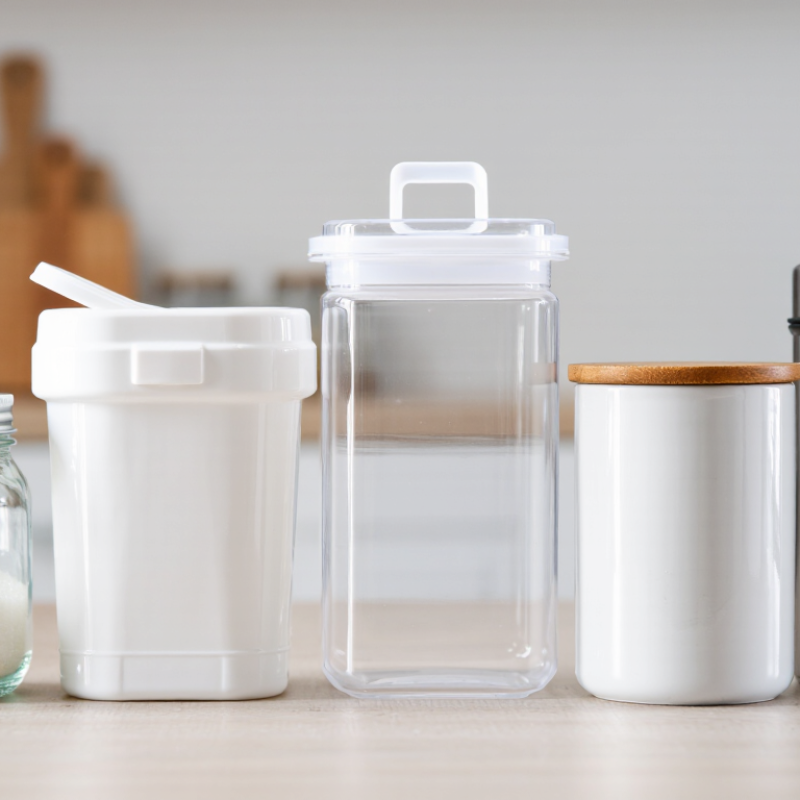
| PP Sugar Jar | Polypropylene (PP) | Approximately 0.90 g/cm³ | 250 mL–5 L | Screw cap, snap-fit lid, flip-top, hinged lid, or tamper-evident closure | Lightweight, impact-resistant, low moisture absorption, and suitable for household food storage | Check food-contact compliance, lid fit, hinge durability, and sealing performance |
| PET Sugar Jar | Polyethylene terephthalate (PET) | Approximately 1.37–1.40 g/cm³ | 250 mL–3 L | Screw cap, dispensing cap, or induction-seal-compatible closure | High clarity, good stiffness, and effective visual product presentation | May be less tolerant of high heat; confirm processing and storage temperature limits |
| HDPE Sugar Jar | High-density polyethylene (HDPE) | Approximately 0.94–0.97 g/cm³ | 500 mL–5 L | Screw cap, snap lid, or tamper-evident closure | Tough, lightweight, moisture-resistant, and suitable for opaque or translucent designs | Usually provides less transparency than PET; evaluate wall thickness and rigidity |
| Glass Sugar Jar | Soda-lime glass | Approximately 2.4–2.6 g/cm³ | 250 mL–2 L | Screw cap, clamp lid, or gasketed glass-compatible closure | Non-porous, highly transparent, and resistant to odor retention | Heavier and more breakable; packaging protection may increase shipping costs |
| Stainless Steel Sugar Canister | Food-grade stainless steel | Approximately 7.7–8.1 g/cm³ | 500 mL–3 L | Push-on lid, hinged lid, or silicone-gasket lid | Durable, opaque, corrosion-resistant, and suitable for light-sensitive contents | Higher weight and cost; verify steel grade, gasket material, and edge finishing |