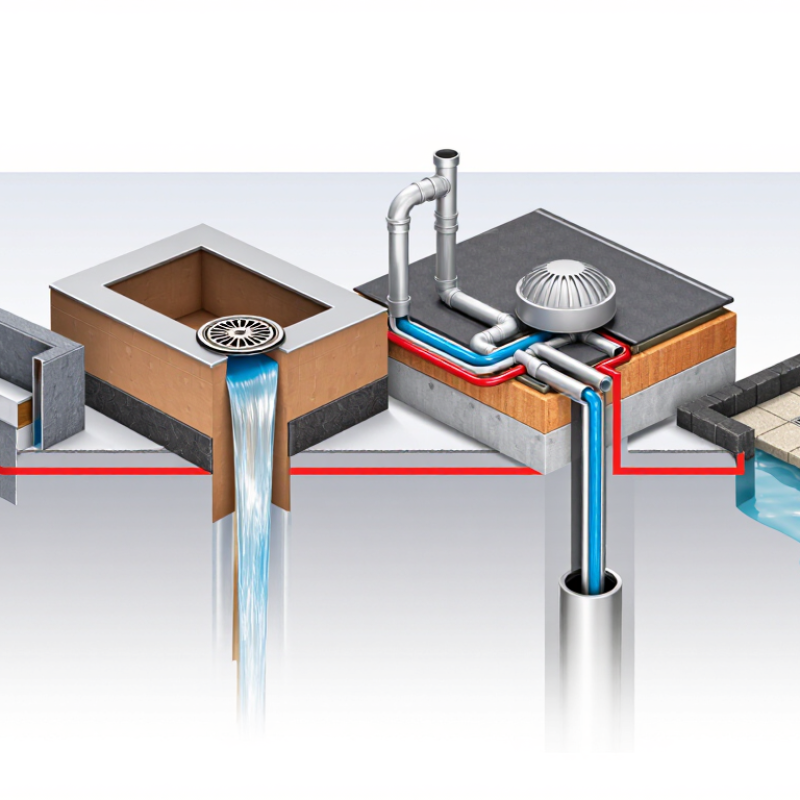
| Gutters and Downspouts | Sloped roofs and low-rise buildings with roof edges | Gutter to outlet, then through a vertical or angled downspout | Size according to contributing roof area, rainfall intensity, gutter slope, outlet capacity, and downspout capacity | Remove leaves and sediment; inspect joints, hangers, outlets, and discharge points |
| Interior Roof Drains | Low-slope roofs where piping can be routed inside the building | Strainer and drain bowl connected to internal piping | Provide adequate roof slope, drain spacing, pipe capacity, overflow drainage, and accessible cleanouts | Keep strainers clear and inspect drain bowls, seals, piping, and overflow routes |
| Scuppers | Low-slope roofs draining through parapet walls | Roof surface through a wall opening to an exterior chute or conductor head | Opening size, roof area, rainfall intensity, wall flashing, and unobstructed discharge must be evaluated | Clear debris and verify that wall flashing, counterflashing, and exterior discharge remain open |
| Scuppers with Downspouts | Parapet roofs where controlled exterior drainage is preferred | Scupper through parapet, conductor head or outlet, then downspout | The scupper, outlet, conductor head, and downspout must work as one continuous drainage system | Inspect transitions for blockages, leakage, corrosion, and overflow staining |
| Siphonic Roof Drainage | Large low-slope roofs requiring high-capacity drainage with minimal horizontal slope | Specially designed outlets and pipework operating under full-bore flow conditions | Requires hydraulic engineering, correctly designed outlets, pipe layout, air-entry control, and compatible structural support | Use qualified inspection and verify outlets, pipe supports, and system performance |
| Emergency Overflow Drains or Scuppers | Low-slope roofs with primary interior drains or concealed drainage paths | Independent overflow route that releases water before excessive ponding develops | Must be independent of the primary drainage path and positioned to provide visible warning of blocked primary drains | Keep openings visible and unobstructed; inspect after severe storms |