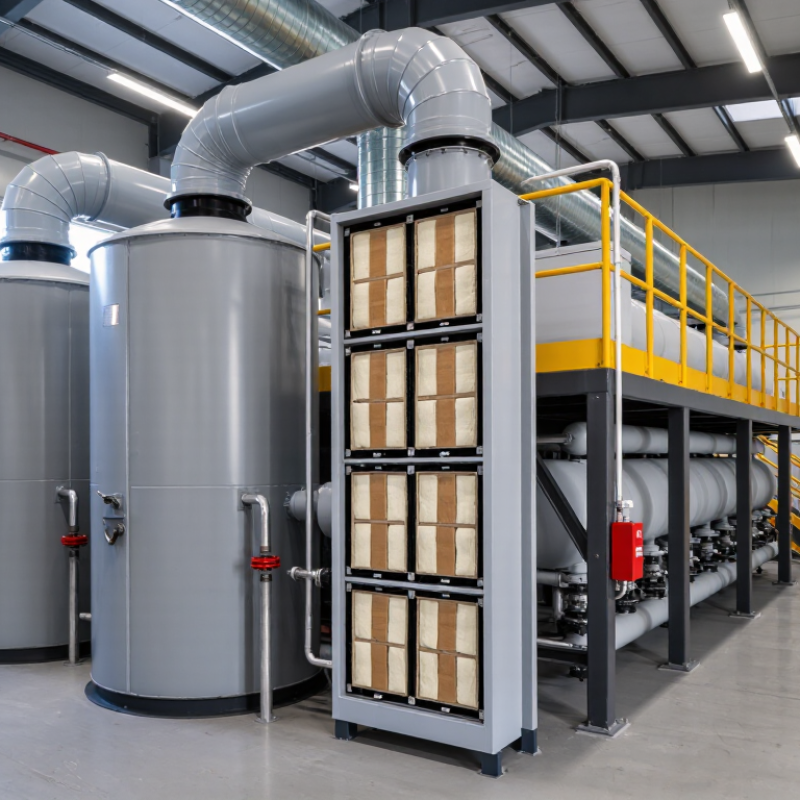
| Pollutant treatment | Oxidizes many volatile organic compounds (VOCs) and other combustible organic pollutants into carbon dioxide and water vapor when adequate operating conditions are maintained. | Provides a thermal treatment option for suitable industrial exhaust streams. |
| VOC destruction efficiency | Many systems are designed for destruction efficiencies of approximately 95% to 99% or higher. Actual performance depends on the pollutant, system design, operating conditions, and verification method. | Helps buyers assess emissions-control targets; the required performance should be confirmed for the specific application. |
| Typical oxidation temperature | Often approximately 760–820°C (1,400–1,500°F), with the required temperature varying by compound and process conditions. | Temperature is one of the factors that determines whether pollutants are effectively oxidized. |
| Gas residence time | Commonly around 0.5–1.0 second in the oxidation chamber, depending on the system and exhaust characteristics. | Provides time for the exhaust stream to undergo thermal oxidation at the required temperature. |
| Heat recovery | Ceramic heat-transfer media store heat from treated gas and transfer it to incoming exhaust. Thermal energy recovery is commonly high, with many designs reporting roughly 90%–97%; actual results vary by configuration and conditions. | Reduces the amount of supplemental fuel needed to heat incoming gas during suitable operating conditions. |
| Fuel use | After warm-up, supplemental fuel demand may be reduced when the incoming stream contains sufficient recoverable heat. The break-even condition depends on VOC concentration, airflow, temperature, and heat losses. | Can lower operating costs, but savings should be evaluated using site-specific exhaust data and energy prices. |
| Suitable exhaust streams | Often considered for relatively large exhaust volumes with low-to-moderate concentrations of combustible pollutants, subject to safety and process requirements. | Helps determine whether an RTO is a practical fit compared with other control technologies. |
| Important design considerations | Airflow, pollutant composition, moisture, particulates, corrosive compounds, pressure drop, temperature, and required emissions limits all affect design and performance. | Proper characterization of the exhaust stream supports reliable operation and appropriate equipment selection. |
| Operating requirements | Requires monitoring and control of temperature, airflow, switching cycles, and safety interlocks. Preventive maintenance and periodic performance checks are also important. | Supports stable treatment performance and helps protect equipment and personnel. |